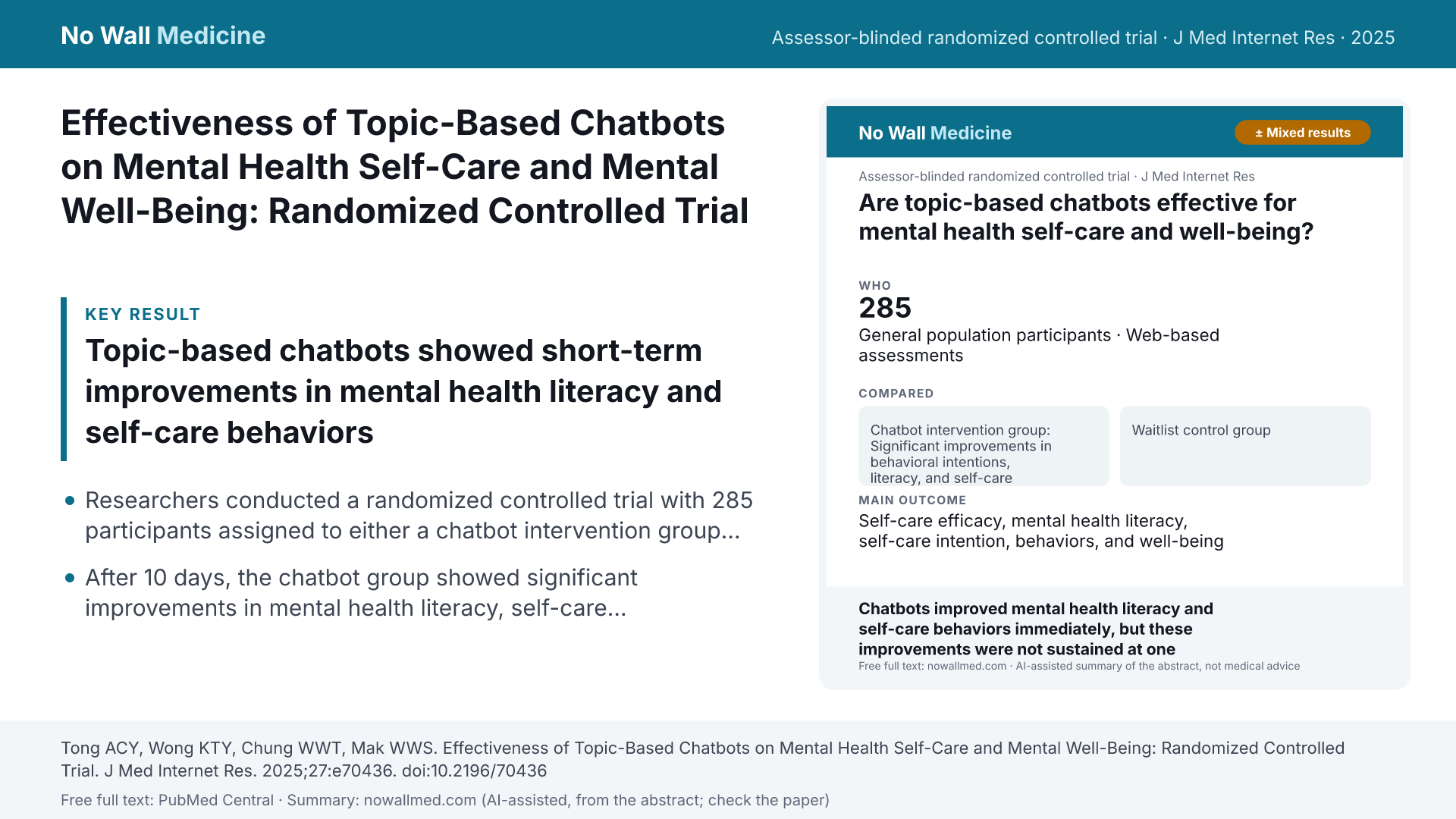
Topic-based chatbots showed short-term improvements in mental health literacy and self-care behaviors
Effectiveness of Topic-Based Chatbots on Mental Health Self-Care and Mental Well-Being: Randomized Controlled Trial
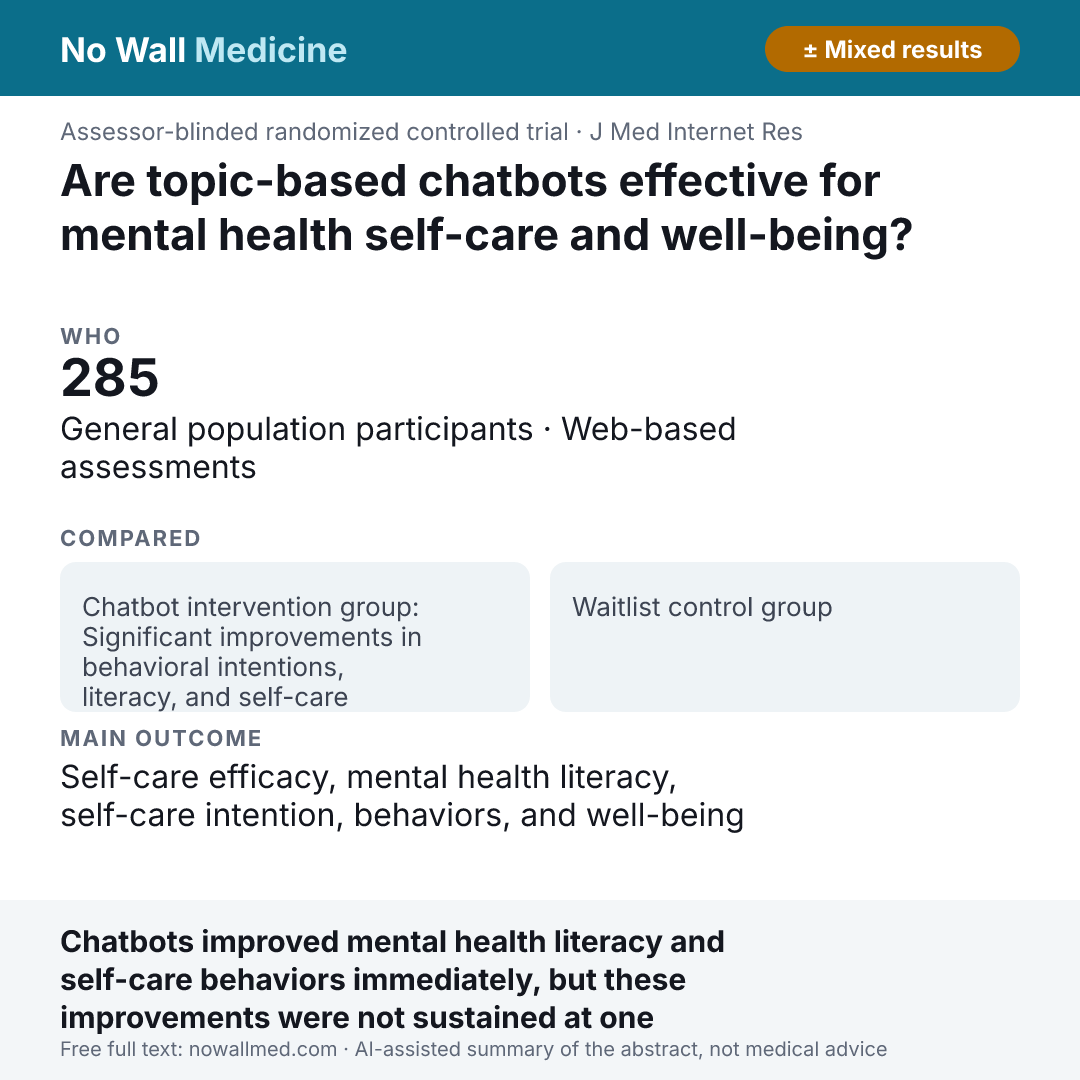
Assessor-blinded randomized controlled trialMixed results
Are topic-based chatbots effective for mental health self-care and well-being?
Who
285
General population participants · Web-based assessments
Compared
Chatbot intervention group: Significant improvements in behavioral intentions, literacy, and self-care behaviors
Waitlist control group
Main outcome
Self-care efficacy, mental health literacy, self-care intention, behaviors, and well-being
Result: Cohen d=0.36 (95% CI 0.08-0.30) for self-care behaviors
Bottom line: Chatbots improved mental health literacy and self-care behaviors immediately, but these improvements were not sustained at one month.
Limitation: Lack of sustained effects suggests a need for greater personalization and interactive features.
J Med Internet Res · 2025-04-30 · NCT05694507
Why it matters: Most chatbot studies focus on clinical populations and symptom reduction rather than the preventive potential for self-care and mental health literacy in the general population.
Headline and visual abstract written with AI from the paper’s abstract, with every number checked against it. Read the paper before relying on them.
Was this summary helpful?
Subject terms
Cite this article
Tong ACY, Wong KTY, Chung WWT, Mak WWS. Effectiveness of Topic-Based Chatbots on Mental Health Self-Care and Mental Well-Being: Randomized Controlled Trial. J Med Internet Res. 2025;27:e70436. doi:10.2196/70436
Spotted a mistake? Suggest a correction