Effectiveness of transcranial direct current stimulation on balance and gait in patients with multiple sclerosis: systematic review and meta-analysis of randomized clinical trials
Meta-analysis of randomized clinical trialsMixed results
Does transcranial direct current stimulation improve balance and gait in multiple sclerosis patients?
Who
230
Patients with multiple sclerosis
Compared
transcranial direct current stimulation
control or sham
Main outcome
balance and gait ability
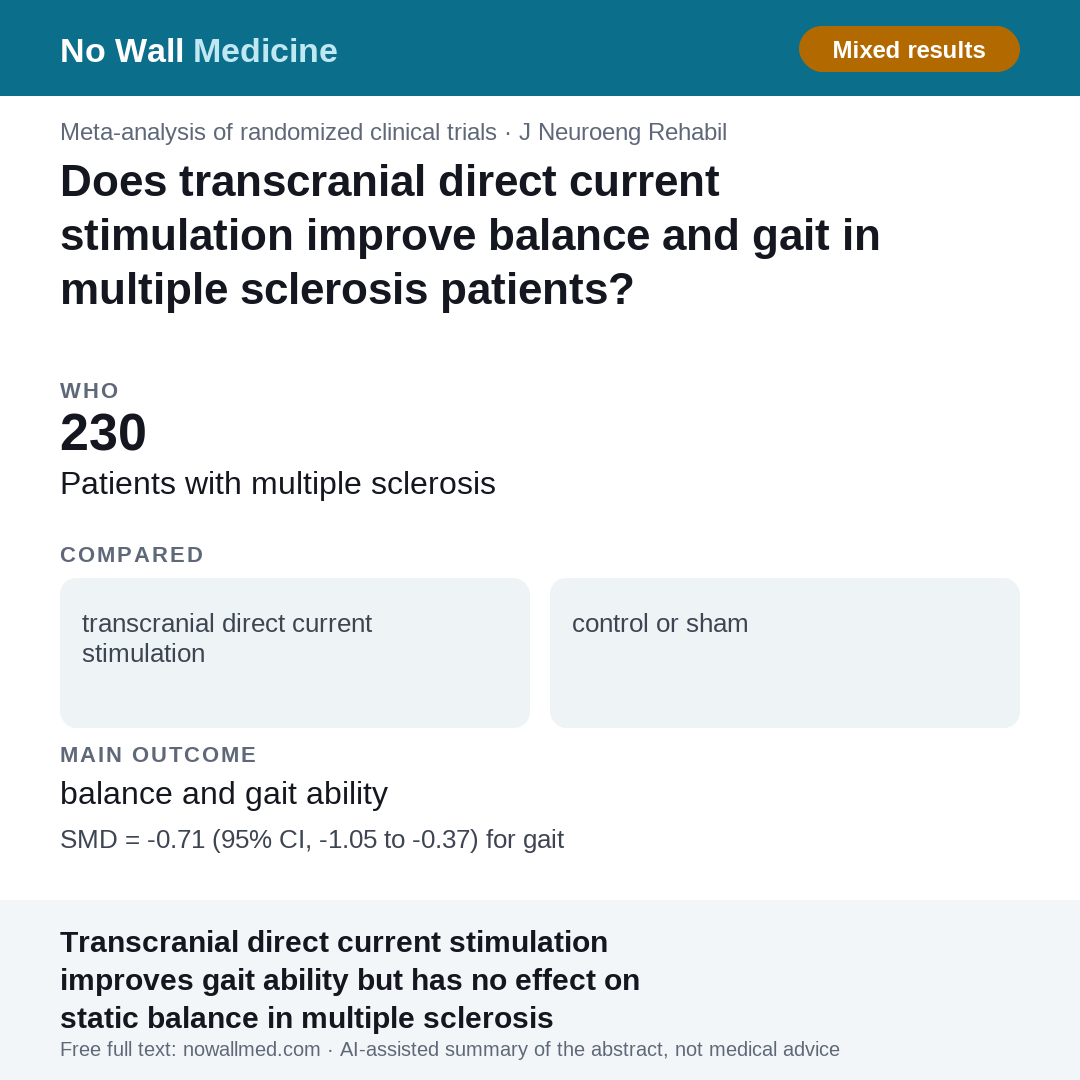
Result: SMD = -0.71 (95% CI, -1.05 to -0.37) for gait
Bottom line: Transcranial direct current stimulation improves gait ability but has no effect on static balance in multiple sclerosis patients.
Limitation: low quality of evidence for gait and very low quality of evidence for balance
J Neuroeng Rehabil · 2023-10-24Download image
Clinical question: Does transcranial direct current stimulation improve balance and gait in multiple sclerosis patients?
Abstract
Background
Motor impairments are very common in neurological diseases such as multiple sclerosis. Noninvasive brain stimulation could influence the motor function of patients. Objective
The aim of this meta-analysis was to evaluate the effectiveness of transcranial direct current stimulation (tDCS) on balance and gait ability in patients with multiple sclerosis. Additionally, a secondary aim was to compare the influence of the stimulation location of tDCS on current effectiveness. Methods
A search was conducted for randomized controlled trials published up to May 2023 comparing the application of tDCS versus a sham or control group. The primary outcome variables were balance and gait ability. Results
Eleven studies were included in the qualitative analysis, and ten were included in the quantitative analysis, which included 230 patients with multiple sclerosis. The average effect of tDCS on gait functionality was superior to that of the control group (SMD = -0.71; 95% CI, -1.05 to -0.37). However, the overall results of the tDCS vs. sham effect on static balance did not show significant differences between groups (MD = 1.26, 95% CI, -1.31 to 3.82). No significant differences were found when different locations of tDCS were compared. Conclusions
These results reveal that tDCS is an effective treatment for improving gait ability with a low quality of evidence. However, the application of tDCS has no effect on static balance in patients with multiple sclerosis with very low quality of evidence. Similarly, there seems to be no difference regarding the stimulation area with tDCS.
Subject terms
Cite this article
Nombela-Cabrera R, Pérez-Nombela S, Avendaño-Coy J, Comino-Suárez N, Arroyo-Fernández R, Gómez-Soriano J. Effectiveness of transcranial direct current stimulation on balance and gait in patients with multiple sclerosis: systematic review and meta-analysis of randomized clinical trials. J Neuroeng Rehabil. 2023. doi:10.1186/s12984-023-01266-w
Spotted a mistake? Suggest a correction
Top studies every Monday
The week’s key trials and guidelines in your specialties, plus any topics you follow. By email, free.
Get the weekly digest