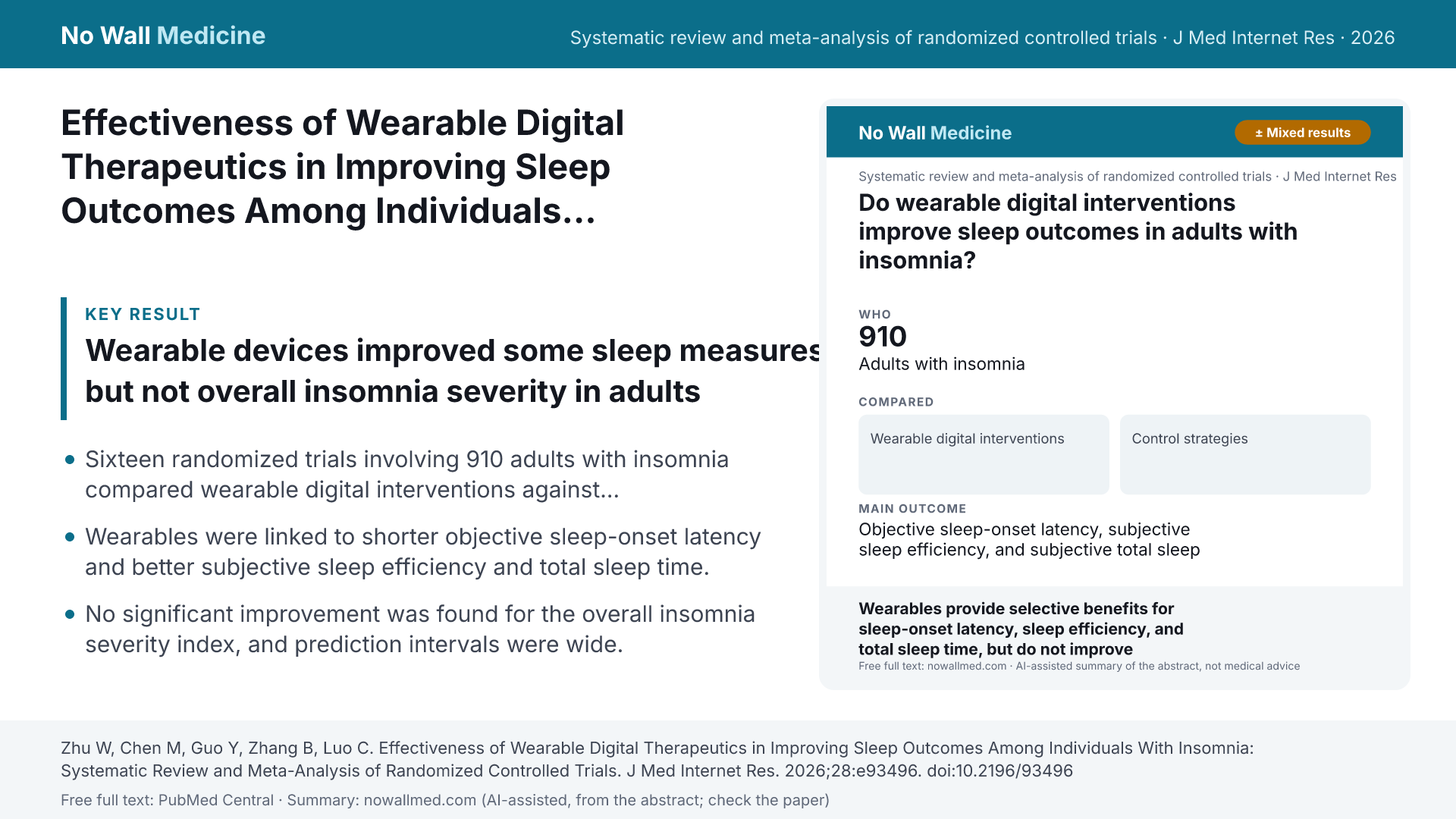
Effectiveness of Wearable Digital Therapeutics in Improving Sleep Outcomes Among Individuals With Insomnia: Systematic Review and Meta-Analysis of Randomized Controlled Trials
Key result: Wearable devices improved some sleep measures but not overall insomnia severity in adults
Key points
- Sixteen randomized trials involving 910 adults with insomnia compared wearable digital interventions against control strategies.
- Wearables were linked to shorter objective sleep-onset latency and better subjective sleep efficiency and total sleep time.
- No significant improvement was found for the overall insomnia severity index, and prediction intervals were wide.
Limitation the authors note: The authors note that wide prediction intervals, substantial heterogeneity, and limited study numbers indicate preliminary, nonconclusive findings.
Discussion prompts
- Would these patients look like yours? Who was left out?
- Is the main outcome one that matters to patients?
- Is the difference large enough to change what you do?
Cite: Zhu W, Chen M, Guo Y, Zhang B, Luo C. Effectiveness of Wearable Digital Therapeutics in Improving Sleep Outcomes Among Individuals With Insomnia: Systematic Review and Meta-Analysis of Randomized Controlled Trials. J Med Internet Res. 2026;28:e93496. doi:10.2196/93496
Free full text: PubMed Central · Summary and visual abstract: nowallmed.com/a/effectiveness-of-wearable-digital-therapeutics-in-improving-sleep-135pcl0/ (AI-assisted from the abstract; check the paper before relying on it).