Effects of a communication training for oncologists on early addressing palliative and end-of-life care in advanced cancer care (PALLI-COM): a randomized, controlled trial
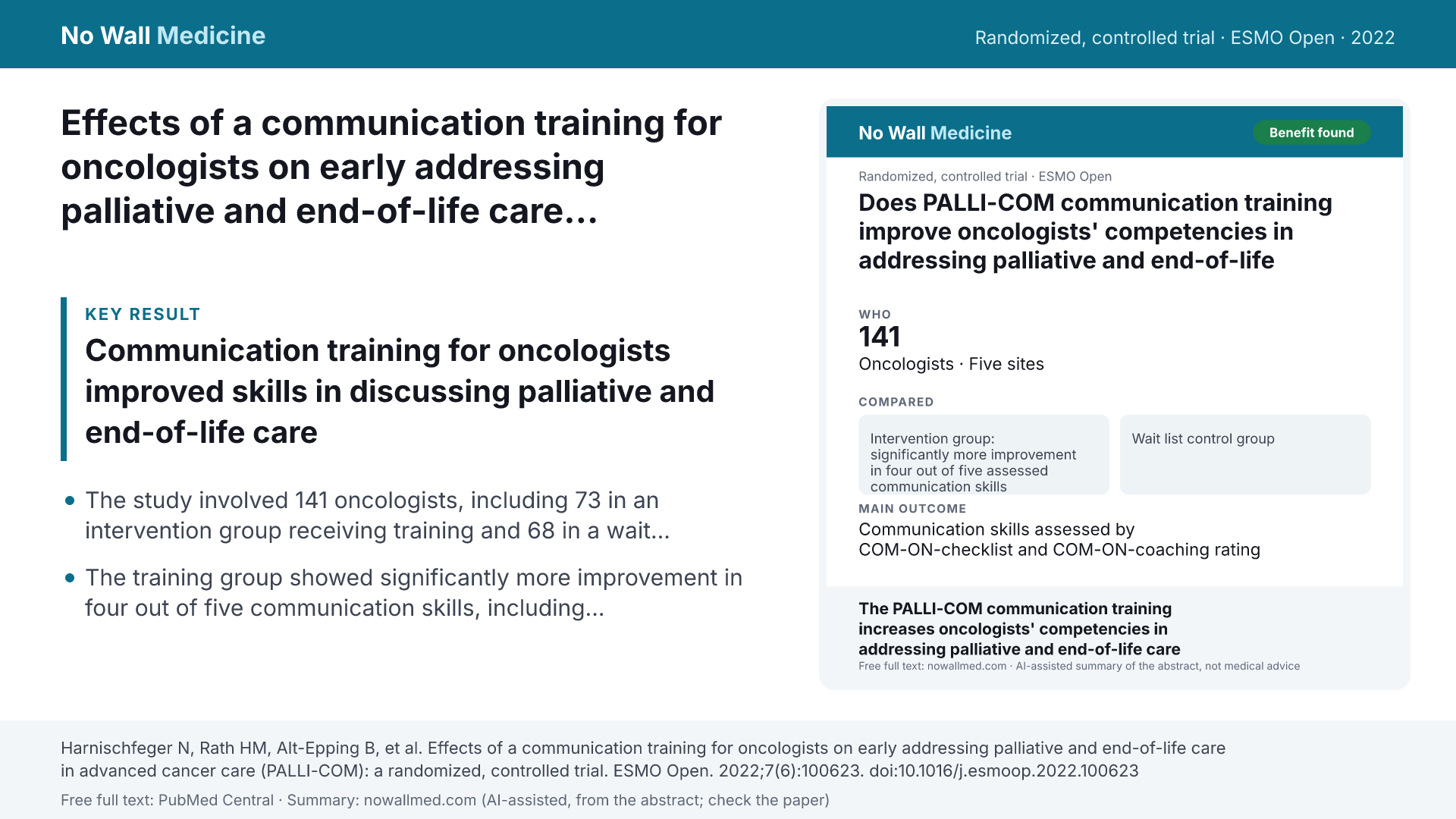
Key result: Communication training for oncologists improved skills in discussing palliative and end-of-life care
Key points
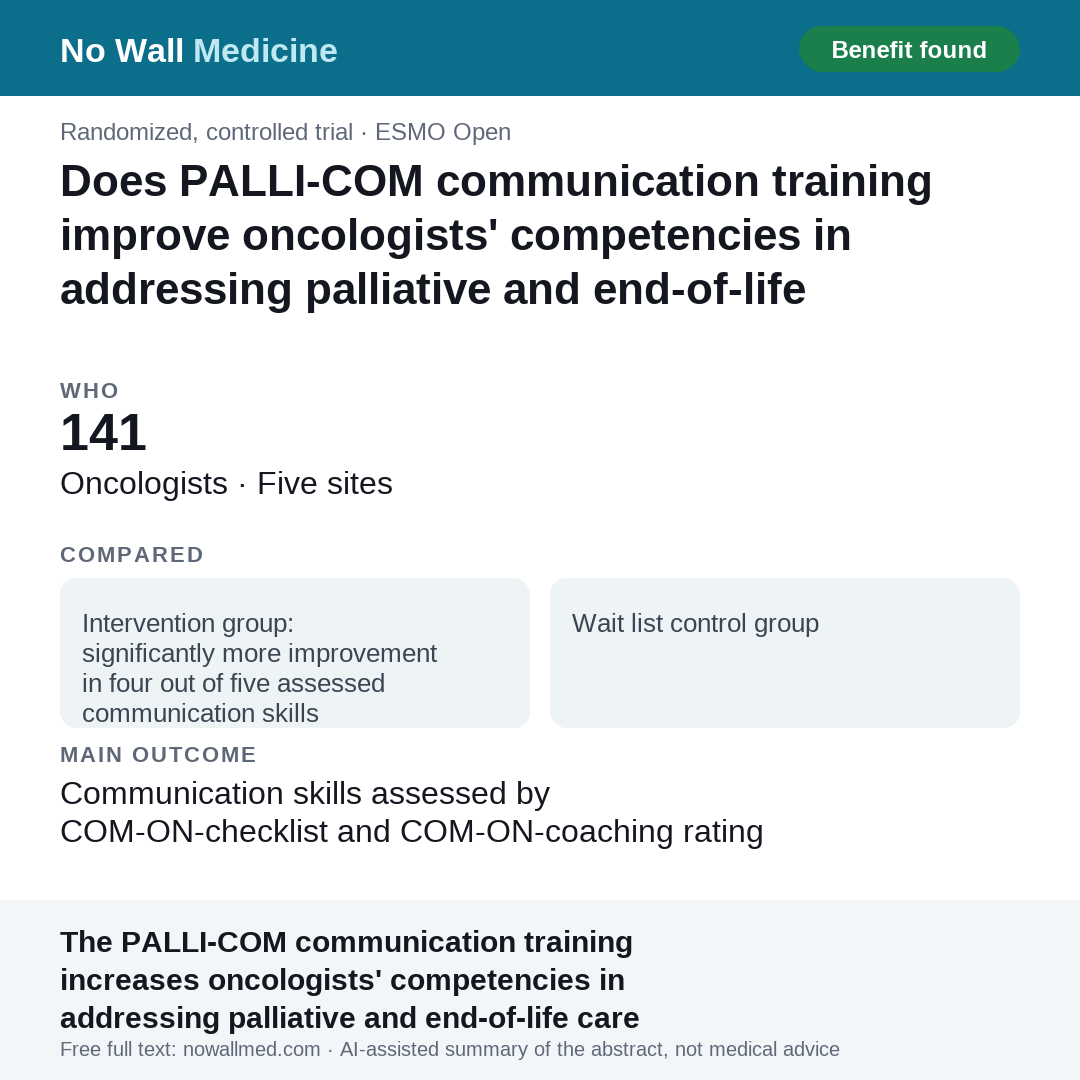
- The study involved 141 oncologists, including 73 in an intervention group receiving training and 68 in a wait list control group.
- The training group showed significantly more improvement in four out of five communication skills, including empathy, giving hope, addressing end-of-life issues, and explaining palliative care.
- Participants in the training group also showed more improvement in self-reported confidence, attitudes toward terminally ill patients, and communication quality as rated by simulated patients.
Why it matters: Physicians' communication insecurities often impede early discussions regarding palliative care and end-of-life issues in advanced cancer care.
Discussion prompts
- Would these patients look like yours? Who was left out?
- Is the main outcome one that matters to patients?
- Is the difference large enough to change what you do?
Cite: Harnischfeger N, Rath HM, Alt-Epping B, et al. Effects of a communication training for oncologists on early addressing palliative and end-of-life care in advanced cancer care (PALLI-COM): a randomized, controlled trial. ESMO Open. 2022. doi:10.1016/j.esmoop.2022.100623
Free full text: PubMed Central · Summary and visual abstract: nowallmed.com/a/effects-of-a-communication-training-for-oncologists-on-early-190ao38/ (AI-assisted from the abstract; check the paper before relying on it).