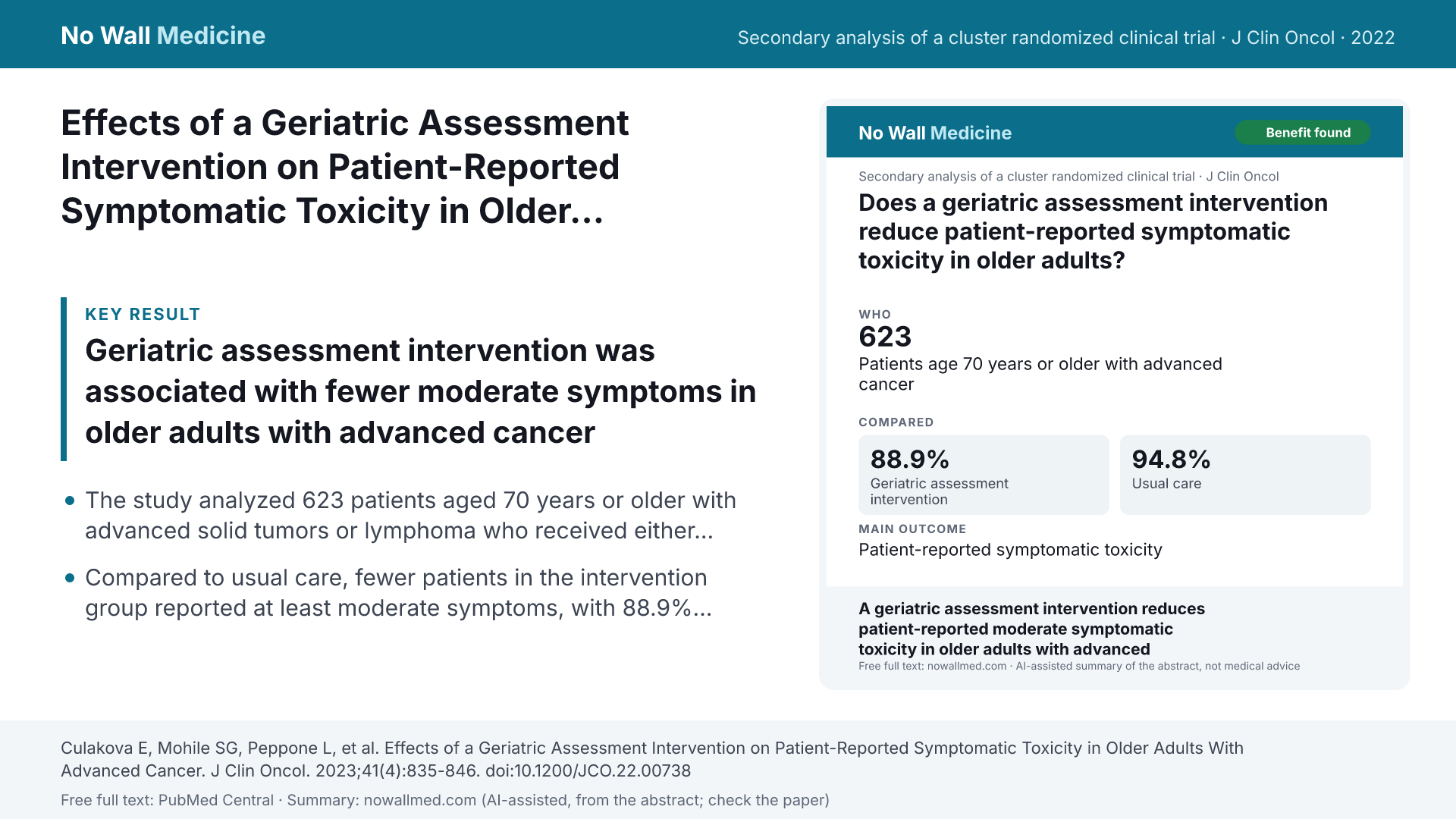
Geriatric assessment intervention was associated with fewer moderate symptoms in older adults with advanced cancer
Effects of a Geriatric Assessment Intervention on Patient-Reported Symptomatic Toxicity in Older Adults With Advanced Cancer
Secondary analysis of a cluster randomized clinical trialBenefit found
Does a geriatric assessment intervention reduce patient-reported symptomatic toxicity in older adults?
Who
623
Patients age 70 years or older with advanced cancer
Compared
88.9%Geriatric assessment intervention (overall grade 2 or higher)
94.8%Usual care (overall grade 2 or higher)
Main outcome
Patient-reported symptomatic toxicity
Bottom line: A geriatric assessment intervention reduces patient-reported moderate symptomatic toxicity in older adults with advanced cancer.
J Clin Oncol · 2022-11-10Download image
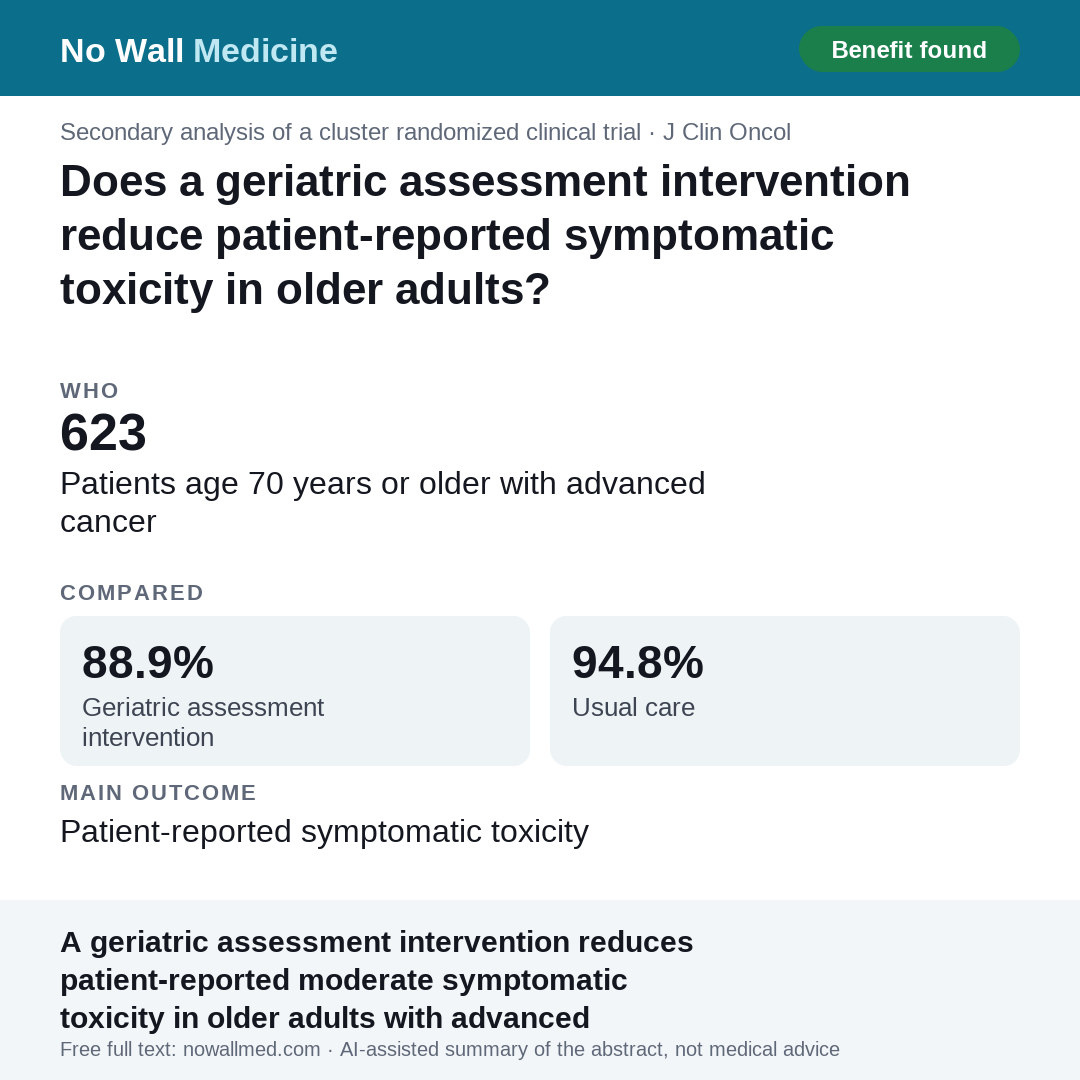
Clinical question: Does a geriatric assessment intervention reduce patient-reported symptomatic toxicity in older adults?
Why it matters: It was unknown if providing a geriatric assessment summary with management recommendations to oncologists would affect the severity of symptoms reported by patients.
In absolute numbers
Geriatric assessment intervention: 88.9% · Usual care: 94.8% → a difference of 5.9 percentage points, so about 17 people would need the treatment for 1 more to benefit (number needed to treat) over the trial’s follow-up.
Worked out by us from the two group results above, not reported by the authors. Check the paper for the exact outcome and timing.
Key points
- The study analyzed 623 patients aged 70 years or older with advanced solid tumors or lymphoma who received either a geriatric assessment intervention or usual care.
- Compared to usual care, fewer patients in the intervention group reported at least moderate symptoms, with 88.9% versus 94.8% overall and 83.4% versus 91.7% for core symptoms.
- The intervention did not show a statistically significant difference in the reporting of severe or very severe symptoms compared to usual care.
Headline and key points written with AI from the paper’s abstract, with every number checked against it. Read the paper before relying on them.
Was this summary helpful?
Subject terms
Cite this article
Culakova E, Mohile SG, Peppone L, et al. Effects of a Geriatric Assessment Intervention on Patient-Reported Symptomatic Toxicity in Older Adults With Advanced Cancer. J Clin Oncol. 2022. doi:10.1200/JCO.22.00738
Spotted a mistake? Suggest a correction