Effects of a Geriatric Assessment Intervention on Patient-Reported Symptomatic Toxicity in Older Adults With Advanced Cancer
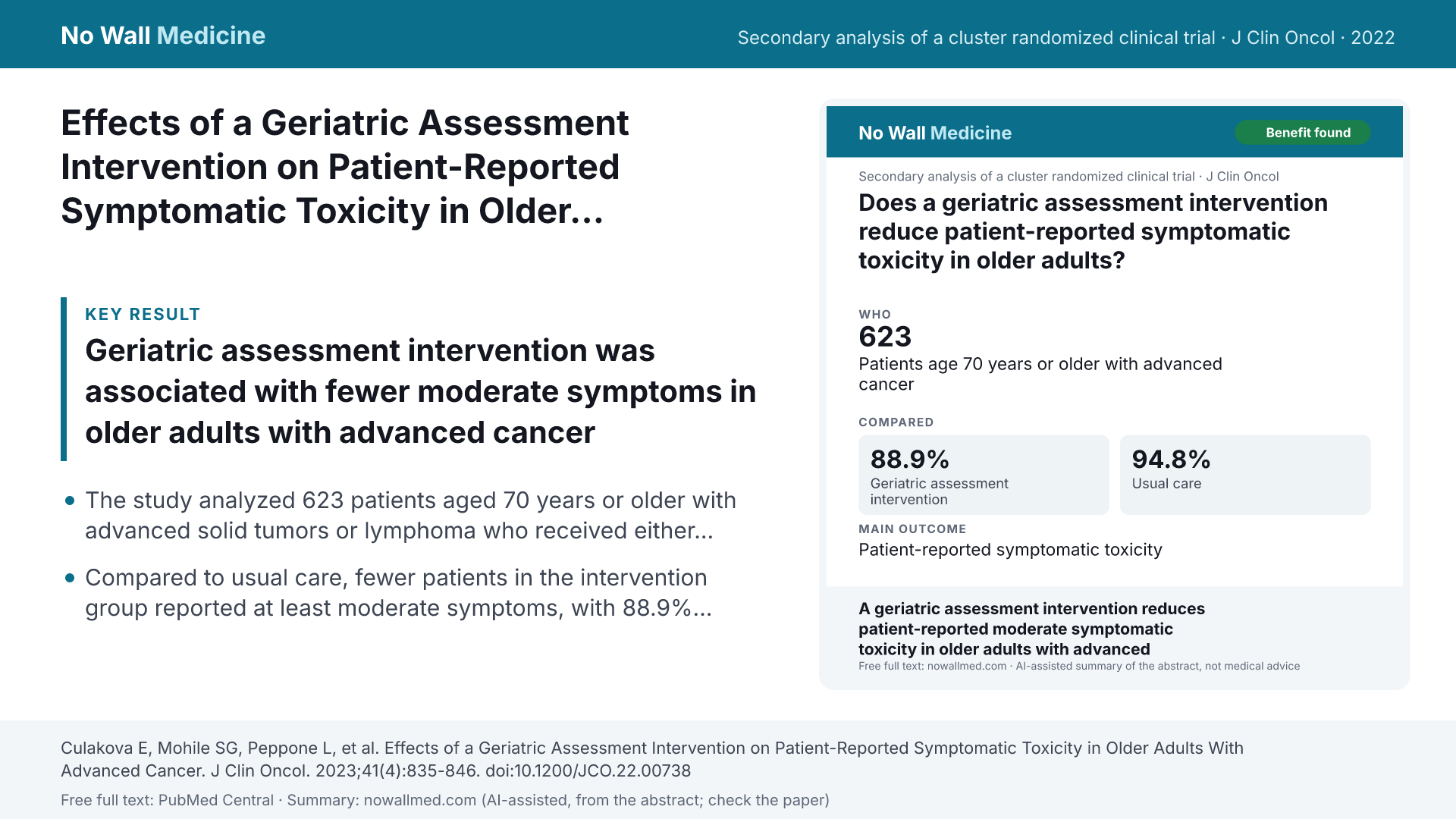
Key result: Geriatric assessment intervention was associated with fewer moderate symptoms in older adults with advanced cancer
Key points
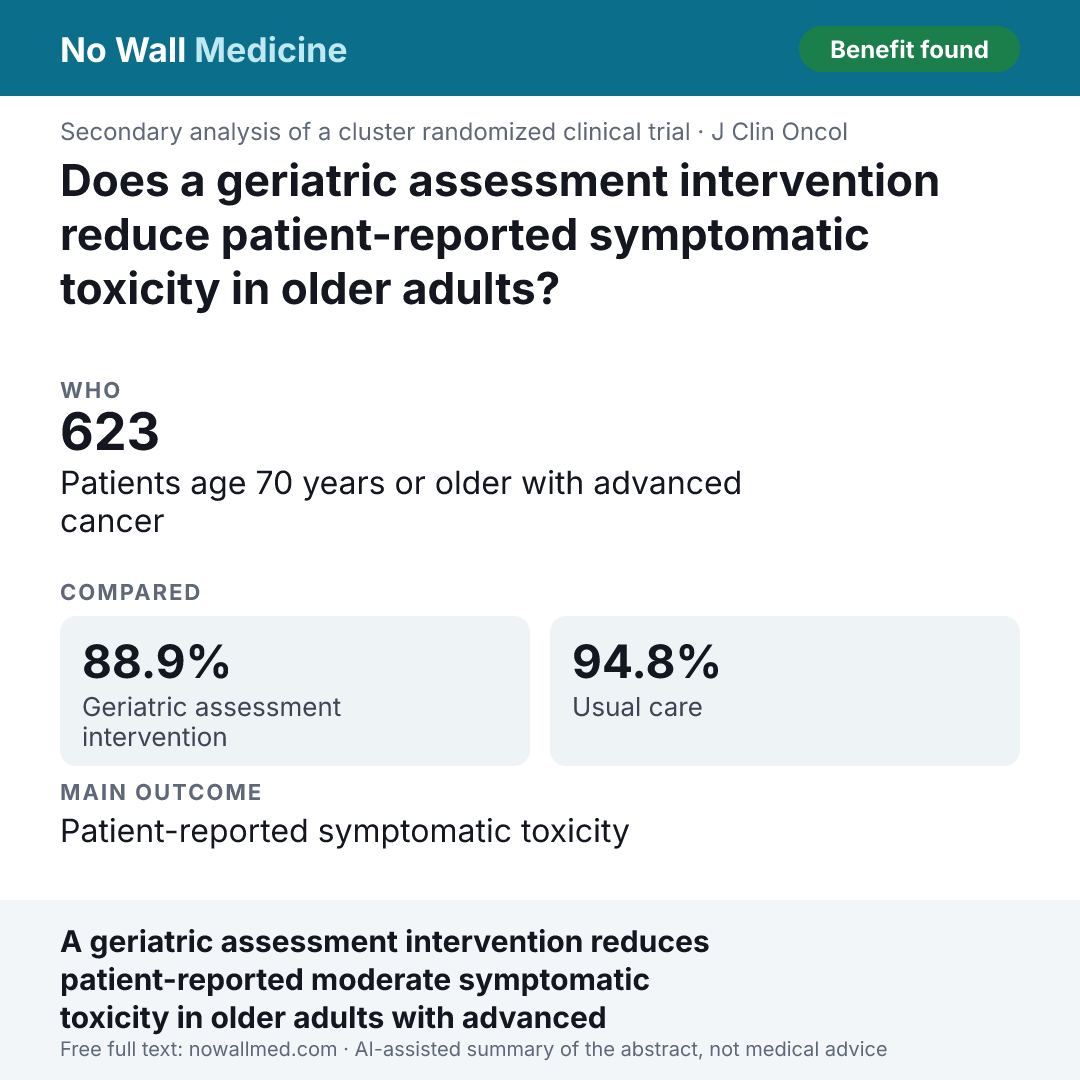
- The study analyzed 623 patients aged 70 years or older with advanced solid tumors or lymphoma who received either a geriatric assessment intervention or usual care.
- Compared to usual care, fewer patients in the intervention group reported at least moderate symptoms, with 88.9% versus 94.8% overall and 83.4% versus 91.7% for core symptoms.
- The intervention did not show a statistically significant difference in the reporting of severe or very severe symptoms compared to usual care.
In absolute numbers: Geriatric assessment intervention 88.9% vs Usual care 94.8%, a difference of 5.9 percentage points (about 17 people treated for one more to benefit).
Discussion prompts
- Would these patients look like yours? Who was left out?
- Is the main outcome one that matters to patients?
- Is the difference large enough to change what you do?
Cite: Culakova E, Mohile SG, Peppone L, et al. Effects of a Geriatric Assessment Intervention on Patient-Reported Symptomatic Toxicity in Older Adults With Advanced Cancer. J Clin Oncol. 2023;41(4):835-846. doi:10.1200/JCO.22.00738
Free full text: PubMed Central · Summary and visual abstract: nowallmed.com/a/effects-of-a-geriatric-assessment-intervention-on-patient-reported-q0rmg0/ (AI-assisted from the abstract; check the paper before relying on it).