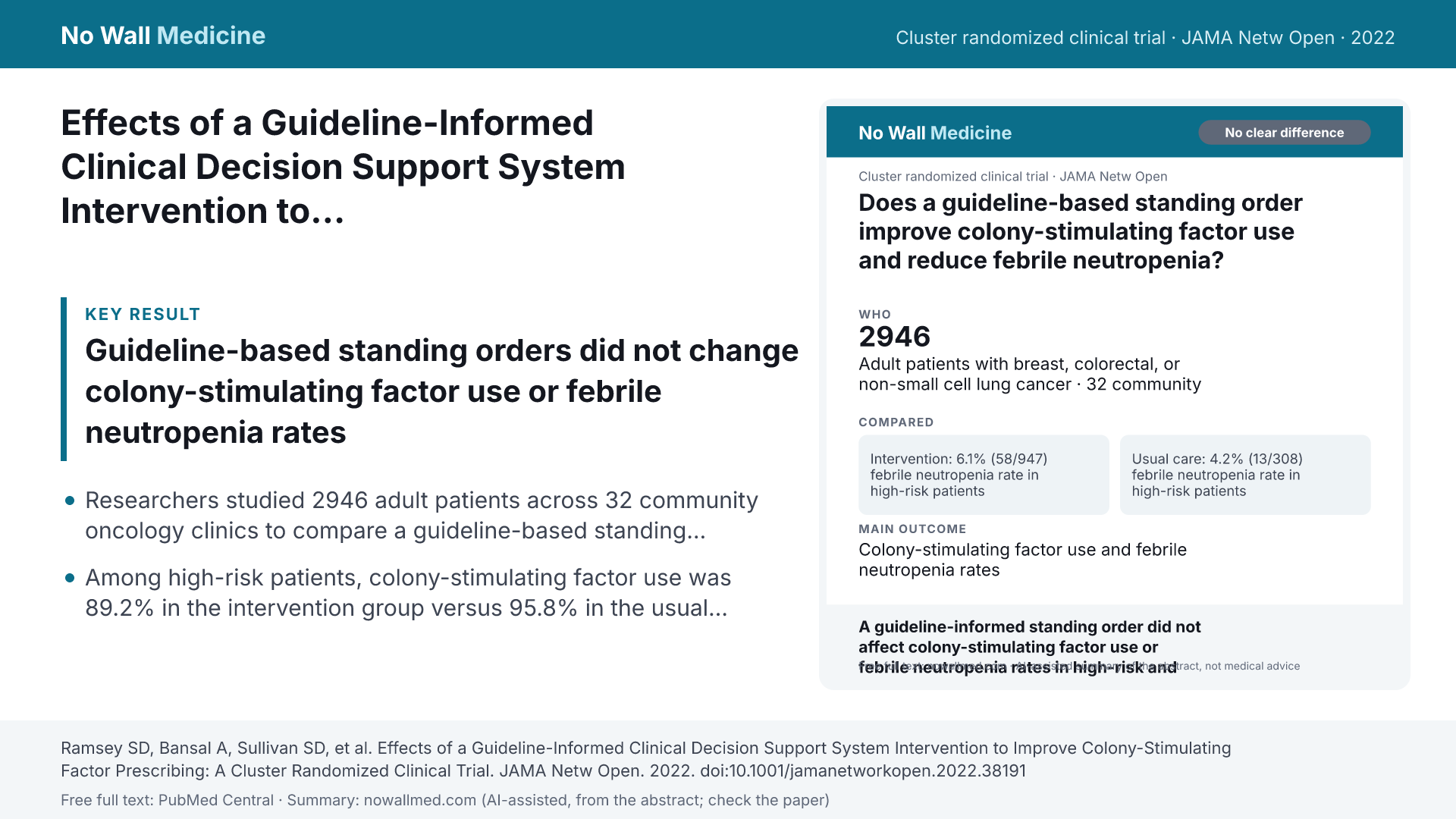
Effects of a Guideline-Informed Clinical Decision Support System Intervention to Improve Colony-Stimulating Factor Prescribing: A Cluster Randomized Clinical Trial
Key result: Guideline-based standing orders did not change colony-stimulating factor use or febrile neutropenia rates
Key points
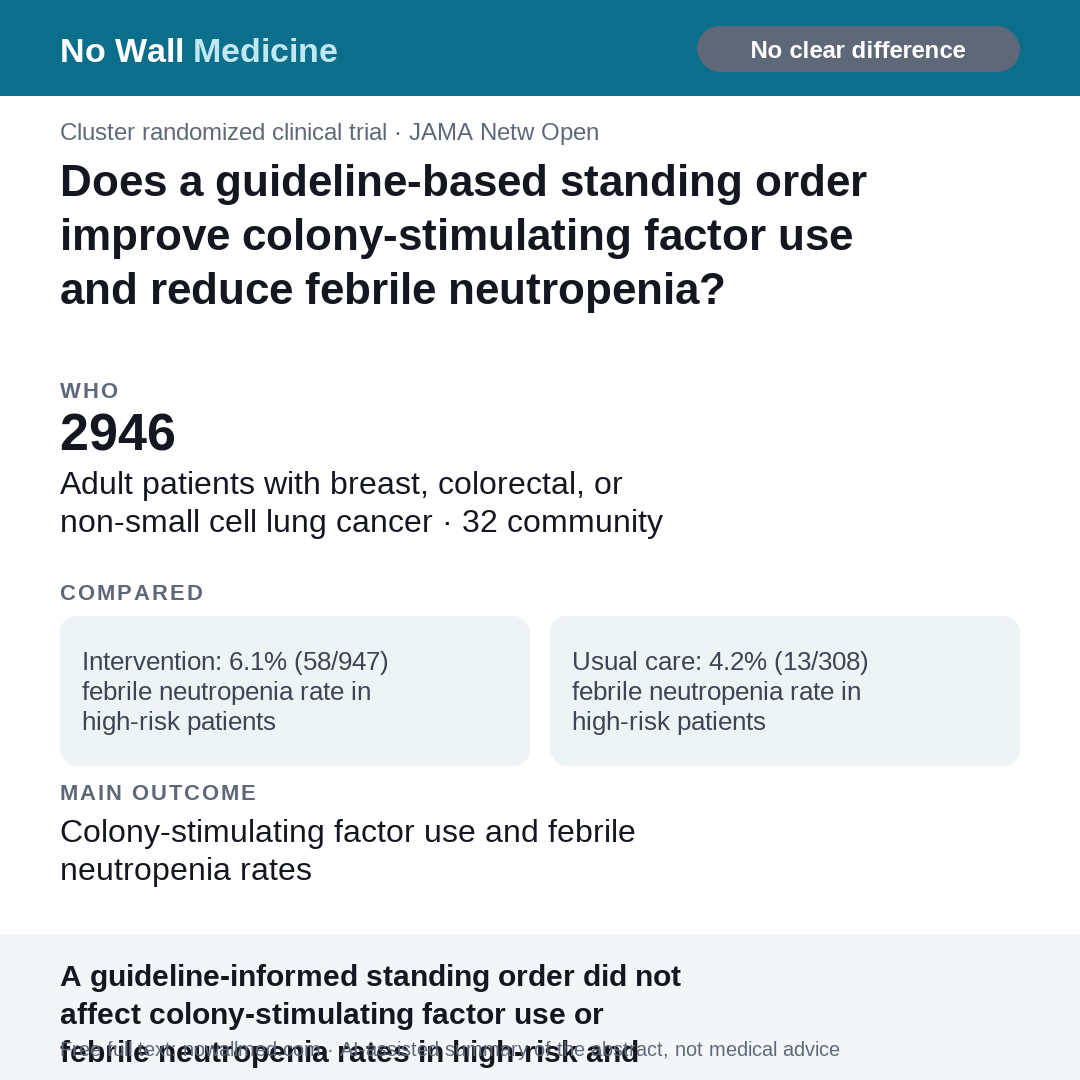
- Researchers studied 2946 adult patients across 32 community oncology clinics to compare a guideline-based standing order system against usual care.
- Among high-risk patients, colony-stimulating factor use was 89.2% in the intervention group versus 95.8% in the usual care group, and febrile neutropenia rates were not significantly different.
- For low-risk patients, colony-stimulating factor use was 6.3% in the intervention group versus 5.5% in the usual care group, with no significant difference in febrile neutropenia rates.
Why it matters: It was unknown if a guideline-based standing order system could improve the use of colony-stimulating factors and reduce febrile neutropenia, a condition involving fever and low white blood cell counts.
Discussion prompts
- Would these patients look like yours? Who was left out?
- Is the main outcome one that matters to patients?
- Is the difference large enough to change what you do?
Cite: Ramsey SD, Bansal A, Sullivan SD, et al. Effects of a Guideline-Informed Clinical Decision Support System Intervention to Improve Colony-Stimulating Factor Prescribing: A Cluster Randomized Clinical Trial. JAMA Netw Open. 2022. doi:10.1001/jamanetworkopen.2022.38191
Free full text: PubMed Central · Summary and visual abstract: nowallmed.com/a/effects-of-a-guideline-informed-clinical-decision-support-system-hkfsaa/ (AI-assisted from the abstract; check the paper before relying on it).