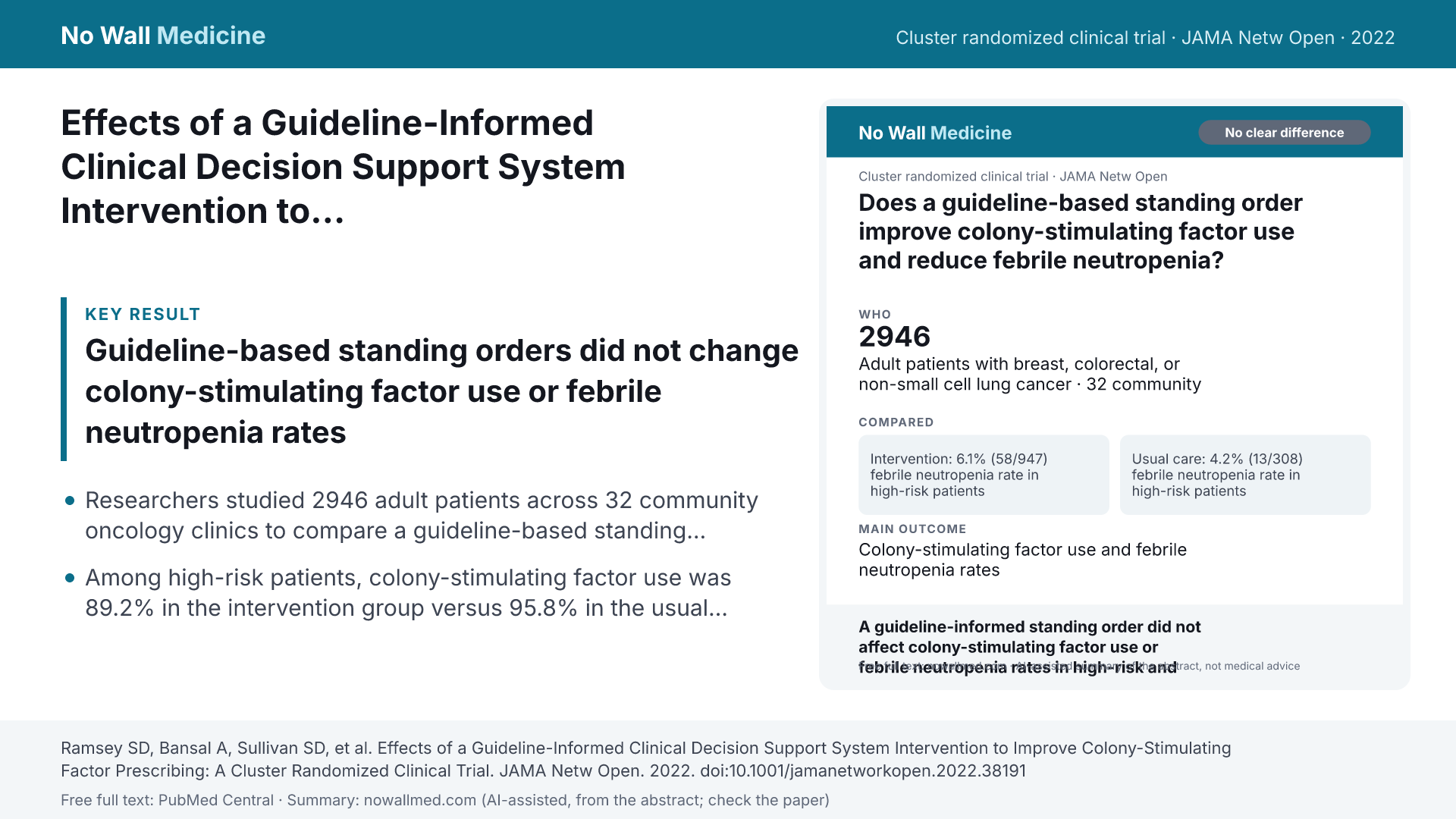
Guideline-based standing orders did not change colony-stimulating factor use or febrile neutropenia rates
Effects of a Guideline-Informed Clinical Decision Support System Intervention to Improve Colony-Stimulating Factor Prescribing: A Cluster Randomized Clinical Trial
Cluster randomized clinical trialNo clear difference
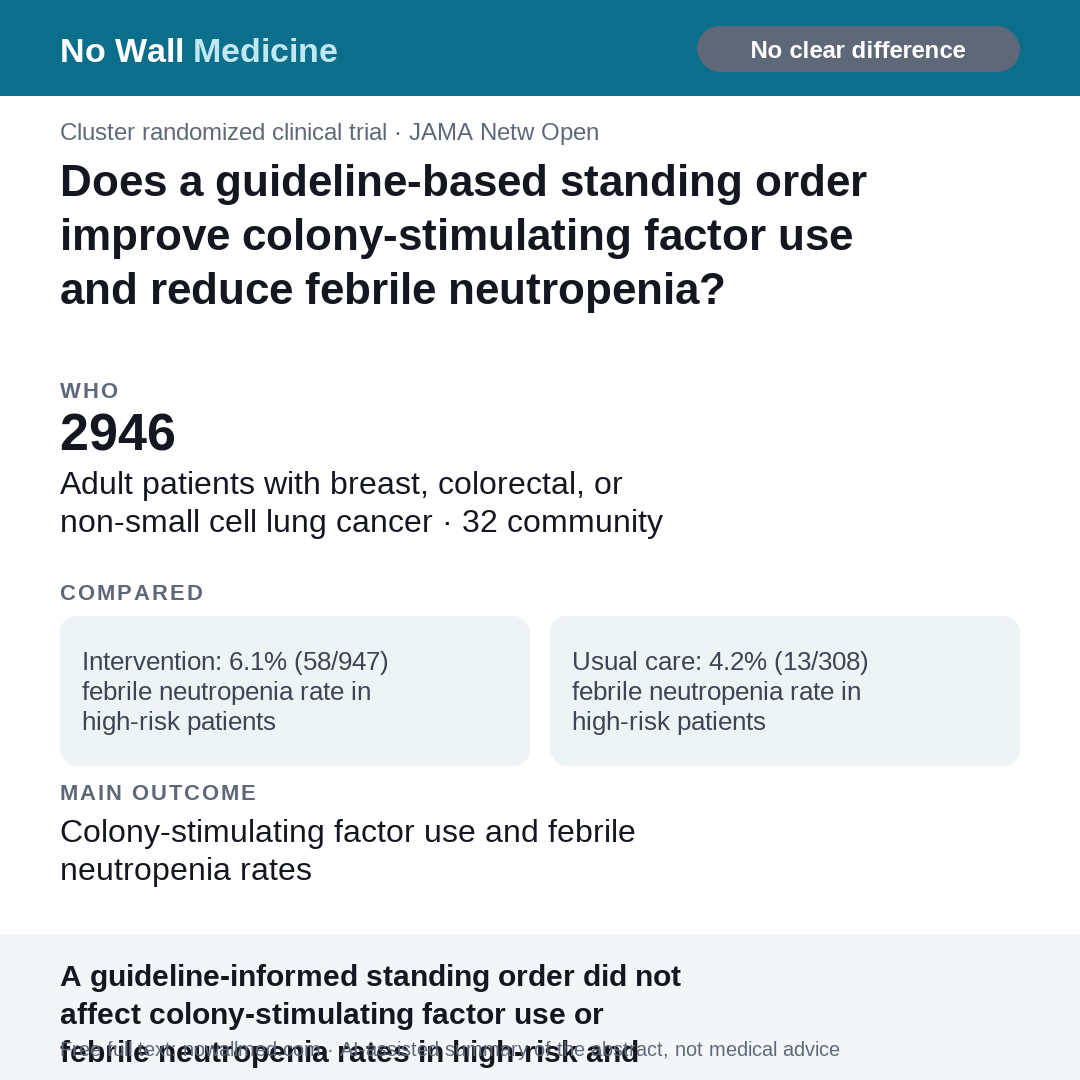
Does a guideline-based standing order improve colony-stimulating factor use and reduce febrile neutropenia?
Who
2946
Adult patients with breast, colorectal, or non-small cell lung cancer · 32 community oncology clinics in the US
Compared
Intervention: 6.1% (58/947) febrile neutropenia rate in high-risk patients
Usual care: 4.2% (13/308) febrile neutropenia rate in high-risk patients
Main outcome
Colony-stimulating factor use and febrile neutropenia rates
Bottom line: A guideline-informed standing order did not affect colony-stimulating factor use or febrile neutropenia rates in high-risk and low-risk patients.
JAMA Netw Open · 2022-10-03Download image
Clinical question: Does a guideline-based standing order improve colony-stimulating factor use and reduce febrile neutropenia?
Why it matters: It was unknown if a guideline-based standing order system could improve the use of colony-stimulating factors and reduce febrile neutropenia, a condition involving fever and low white blood cell counts.
Key points
- Researchers studied 2946 adult patients across 32 community oncology clinics to compare a guideline-based standing order system against usual care.
- Among high-risk patients, colony-stimulating factor use was 89.2% in the intervention group versus 95.8% in the usual care group, and febrile neutropenia rates were not significantly different.
- For low-risk patients, colony-stimulating factor use was 6.3% in the intervention group versus 5.5% in the usual care group, with no significant difference in febrile neutropenia rates.
Headline and key points written with AI from the paper’s abstract, with every number checked against it. Read the paper before relying on them.
Was this summary helpful?
Subject terms
Cite this article
Ramsey SD, Bansal A, Sullivan SD, et al. Effects of a Guideline-Informed Clinical Decision Support System Intervention to Improve Colony-Stimulating Factor Prescribing: A Cluster Randomized Clinical Trial. JAMA Netw Open. 2022. doi:10.1001/jamanetworkopen.2022.38191
Spotted a mistake? Suggest a correction