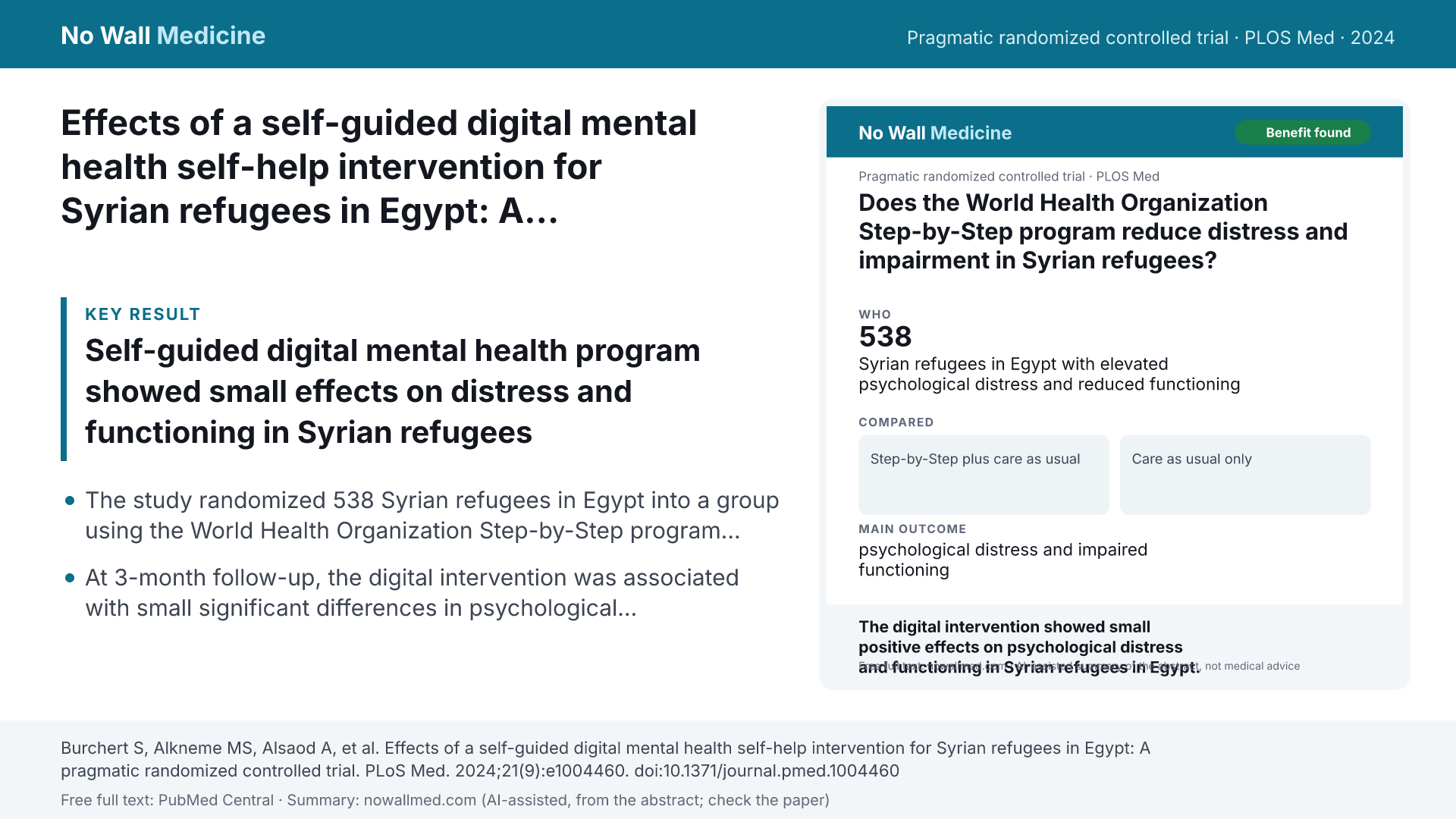
Effects of a self-guided digital mental health self-help intervention for Syrian refugees in Egypt: A pragmatic randomized controlled trial
Key result: Self-guided digital mental health program showed small effects on distress and functioning in Syrian refugees
Key points
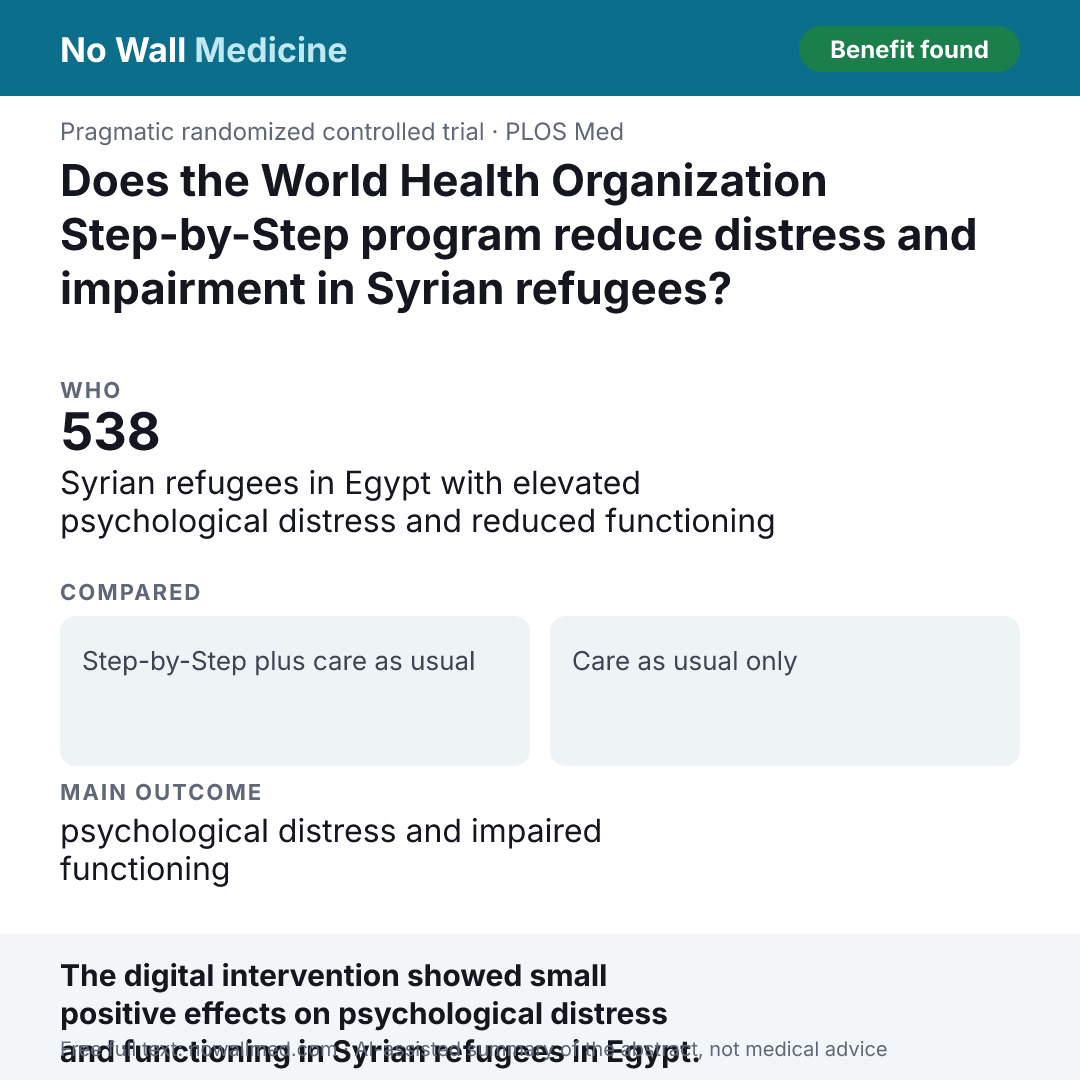
- The study randomized 538 Syrian refugees in Egypt into a group using the World Health Organization Step-by-Step program plus usual care or a group receiving usual care only.
- At 3-month follow-up, the digital intervention was associated with small significant differences in psychological distress (mean difference: -0.15) and functional impairment (mean difference: -2.04).
- There were no significant differences between the groups regarding posttraumatic stress disorder symptoms or self-identified problems, and remission rates did not differ.
Limitation the authors note: The authors stated that the main limitations were high intervention dropout and low utilization of the contact-on-demand support.
Discussion prompts
- Would these patients look like yours? Who was left out?
- Is the main outcome one that matters to patients?
- Is the difference large enough to change what you do?
Cite: Burchert S, Alkneme MS, Alsaod A, et al. Effects of a self-guided digital mental health self-help intervention for Syrian refugees in Egypt: A pragmatic randomized controlled trial. PLoS Med. 2024;21(9):e1004460. doi:10.1371/journal.pmed.1004460
Free full text: PubMed Central · Summary and visual abstract: nowallmed.com/a/effects-of-a-self-guided-digital-mental-health-self-help-intervention-1nzvaml/ (AI-assisted from the abstract; check the paper before relying on it).