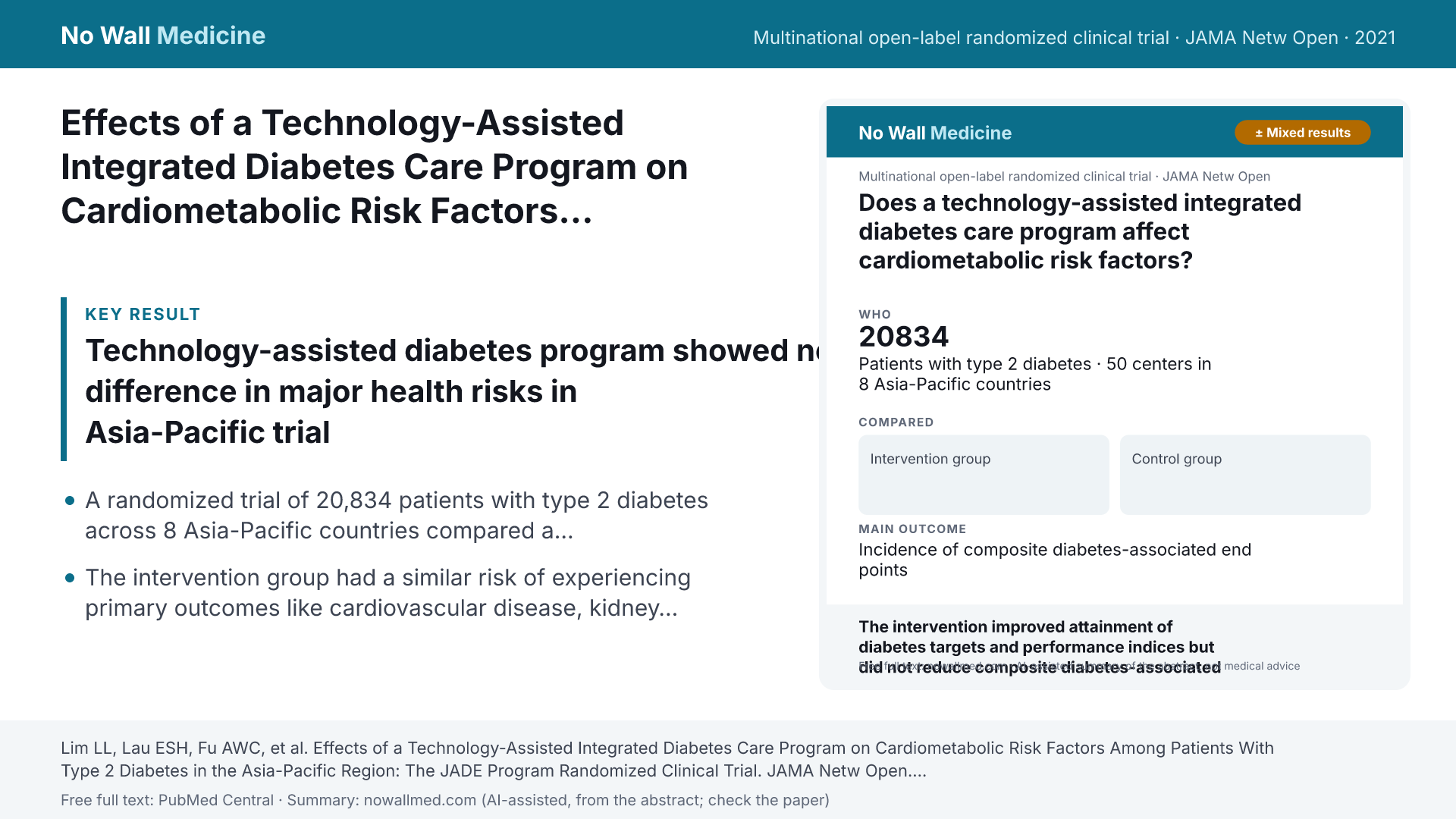
Technology-assisted diabetes program showed no difference in major health risks in Asia-Pacific trial
Effects of a Technology-Assisted Integrated Diabetes Care Program on Cardiometabolic Risk Factors Among Patients With Type 2 Diabetes in the Asia-Pacific Region: The JADE Program Randomized Clinical Trial
Multinational open-label randomized clinical trialMixed results
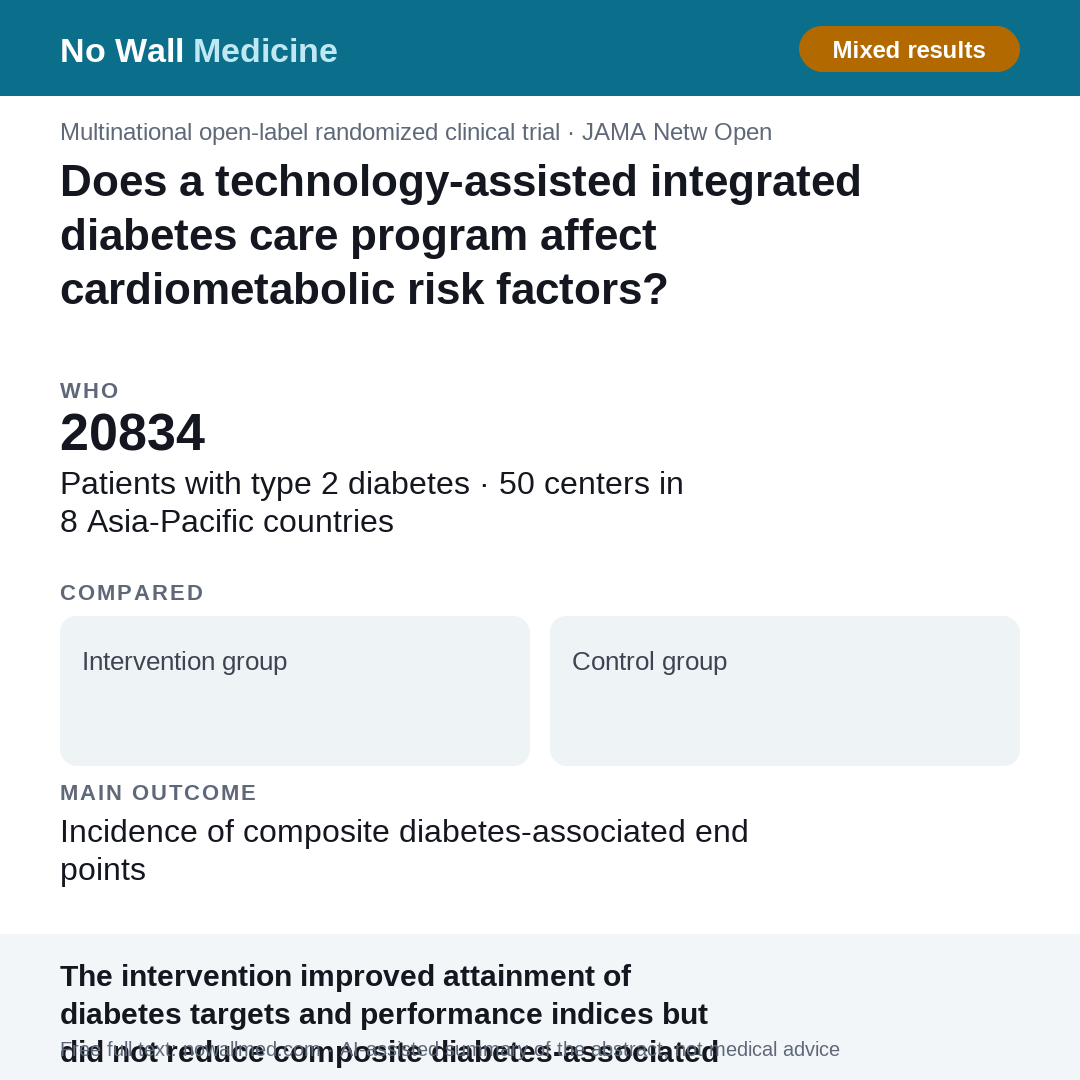
Does a technology-assisted integrated diabetes care program affect cardiometabolic risk factors?
Who
20834
Patients with type 2 diabetes · 50 centers in 8 Asia-Pacific countries
Compared
Intervention group
Control group
Main outcome
Incidence of composite diabetes-associated end points
Bottom line: The intervention improved attainment of diabetes targets and performance indices but did not reduce composite diabetes-associated end points.
JAMA Netw Open · 2021-04-01Download image
Clinical question: Does a technology-assisted integrated diabetes care program affect cardiometabolic risk factors?
Why it matters: Health care systems in low- and middle-income countries may lack the resources needed to manage the increasing number of patients with type 2 diabetes.
Key points
- A randomized trial of 20,834 patients with type 2 diabetes across 8 Asia-Pacific countries compared a technology-guided program with nurse contact to standard care.
- The intervention group had a similar risk of experiencing primary outcomes like cardiovascular disease, kidney disease, or death compared to the control group.
- The intervention group had a greater likelihood of attaining 2 or more primary targets, such as blood pressure or blood sugar goals, in both study phases.
Headline and key points written with AI from the paper’s abstract, with every number checked against it. Read the paper before relying on them.
Was this summary helpful?
Subject terms
Cite this article
Lim LL, Lau ESH, Fu AWC, et al. Effects of a Technology-Assisted Integrated Diabetes Care Program on Cardiometabolic Risk Factors Among Patients With Type 2 Diabetes in the Asia-Pacific Region: The JADE Program Randomized Clinical Trial. JAMA Netw Open. 2021. doi:10.1001/jamanetworkopen.2021.7557
Spotted a mistake? Suggest a correction