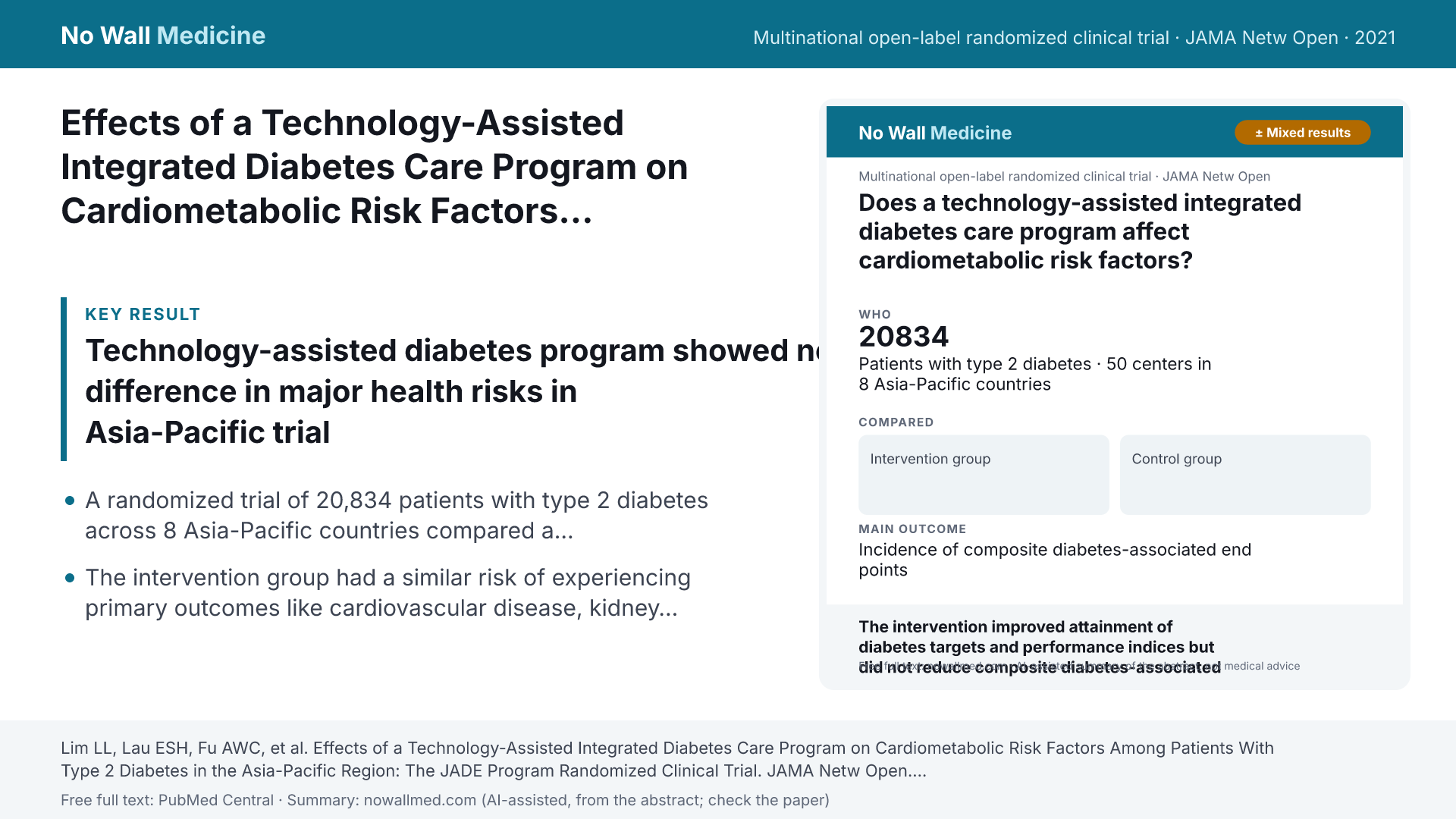
Effects of a Technology-Assisted Integrated Diabetes Care Program on Cardiometabolic Risk Factors Among Patients With Type 2 Diabetes in the Asia-Pacific Region: The JADE Program Randomized Clinical Trial
Key result: Technology-assisted diabetes program showed no difference in major health risks in Asia-Pacific trial
Key points
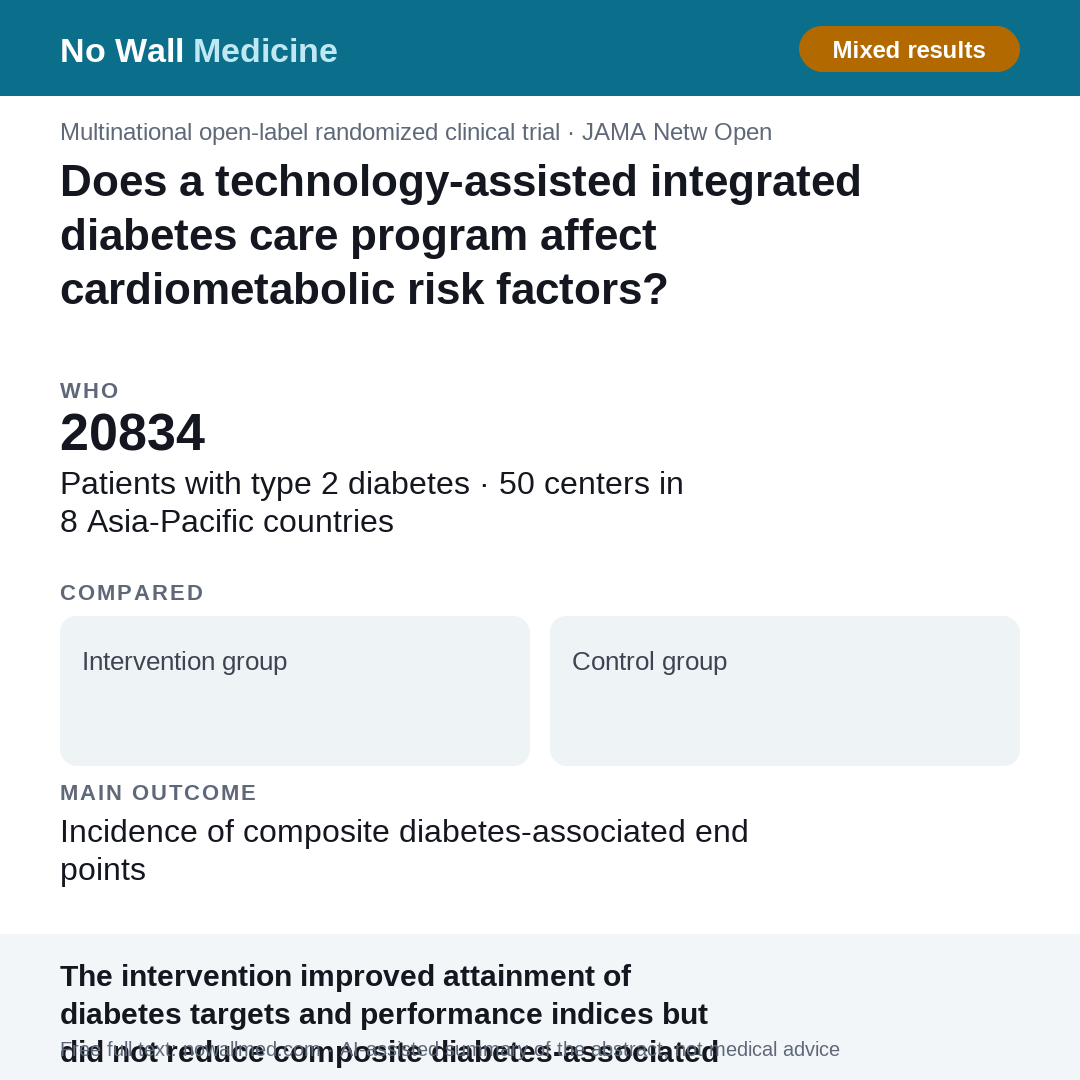
- A randomized trial of 20,834 patients with type 2 diabetes across 8 Asia-Pacific countries compared a technology-guided program with nurse contact to standard care.
- The intervention group had a similar risk of experiencing primary outcomes like cardiovascular disease, kidney disease, or death compared to the control group.
- The intervention group had a greater likelihood of attaining 2 or more primary targets, such as blood pressure or blood sugar goals, in both study phases.
Why it matters: Health care systems in low- and middle-income countries may lack the resources needed to manage the increasing number of patients with type 2 diabetes.
Discussion prompts
- Would these patients look like yours? Who was left out?
- Is the main outcome one that matters to patients?
- Is the difference large enough to change what you do?
Cite: Lim LL, Lau ESH, Fu AWC, et al. Effects of a Technology-Assisted Integrated Diabetes Care Program on Cardiometabolic Risk Factors Among Patients With Type 2 Diabetes in the Asia-Pacific Region: The JADE Program Randomized Clinical Trial. JAMA Netw Open. 2021. doi:10.1001/jamanetworkopen.2021.7557
Free full text: PubMed Central · Summary and visual abstract: nowallmed.com/a/effects-of-a-technology-assisted-integrated-diabetes-care-program-on-1kjf6wd/ (AI-assisted from the abstract; check the paper before relying on it).