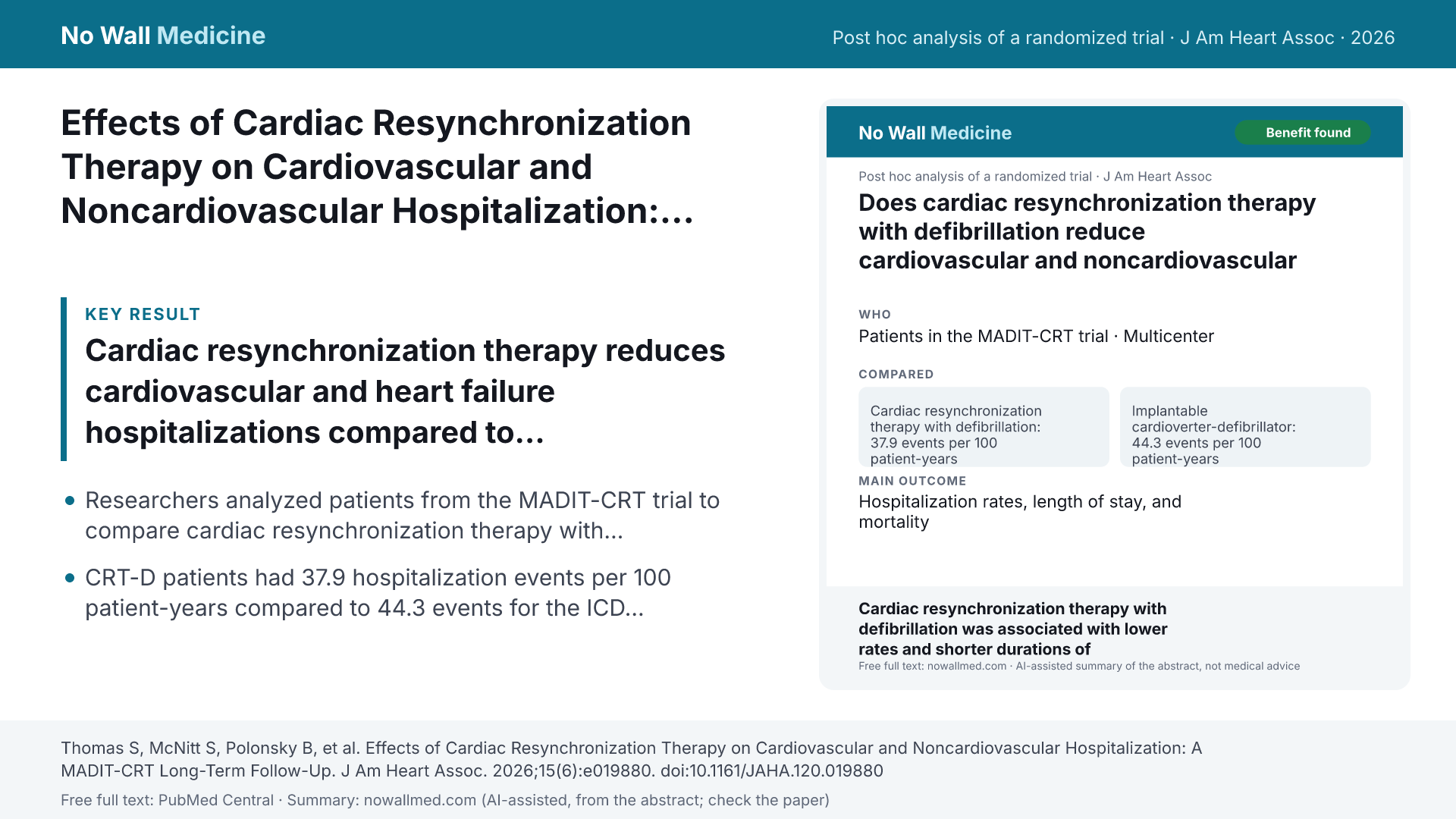
Cardiac resynchronization therapy reduces cardiovascular and heart failure hospitalizations compared to defibrillators alone
Effects of Cardiac Resynchronization Therapy on Cardiovascular and Noncardiovascular Hospitalization: A MADIT-CRT Long-Term Follow-Up
Post hoc analysis of a randomized trialBenefit found
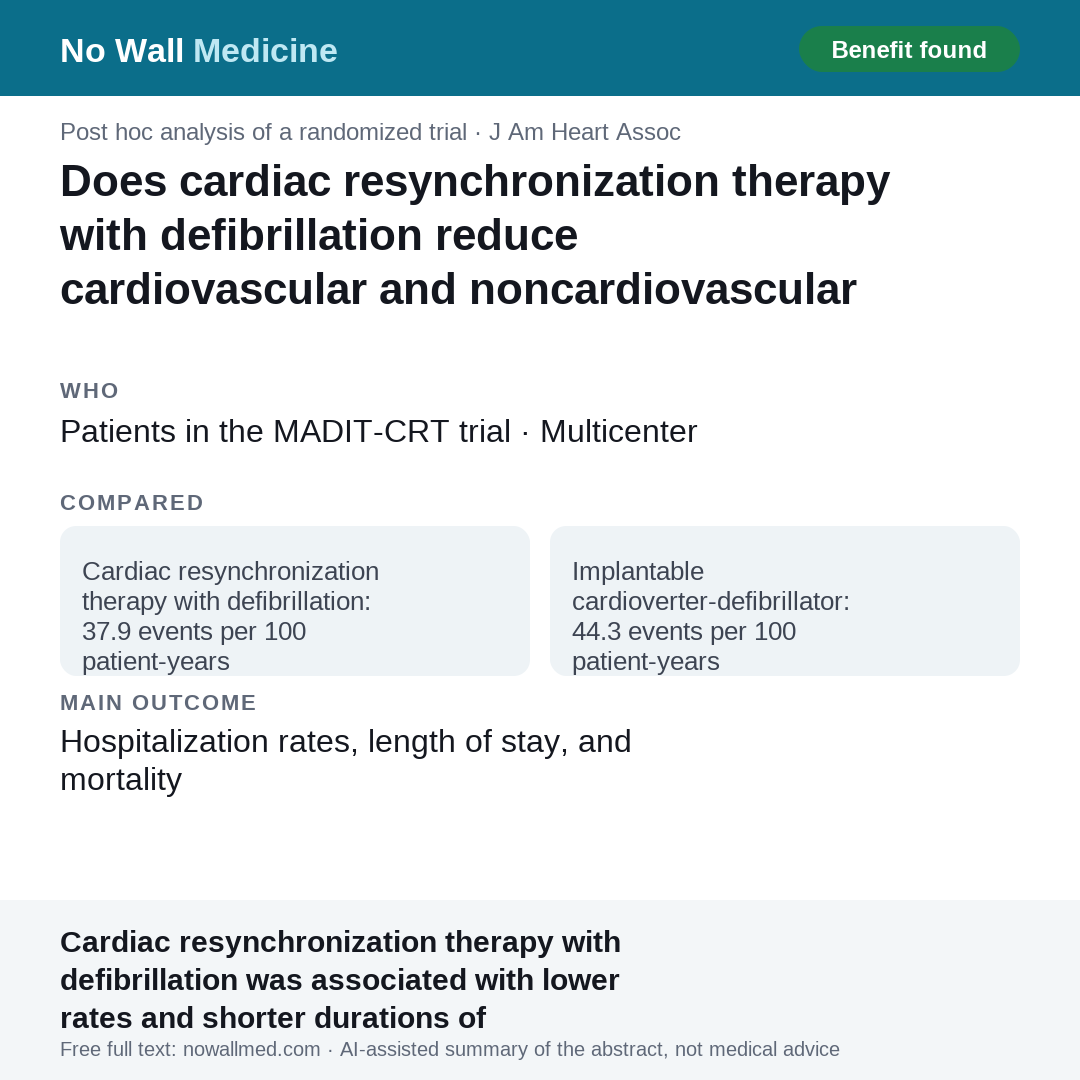
Does cardiac resynchronization therapy with defibrillation reduce cardiovascular and noncardiovascular hospitalizations?
Who
Patients in the MADIT-CRT trial · Multicenter
Compared
Cardiac resynchronization therapy with defibrillation: 37.9 events per 100 patient-years
Implantable cardioverter-defibrillator: 44.3 events per 100 patient-years
Main outcome
Hospitalization rates, length of stay, and mortality
Bottom line: Cardiac resynchronization therapy with defibrillation was associated with lower rates and shorter durations of cardiovascular hospitalizations.
J Am Heart Assoc · 2026-02-27Download image
Clinical question: Does cardiac resynchronization therapy with defibrillation reduce cardiovascular and noncardiovascular hospitalizations?
Why it matters: The long-term impact of cardiac resynchronization therapy with defibrillation on different types of hospitalizations remained unknown.
Key points
- Researchers analyzed patients from the MADIT-CRT trial to compare cardiac resynchronization therapy with defibrillation (CRT-D) against an implantable cardioverter-defibrillator (ICD).
- CRT-D patients had 37.9 hospitalization events per 100 patient-years compared to 44.3 events for the ICD group, including lower rates of heart failure hospitalizations.
- The average length of stay for cardiovascular hospitalizations was 6.7±0.89 days with CRT-D versus 7.7±0.68 days with ICD, while noncardiovascular hospitalizations showed no difference.
Headline and key points written with AI from the paper’s abstract, with every number checked against it. Read the paper before relying on them.
Was this summary helpful?
Subject terms
Cite this article
Thomas S, McNitt S, Polonsky B, et al. Effects of Cardiac Resynchronization Therapy on Cardiovascular and Noncardiovascular Hospitalization: A MADIT-CRT Long-Term Follow-Up. J Am Heart Assoc. 2026. doi:10.1161/JAHA.120.019880
Spotted a mistake? Suggest a correction