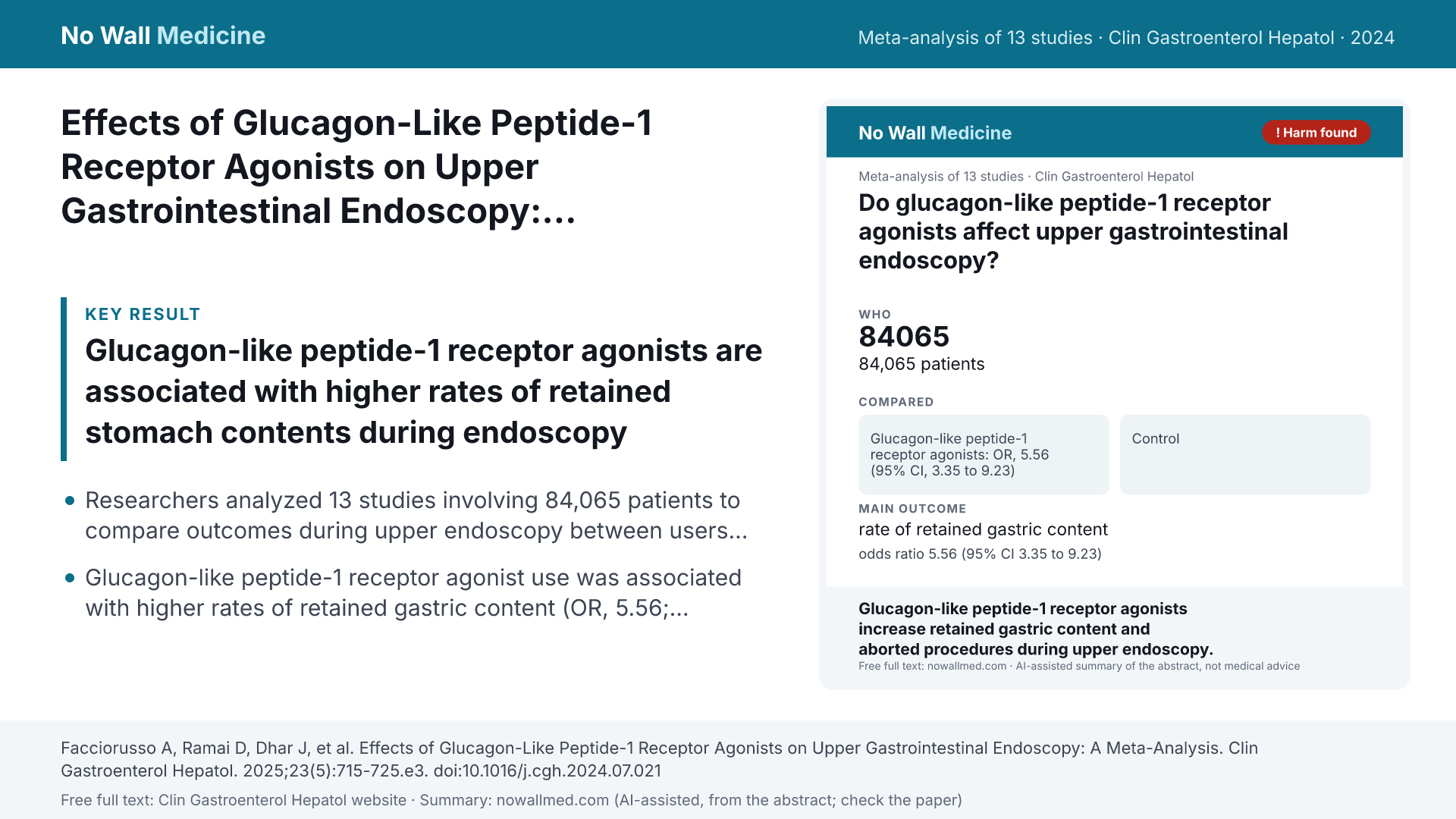
Effects of Glucagon-Like Peptide-1 Receptor Agonists on Upper Gastrointestinal Endoscopy: A Meta-Analysis
Key result: Glucagon-like peptide-1 receptor agonists are associated with higher rates of retained stomach contents during endoscopy
Key points
- Researchers analyzed 13 studies involving 84,065 patients to compare outcomes during upper endoscopy between users and non-users of glucagon-like peptide-1 receptor agonists.
- Glucagon-like peptide-1 receptor agonist use was associated with higher rates of retained gastric content (OR, 5.56; 95% CI, 3.35 to 9.23) and aborted procedures (OR, 5.13; 95% CI, 3.01 to 8.75).
- No significant differences were found between the groups regarding adverse event rates (OR, 4.04; 95% CI, 0.63 to 26.03) or aspiration rates (OR, 1.75; 95% CI, 0.64 to 4.77).
Why it matters: The impact of glucagon-like peptide-1 receptor agonists on upper gastrointestinal endoscopy procedures is currently supported by limited evidence.
Discussion prompts
- Would these patients look like yours? Who was left out?
- Is the main outcome one that matters to patients?
- Is the difference large enough to change what you do?
Cite: Facciorusso A, Ramai D, Dhar J, et al. Effects of Glucagon-Like Peptide-1 Receptor Agonists on Upper Gastrointestinal Endoscopy: A Meta-Analysis. Clin Gastroenterol Hepatol. 2025;23(5):715-725.e3. doi:10.1016/j.cgh.2024.07.021
Free full text: Clin Gastroenterol Hepatol website · Summary and visual abstract: nowallmed.com/a/effects-of-glucagon-like-peptide-1-receptor-agonists-on-upper-qssvrv/ (AI-assisted from the abstract; check the paper before relying on it).