Effects of Gonadotropin-Releasing Hormone Analogs on Ovarian Function Against Chemotherapy-Induced Gonadotoxic Effects in Premenopausal Women With Breast Cancer in China: A Randomized Clinical Trial
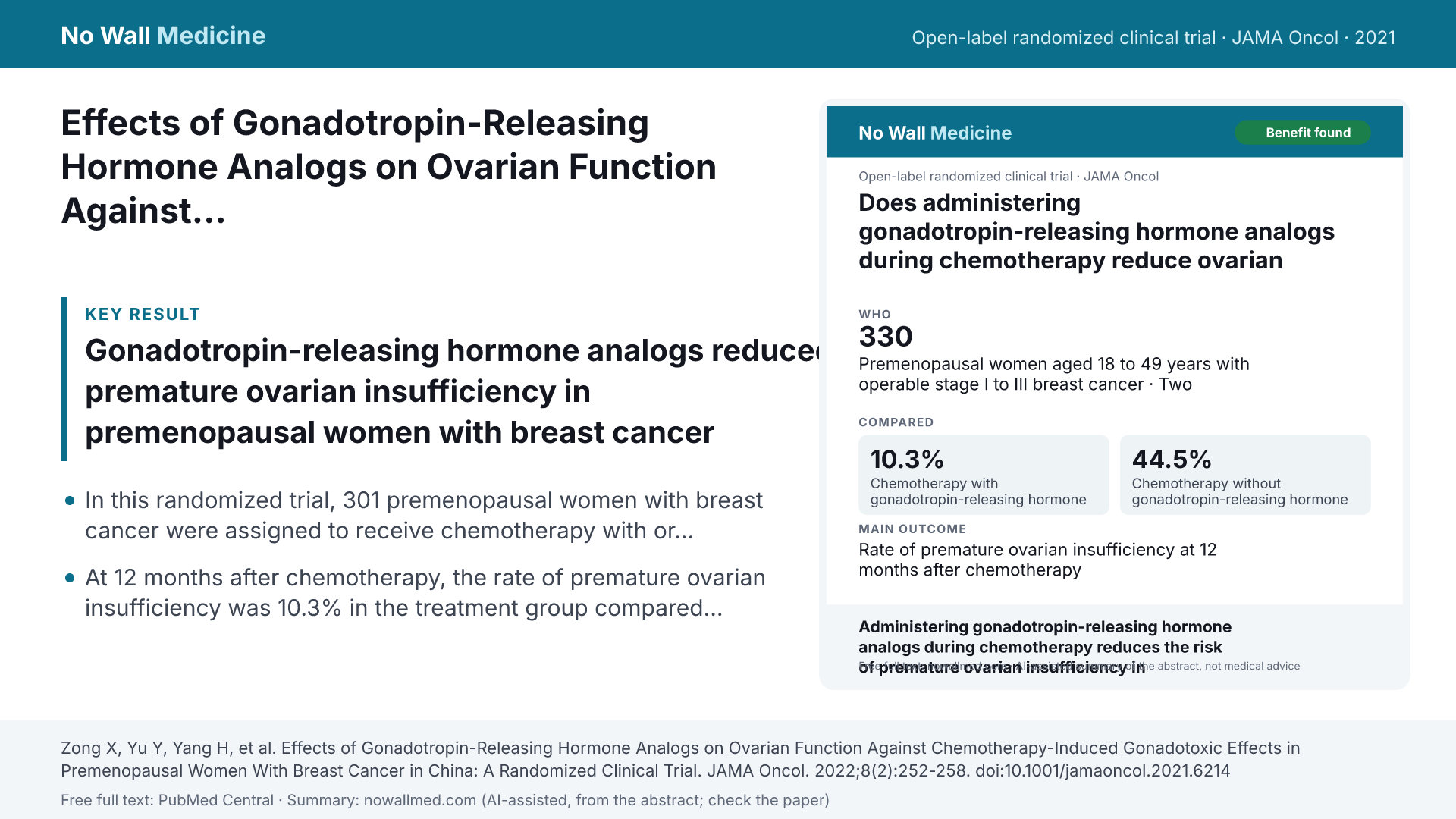
Key result: Gonadotropin-releasing hormone analogs reduced premature ovarian insufficiency in premenopausal women with breast cancer
Key points
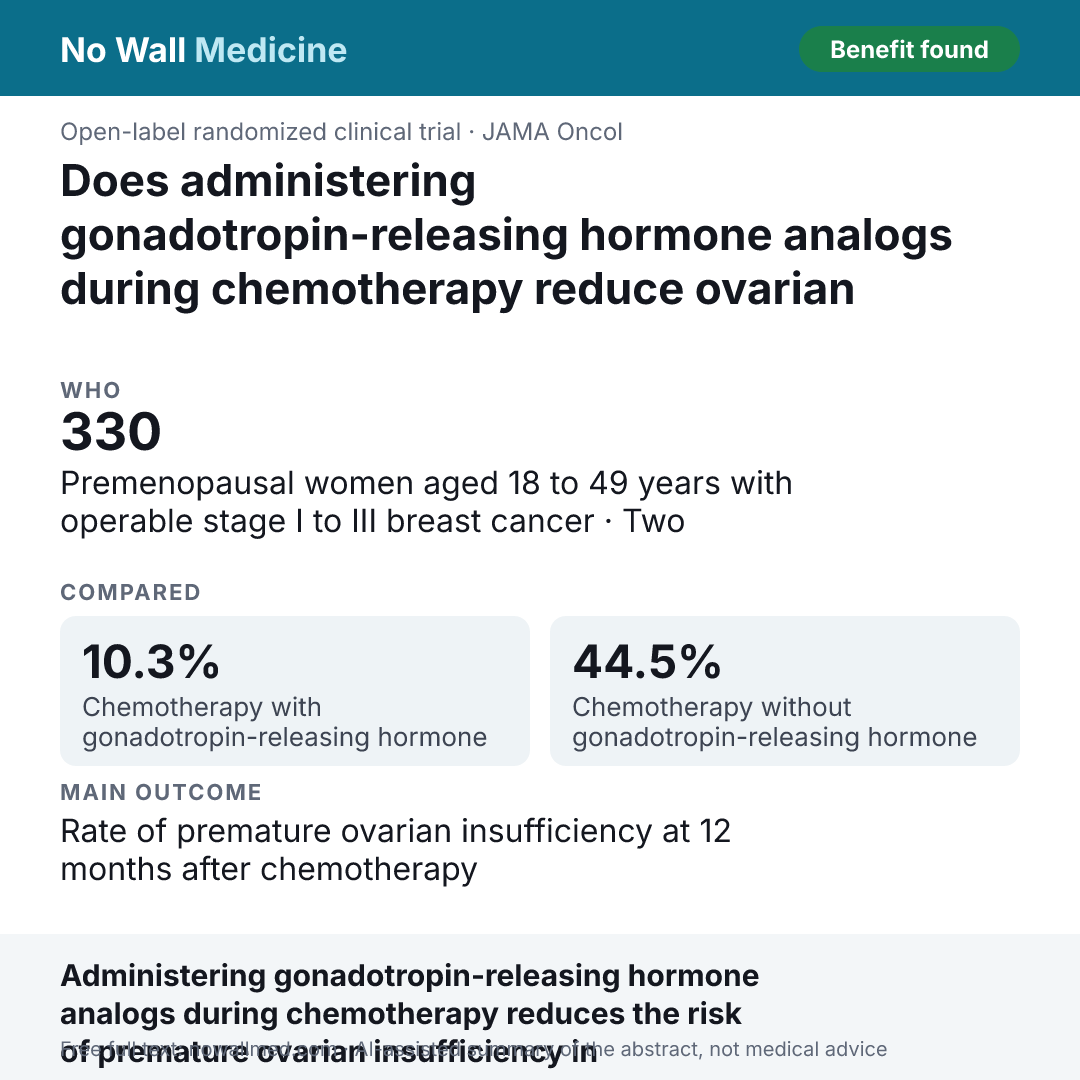
- In this randomized trial, 301 premenopausal women with breast cancer were assigned to receive chemotherapy with or without gonadotropin-releasing hormone analogs.
- At 12 months after chemotherapy, the rate of premature ovarian insufficiency was 10.3% in the treatment group compared to 44.5% in the control group.
- The study found no significant difference in 4-year overall survival or tumor-free survival between the two groups after a median follow-up of 49 months.
Why it matters: Studies regarding the use of gonadotropin-releasing hormone analogs to protect ovarian function have shown mixed results.
Discussion prompts
- Would these patients look like yours? Who was left out?
- Is the main outcome one that matters to patients?
- Is the difference large enough to change what you do?
Cite: Zong X, Yu Y, Yang H, et al. Effects of Gonadotropin-Releasing Hormone Analogs on Ovarian Function Against Chemotherapy-Induced Gonadotoxic Effects in Premenopausal Women With Breast Cancer in China: A Randomized Clinical Trial. JAMA Oncol. 2021. doi:10.1001/jamaoncol.2021.6214
Free full text: PubMed Central · Summary and visual abstract: nowallmed.com/a/effects-of-gonadotropin-releasing-hormone-analogs-on-ovarian-function-uyl4e3/ (AI-assisted from the abstract; check the paper before relying on it).