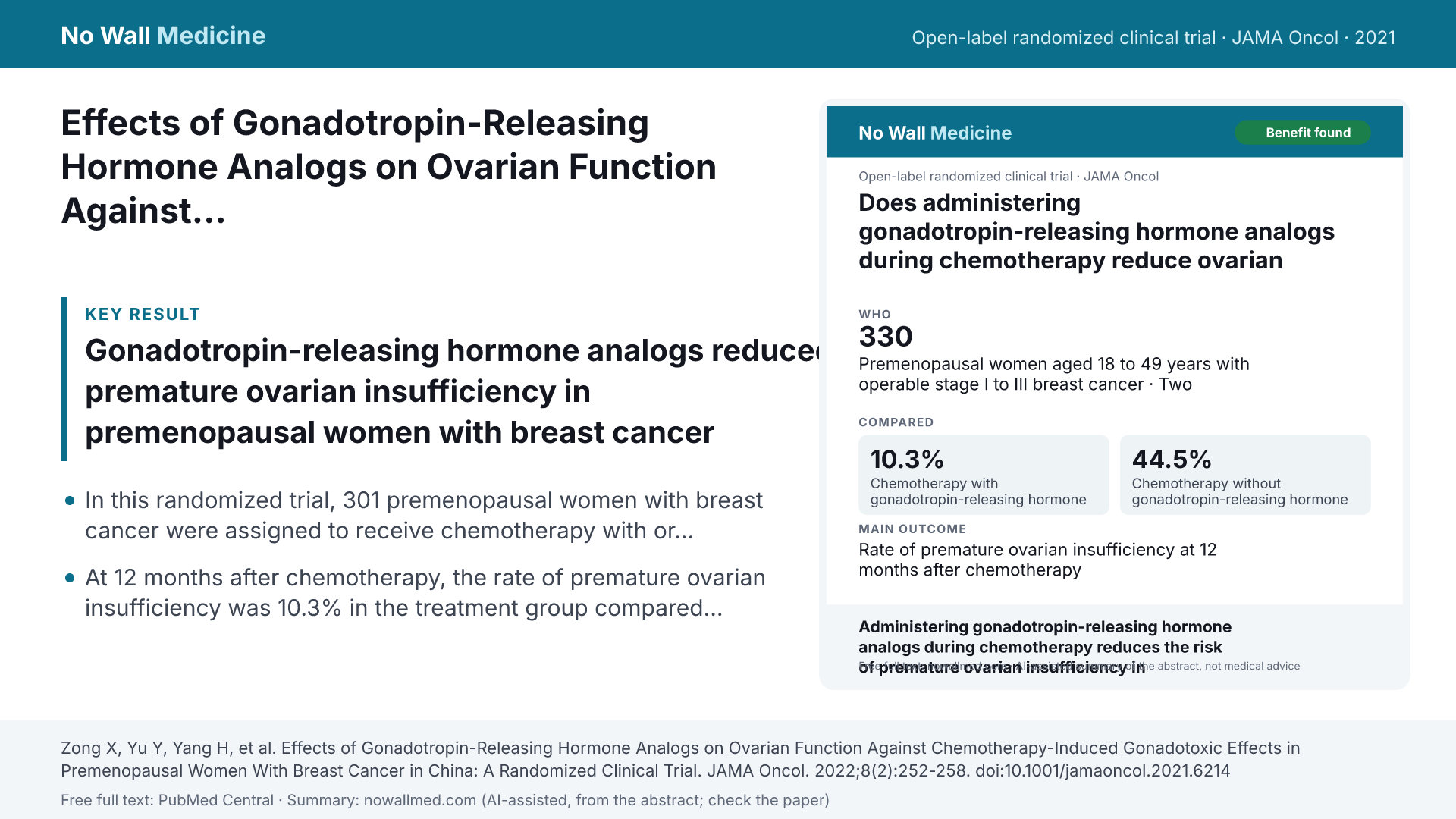
Gonadotropin-releasing hormone analogs reduced premature ovarian insufficiency in premenopausal women with breast cancer
Effects of Gonadotropin-Releasing Hormone Analogs on Ovarian Function Against Chemotherapy-Induced Gonadotoxic Effects in Premenopausal Women With Breast Cancer in China: A Randomized Clinical Trial
Open-label randomized clinical trialBenefit found
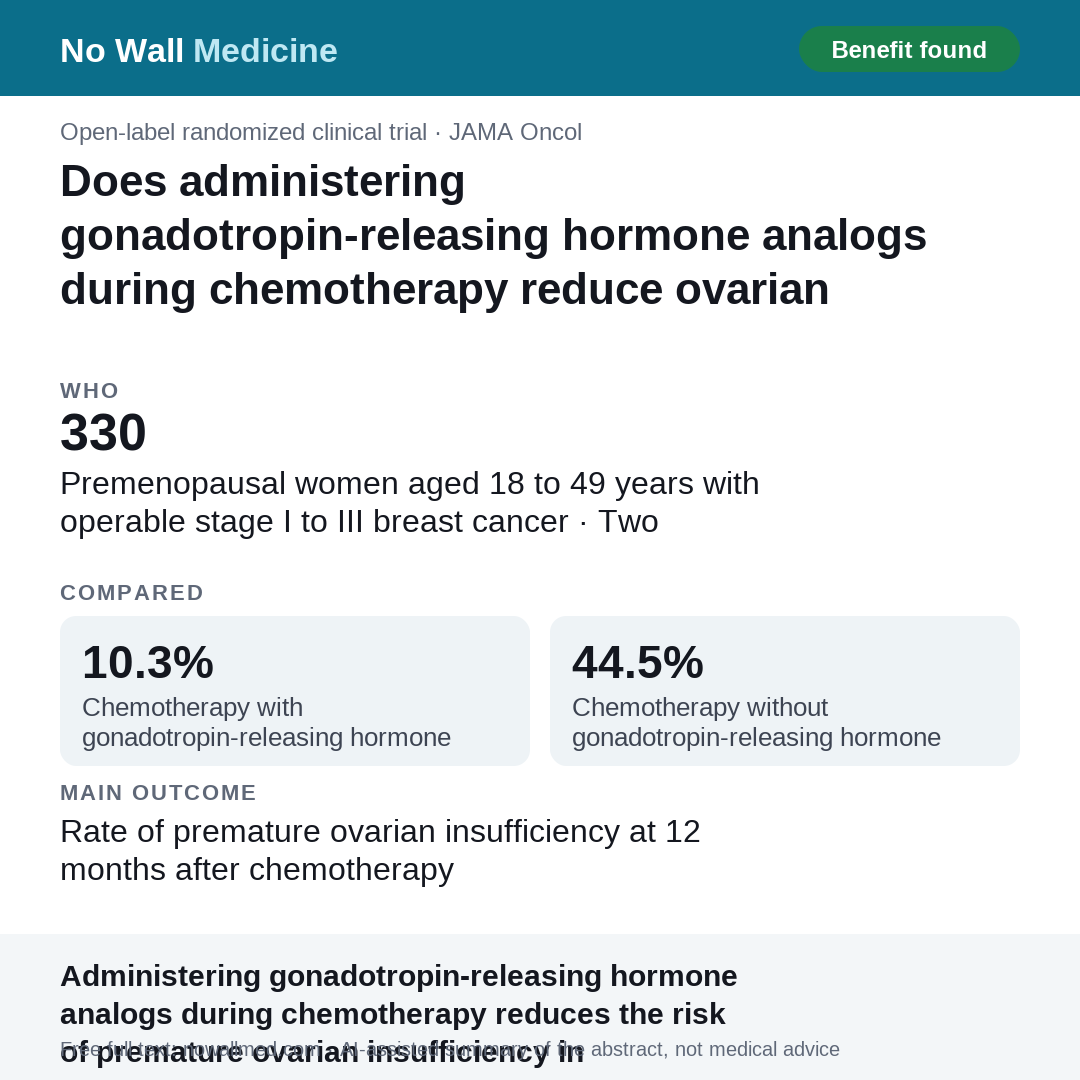
Does administering gonadotropin-releasing hormone analogs during chemotherapy reduce ovarian impairment in premenopausal women?
Who
330
Premenopausal women aged 18 to 49 years with operable stage I to III breast cancer · Two hospitals in China
Compared
10.3%Chemotherapy with gonadotropin-releasing hormone analogs (15 of 146)
44.5%Chemotherapy without gonadotropin-releasing hormone analogs (69 of 155)
Main outcome
Rate of premature ovarian insufficiency at 12 months after chemotherapy
Result: odds ratio 0.23 (95% CI 0.14-0.39)
Bottom line: Administering gonadotropin-releasing hormone analogs during chemotherapy reduces the risk of premature ovarian insufficiency in premenopausal breast cancer patients.
JAMA Oncol · 2021-12-31Download image
Clinical question: Does administering gonadotropin-releasing hormone analogs during chemotherapy reduce ovarian impairment in premenopausal women?
Why it matters: Studies regarding the use of gonadotropin-releasing hormone analogs to protect ovarian function have shown mixed results.
Key points
- In this randomized trial, 301 premenopausal women with breast cancer were assigned to receive chemotherapy with or without gonadotropin-releasing hormone analogs.
- At 12 months after chemotherapy, the rate of premature ovarian insufficiency was 10.3% in the treatment group compared to 44.5% in the control group.
- The study found no significant difference in 4-year overall survival or tumor-free survival between the two groups after a median follow-up of 49 months.
Headline and key points written with AI from the paper’s abstract, with every number checked against it. Read the paper before relying on them.
Was this summary helpful?
Subject terms
Cite this article
Zong X, Yu Y, Yang H, Chen W, Ding X, Liu S. Effects of Gonadotropin-Releasing Hormone Analogs on Ovarian Function Against Chemotherapy-Induced Gonadotoxic Effects in Premenopausal Women With Breast Cancer in China: A Randomized Clinical Trial. JAMA Oncol. 2021. doi:10.1001/jamaoncol.2021.6214
Spotted a mistake? Suggest a correction
Top studies every Monday
The week’s key trials and guidelines in your specialties, plus any topics you follow. By email, free.
Get the weekly digest