High-protein diets increase kidney filtration rate but do not show evidence of renal injury
Effects of High-Protein Diets on Renal Function and Body Composition in Adults Without Chronic Kidney Disease: A Systematic Review and Meta-Analysis of Randomised Trials
Systematic review and meta-analysis of 22 randomized controlled trialsMixed results
Do high-protein diets affect renal function and body composition in adults without chronic kidney disease?
Who
Adults without chronic kidney disease
Compared
High-protein diets
Normal- or low-protein diets
Main outcome
estimated glomerular filtration rate and serum creatinine
Result: standardised mean difference 0.39 (95% confidence interval 0.09-0.69) for eGFR
Bottom line: High-protein diets increased estimated glomerular filtration rate but did not significantly change serum creatinine in adults without chronic kidney disease.
Limitation: Most studies were relatively short duration and relied on creatinine-based estimates of renal function.
Diabetes Obes Metab · 2026-06-14Download image
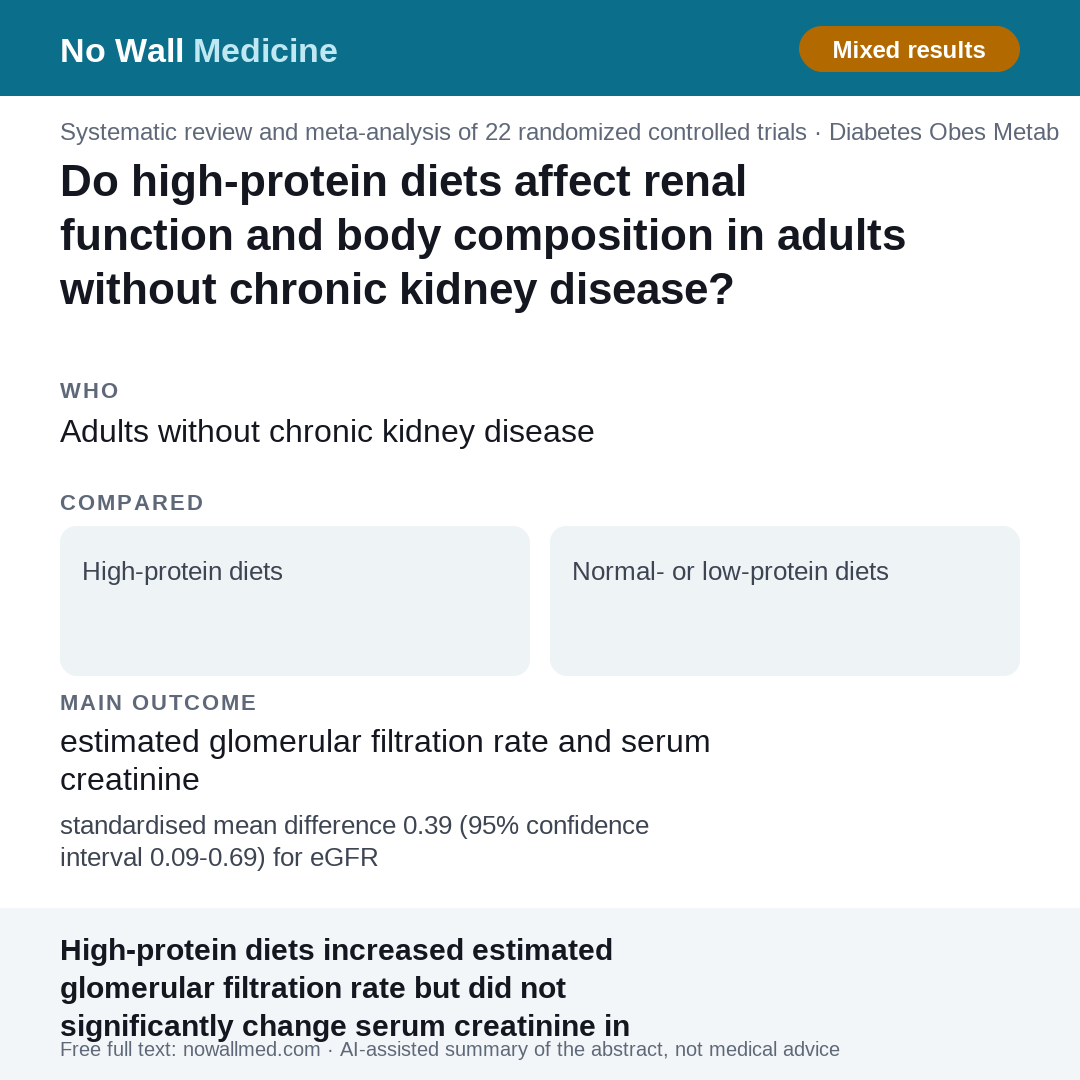
Clinical question: Do high-protein diets affect renal function and body composition in adults without chronic kidney disease?
Why it matters: Concerns persist regarding whether high-protein diets impact kidney function through diet-induced hyperfiltration, which is an increased rate of blood filtering through the kidneys.
Key points
- Researchers analyzed 22 randomized controlled trials involving adults without chronic kidney disease to compare high-protein diets against normal- or low-protein diets.
- High-protein diets increased the estimated glomerular filtration rate, a measure of kidney function, with a standardized mean difference of 0.39.
- High-protein diets reduced body fat percentage and total fat mass but did not significantly change fat-free mass or serum creatinine levels.
Limitation the authors note: Most included studies were of relatively short duration and frequently relied on creatinine-based estimates of kidney function.
Headline and key points written with AI from the paper’s abstract, with every number checked against it. Read the paper before relying on them.
Topics
Cite this article
Teixeira Silva PR, Santos P, de Miranda Silva Nogueira PA, Nogueira IDB, Vieira RP, Nascimento MF. Effects of High-Protein Diets on Renal Function and Body Composition in Adults Without Chronic Kidney Disease: A Systematic Review and Meta-Analysis of Randomised Trials. Diabetes Obes Metab. 2026. doi:10.1111/dom.70996
Spotted a mistake? Suggest a correction