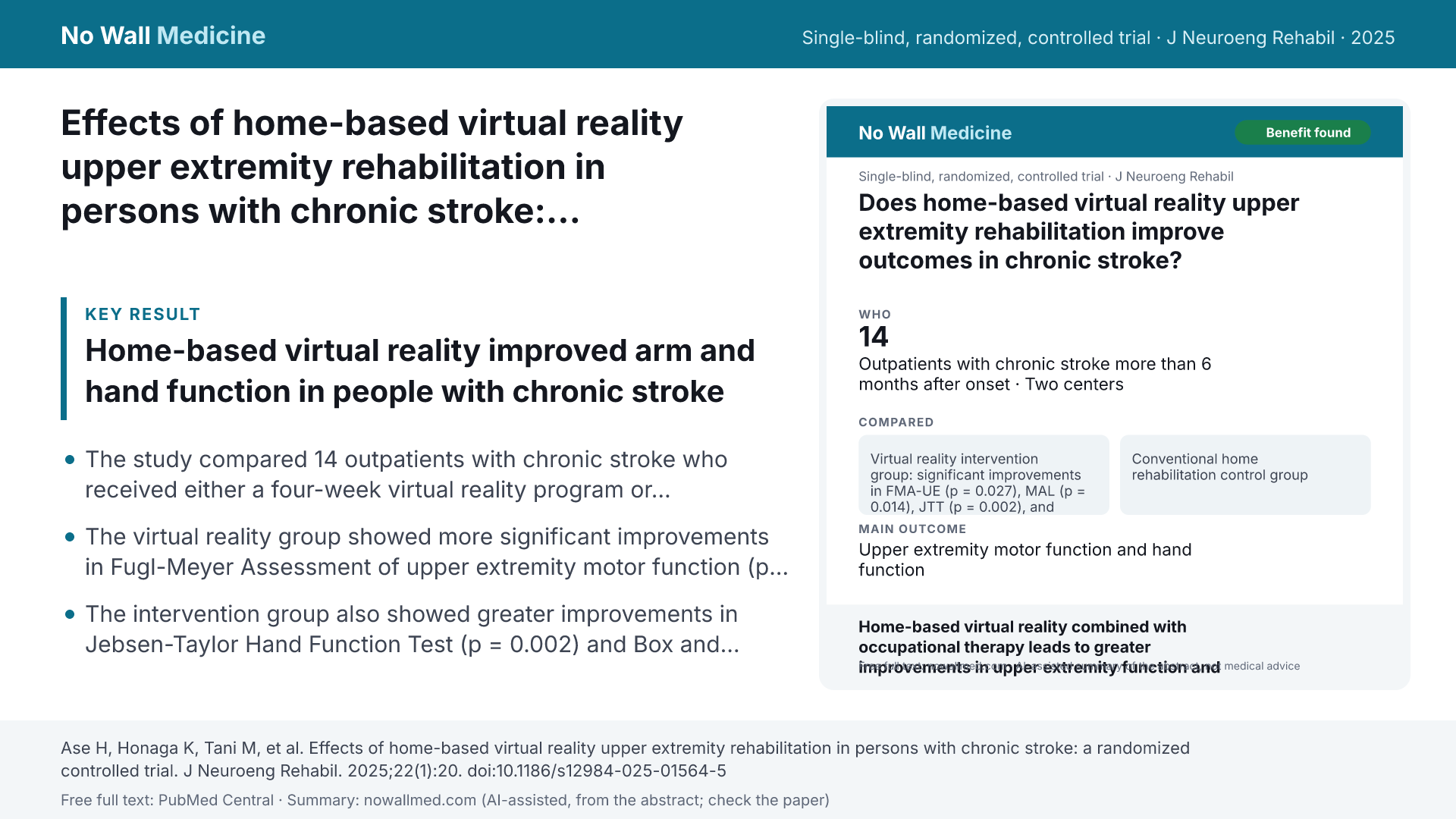
Effects of home-based virtual reality upper extremity rehabilitation in persons with chronic stroke: a randomized controlled trial
Key result: Home-based virtual reality improved arm and hand function in people with chronic stroke
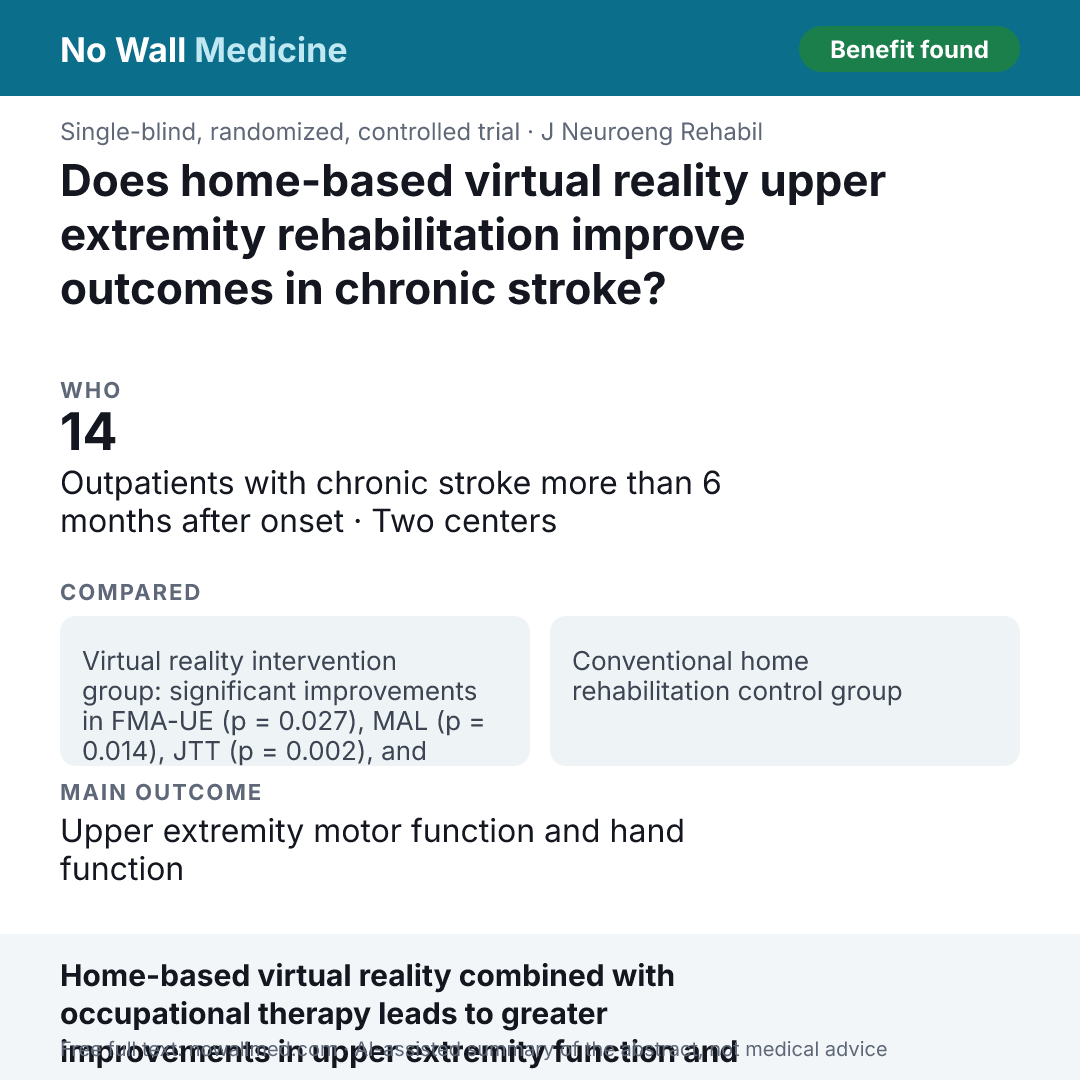
Single-blind, randomized, controlled trialBenefit found
Does home-based virtual reality upper extremity rehabilitation improve outcomes in chronic stroke?
Who
14
Outpatients with chronic stroke more than 6 months after onset · Two centers
Compared
Virtual reality intervention group: significant improvements in FMA-UE (p = 0.027), MAL (p = 0.014), JTT (p = 0.002), and BBT (p = 0.014)
Conventional home rehabilitation control group
Main outcome
Upper extremity motor function and hand function
Bottom line: Home-based virtual reality combined with occupational therapy leads to greater improvements in upper extremity function and paretic hand use.
J Neuroeng Rehabil · 2025-02-03 · Save PNG
Key points
- The study compared 14 outpatients with chronic stroke who received either a four-week virtual reality program or a conventional home rehabilitation program.
- The virtual reality group showed more significant improvements in Fugl-Meyer Assessment of upper extremity motor function (p = 0.027) and Motor Activity Log-14 (p = 0.014).
- The intervention group also showed greater improvements in Jebsen-Taylor Hand Function Test (p = 0.002) and Box and Block Test (p = 0.014) scores.
Discussion prompts
- Would these patients look like yours? Who was left out?
- Is the main outcome one that matters to patients?
- Is the difference large enough to change what you do?
Cite: Ase H, Honaga K, Tani M, et al. Effects of home-based virtual reality upper extremity rehabilitation in persons with chronic stroke: a randomized controlled trial. J Neuroeng Rehabil. 2025;22(1):20. doi:10.1186/s12984-025-01564-5
Free full text: PubMed Central · Summary and visual abstract: nowallmed.com/a/effects-of-home-based-virtual-reality-upper-extremity-rehabilitation-1ydiy7p/ (AI-assisted from the abstract; check the paper before relying on it).