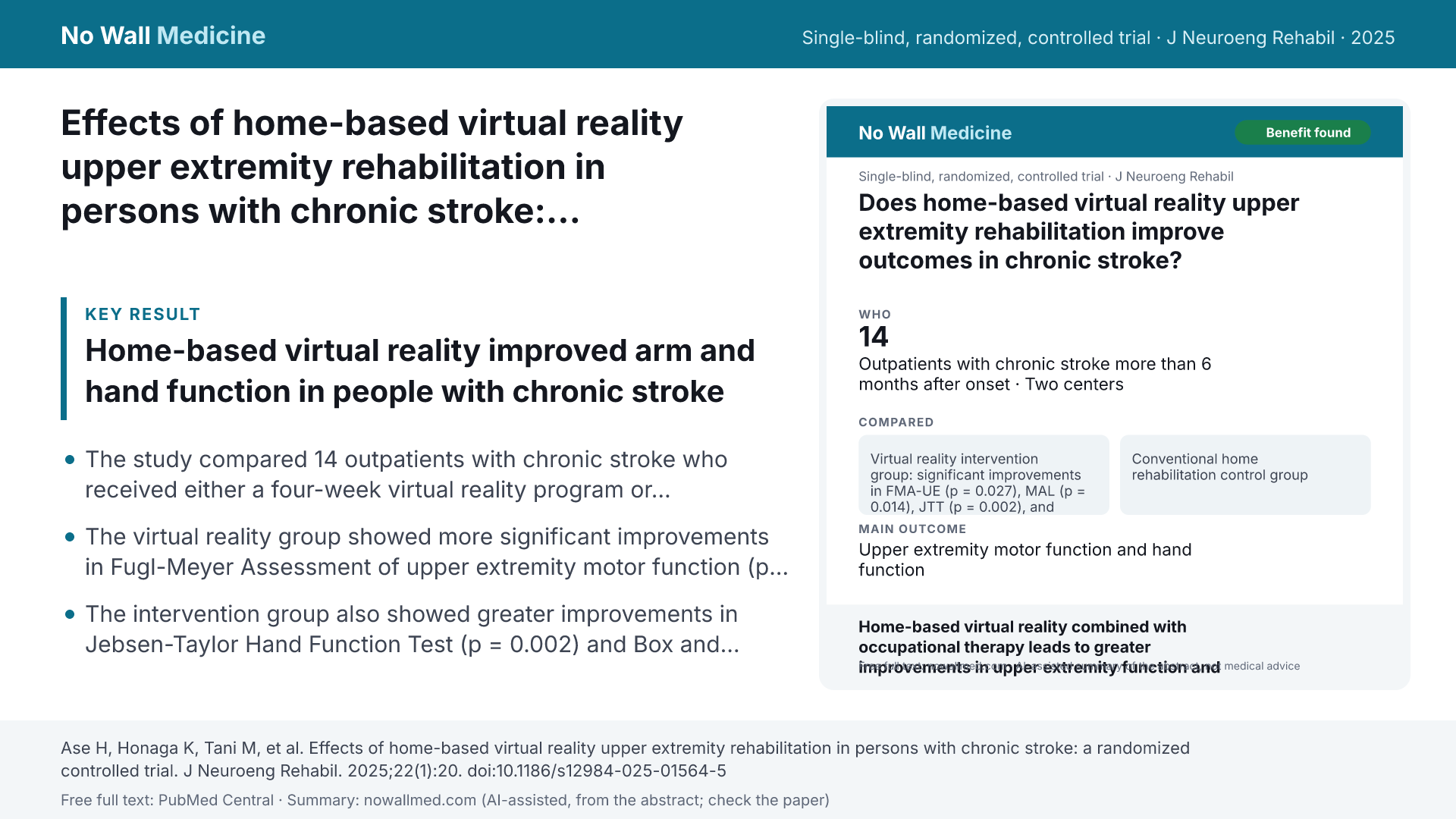
Home-based virtual reality improved arm and hand function in people with chronic stroke
Effects of home-based virtual reality upper extremity rehabilitation in persons with chronic stroke: a randomized controlled trial
Single-blind, randomized, controlled trialBenefit found
Does home-based virtual reality upper extremity rehabilitation improve outcomes in chronic stroke?
Who
14
Outpatients with chronic stroke more than 6 months after onset · Two centers
Compared
Virtual reality intervention group: significant improvements in FMA-UE (p = 0.027), MAL (p = 0.014), JTT (p = 0.002), and BBT (p = 0.014)
Conventional home rehabilitation control group
Main outcome
Upper extremity motor function and hand function
Bottom line: Home-based virtual reality combined with occupational therapy leads to greater improvements in upper extremity function and paretic hand use.
J Neuroeng Rehabil · 2025-02-03Download image
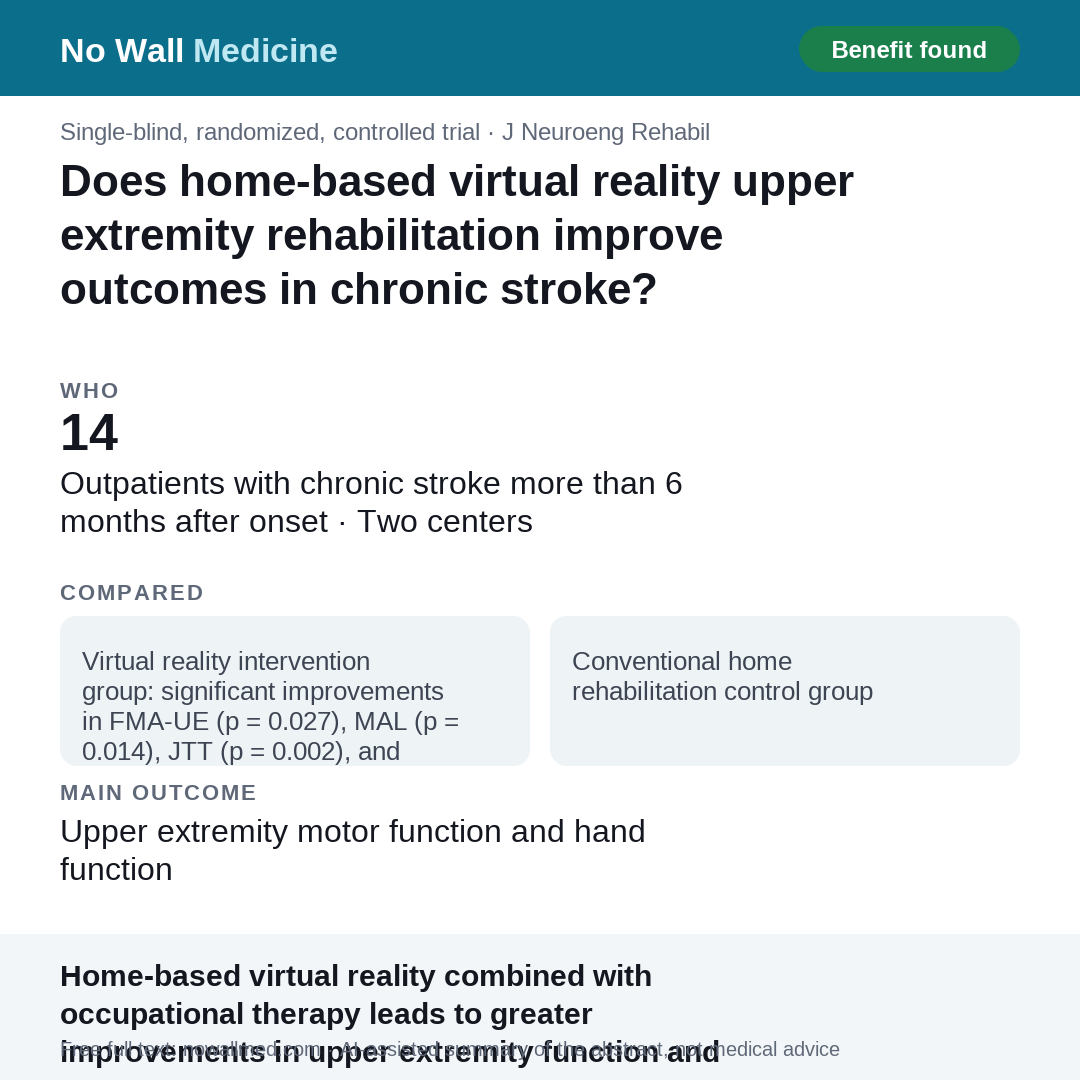
Clinical question: Does home-based virtual reality upper extremity rehabilitation improve outcomes in chronic stroke?
Why it matters: It was unknown if home-based virtual reality could be used safely and effectively for upper extremity rehabilitation in people with chronic stroke.
Key points
- The study compared 14 outpatients with chronic stroke who received either a four-week virtual reality program or a conventional home rehabilitation program.
- The virtual reality group showed more significant improvements in Fugl-Meyer Assessment of upper extremity motor function (p = 0.027) and Motor Activity Log-14 (p = 0.014).
- The intervention group also showed greater improvements in Jebsen-Taylor Hand Function Test (p = 0.002) and Box and Block Test (p = 0.014) scores.
Headline and key points written with AI from the paper’s abstract, with every number checked against it. Read the paper before relying on them.
Was this summary helpful?
Subject terms
Cite this article
Ase H, Honaga K, Tani M, et al. Effects of home-based virtual reality upper extremity rehabilitation in persons with chronic stroke: a randomized controlled trial. J Neuroeng Rehabil. 2025. doi:10.1186/s12984-025-01564-5
Spotted a mistake? Suggest a correction