Virtual reality training improves upper limb function and balance in stroke patients
Effects of Virtual Reality Training on Upper Limb Function and Balance in Stroke Patients: Systematic Review and Meta-Meta-Analysis
Meta-meta-analysis of 10 studiesBenefit found
Does virtual reality training improve upper limb function and balance in stroke patients?
Who
550
Stroke patients
Compared
Virtual reality training
Control
Main outcome
Upper limb function and balance
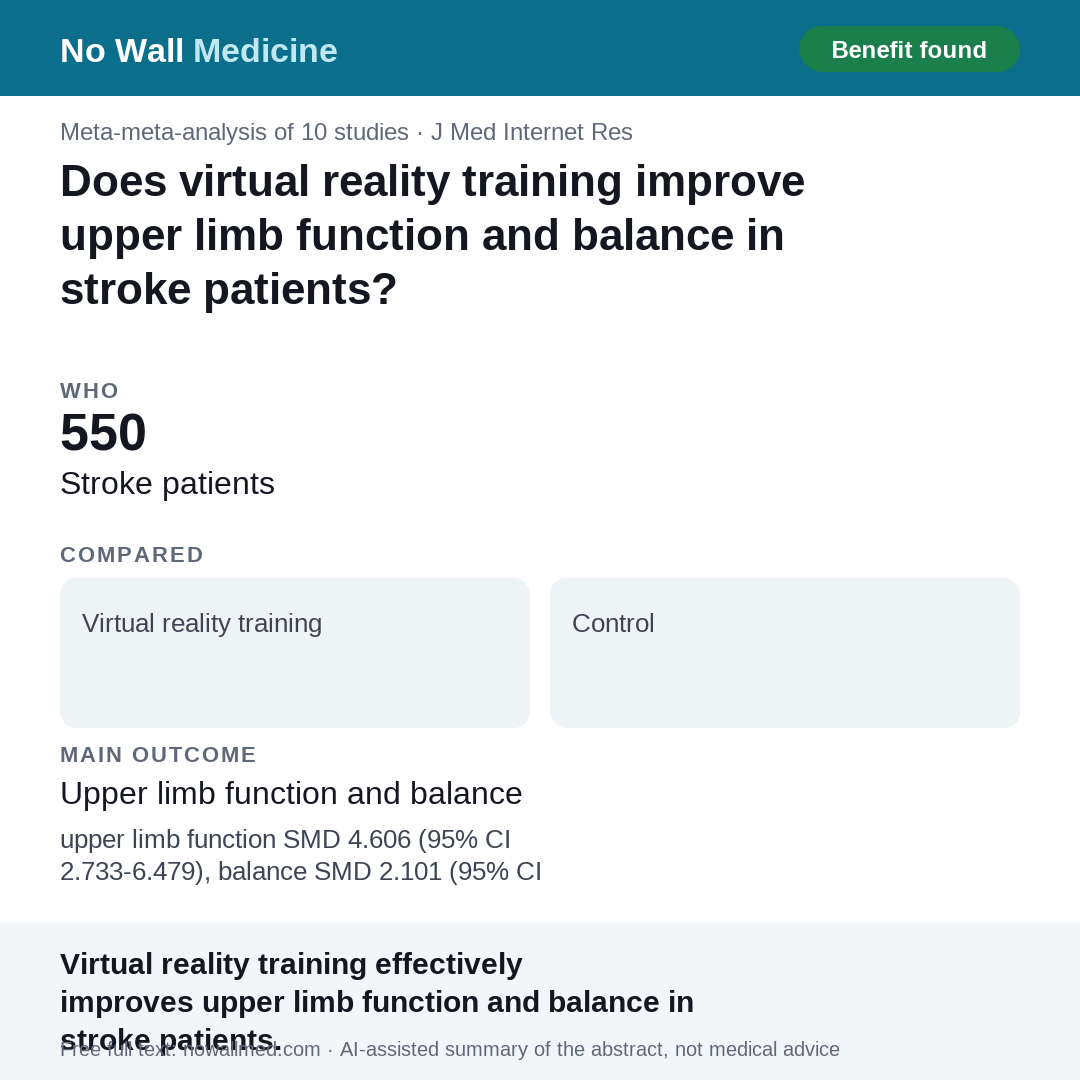
Result: upper limb function SMD 4.606 (95% CI 2.733-6.479), balance SMD 2.101 (95% CI 0.202-4.000)
Bottom line: Virtual reality training effectively improves upper limb function and balance in stroke patients.
Limitation: The results showed considerable heterogeneity and may need to be treated with caution.
J Med Internet Res · 2021-10-12Download image
Clinical question: Does virtual reality training improve upper limb function and balance in stroke patients?
Why it matters: Effectiveness of virtual reality training on motor function in stroke patients was unclear
Key points
- 550 stroke patients were studied in 10 meta-analyses.
- VR training improved upper limb function with SMD 4.606 and balance with SMD 2.101.
- Results showed considerable heterogeneity and need to be treated with caution.
Limitation the authors note: Results showed considerable heterogeneity and may need to be treated with caution
Headline and key points written with AI from the paper’s abstract, with every number checked against it. Read the paper before relying on them.
Was this summary helpful?
Subject terms
Cite this article
Wu J, Zeng A, Chen Z, Wei Y, Huang K, Chen J. Effects of Virtual Reality Training on Upper Limb Function and Balance in Stroke Patients: Systematic Review and Meta-Meta-Analysis. J Med Internet Res. 2021. doi:10.2196/31051
Spotted a mistake? Suggest a correction
Top studies every Monday
The week’s key trials and guidelines in your specialties, plus any topics you follow. By email, free.
Get the weekly digest