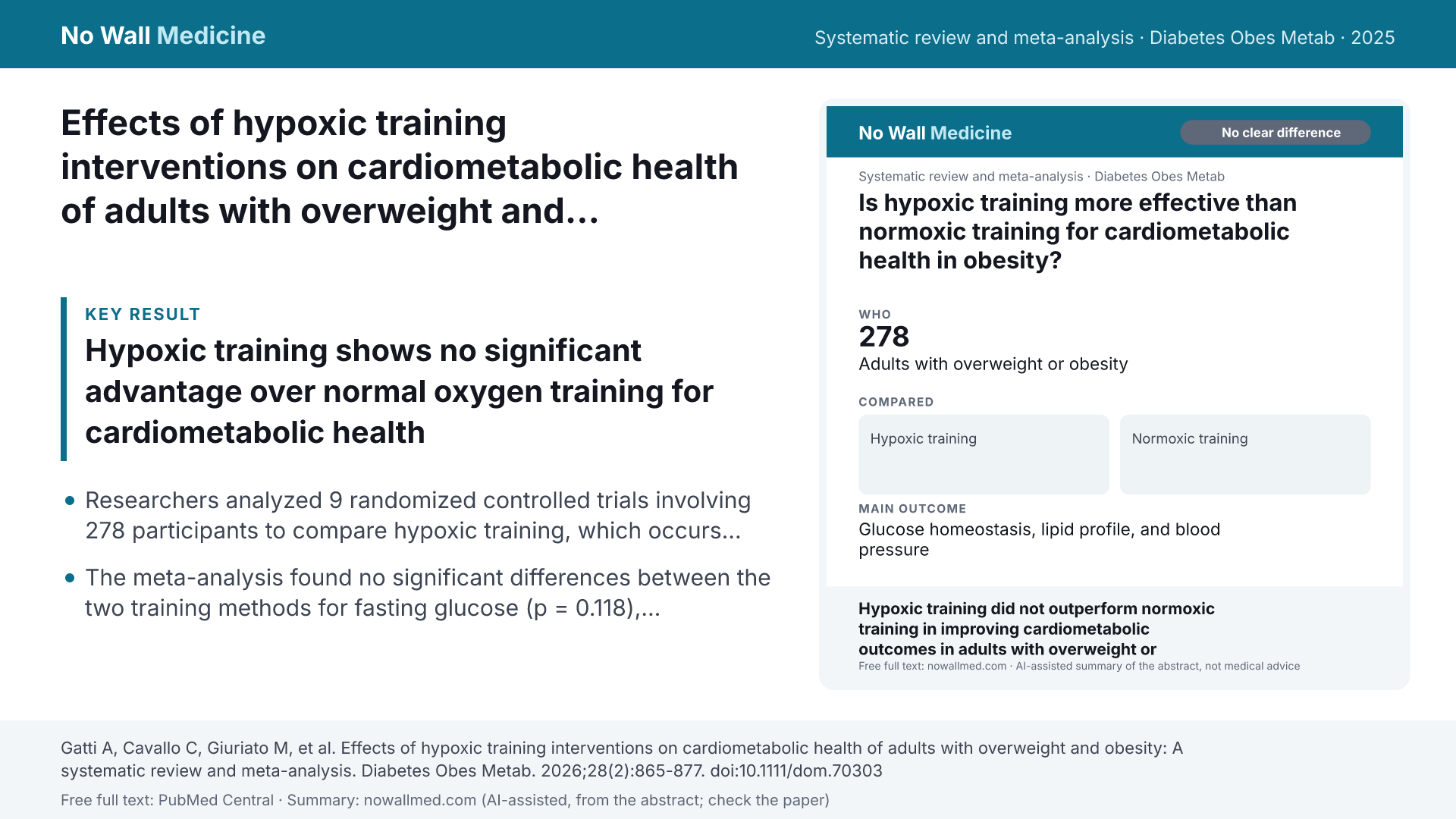
Effects of hypoxic training interventions on cardiometabolic health of adults with overweight and obesity: A systematic review and meta-analysis
Key result: Hypoxic training shows no significant advantage over normal oxygen training for cardiometabolic health
Key points
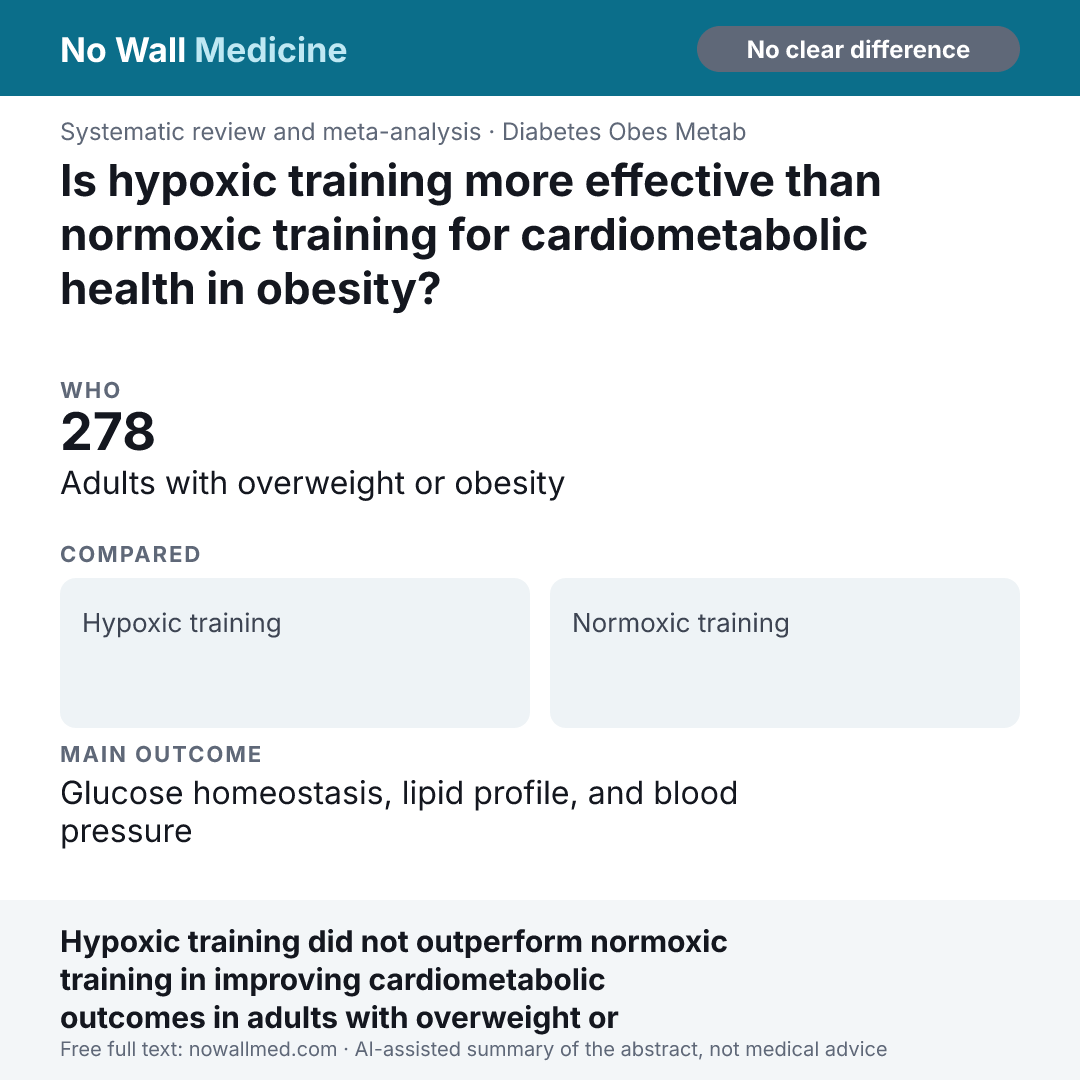
- Researchers analyzed 9 randomized controlled trials involving 278 participants to compare hypoxic training, which occurs in low oxygen environments, with normoxic training in normal oxygen levels.
- The meta-analysis found no significant differences between the two training methods for fasting glucose (p = 0.118), fasting insulin (p = 0.415), lipid profiles, or blood pressure.
- Subgroup analyses suggested that shorter and lower-intensity hypoxic interventions were associated with greater fasting glucose reductions.
Why it matters: Evidence remains inconclusive regarding whether training in low oxygen environments is more effective than training in normal oxygen levels for adults with overweight or obesity.
Discussion prompts
- Would these patients look like yours? Who was left out?
- Is the main outcome one that matters to patients?
- Is the difference large enough to change what you do?
Cite: Gatti A, Cavallo C, Giuriato M, et al. Effects of hypoxic training interventions on cardiometabolic health of adults with overweight and obesity: A systematic review and meta-analysis. Diabetes Obes Metab. 2026;28(2):865-877. doi:10.1111/dom.70303
Free full text: PubMed Central · Summary and visual abstract: nowallmed.com/a/effects-of-hypoxic-training-interventions-on-cardiometabolic-health-iuvy0a/ (AI-assisted from the abstract; check the paper before relying on it).