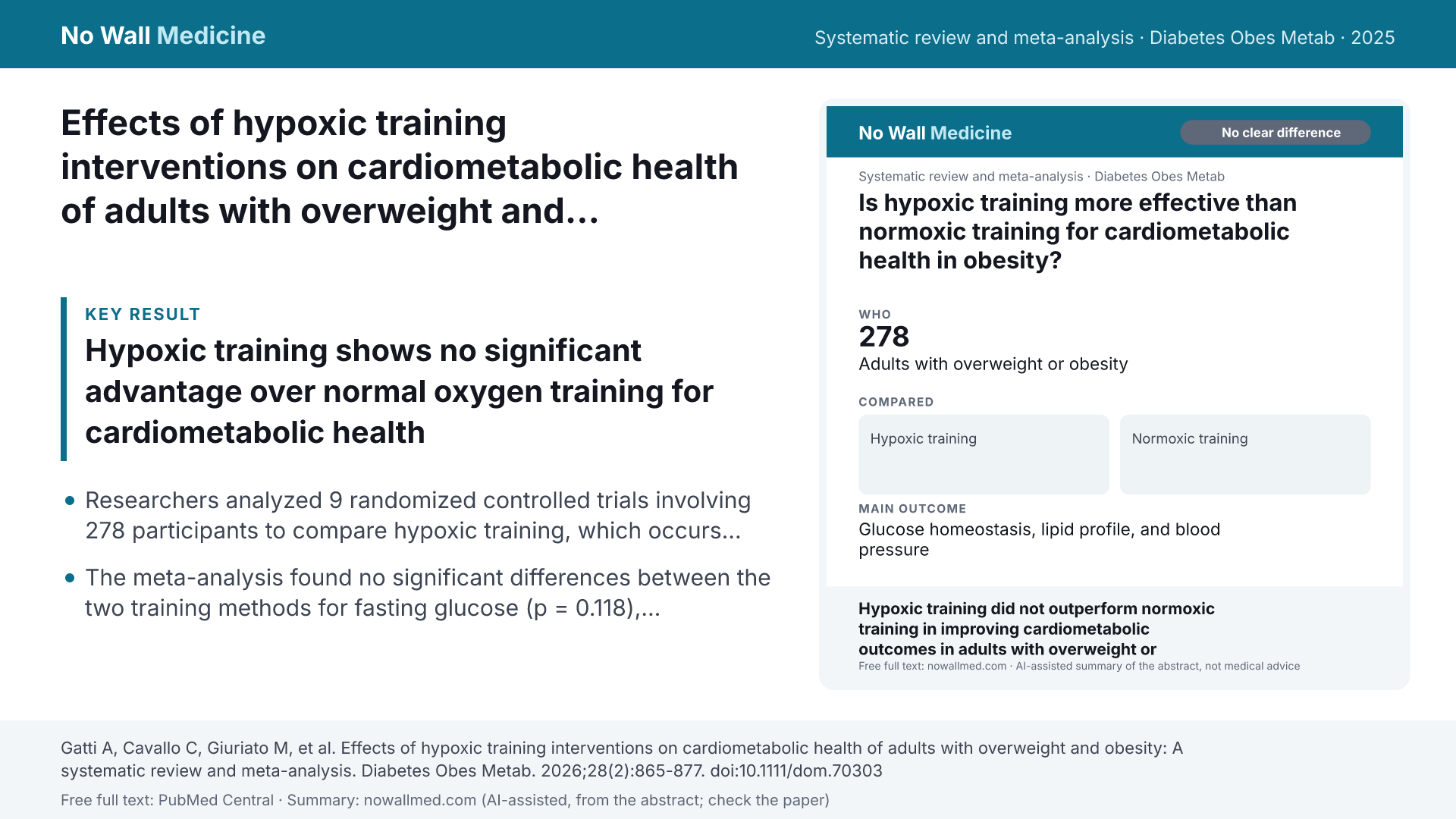
Hypoxic training shows no significant advantage over normal oxygen training for cardiometabolic health
Effects of hypoxic training interventions on cardiometabolic health of adults with overweight and obesity: A systematic review and meta-analysis
Systematic review and meta-analysisNo clear difference
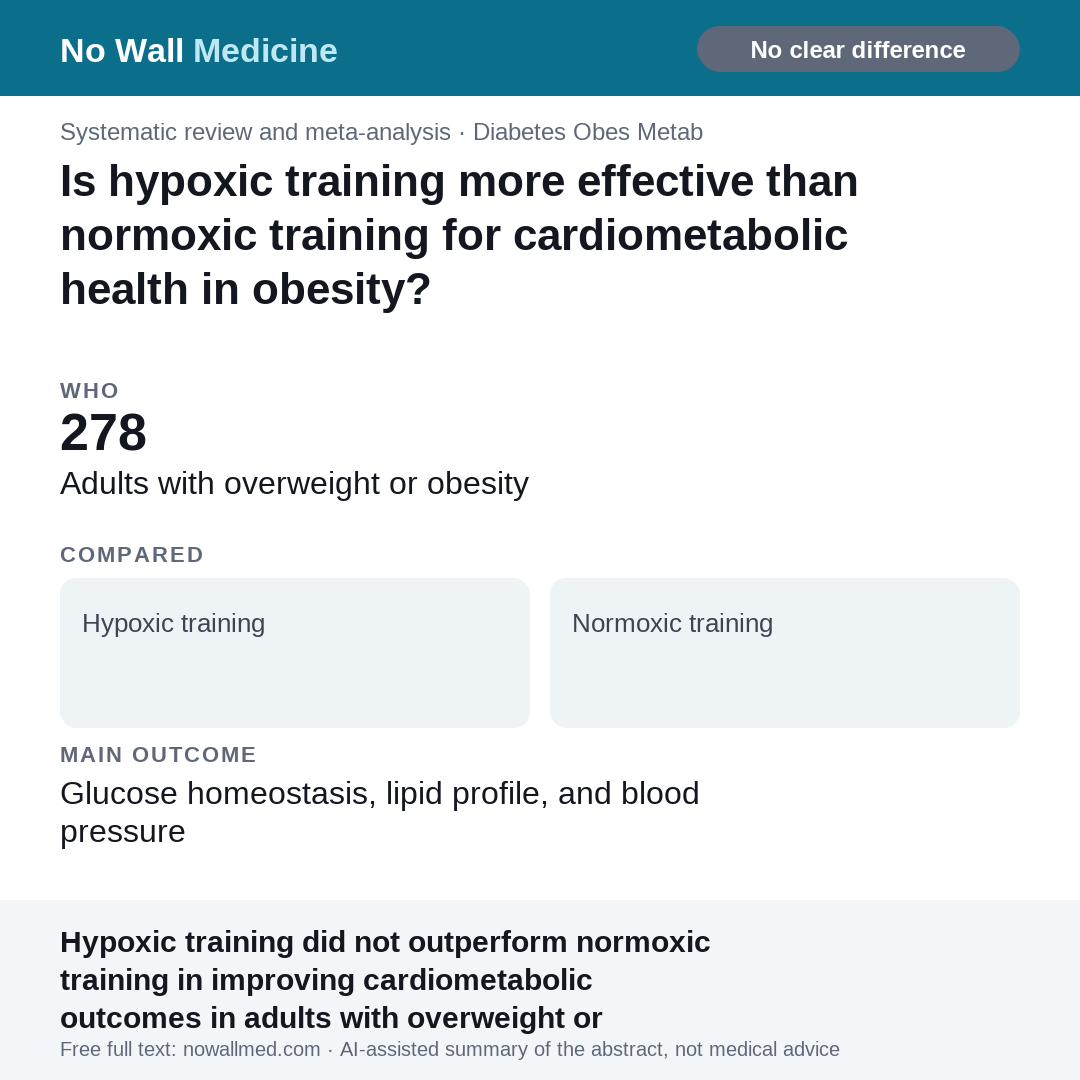
Is hypoxic training more effective than normoxic training for cardiometabolic health in obesity?
Who
278
Adults with overweight or obesity
Compared
Hypoxic training
Normoxic training
Main outcome
Glucose homeostasis, lipid profile, and blood pressure
Bottom line: Hypoxic training did not outperform normoxic training in improving cardiometabolic outcomes in adults with overweight or obesity.
Limitation: Considerable variability in intervention duration, hypoxic dose, and exercise intensity across studies.
Diabetes Obes Metab · 2025-11-18Download image
Clinical question: Is hypoxic training more effective than normoxic training for cardiometabolic health in obesity?
Why it matters: Evidence remains inconclusive regarding whether training in low oxygen environments is more effective than training in normal oxygen levels for adults with overweight or obesity.
Key points
- Researchers analyzed 9 randomized controlled trials involving 278 participants to compare hypoxic training, which occurs in low oxygen environments, with normoxic training in normal oxygen levels.
- The meta-analysis found no significant differences between the two training methods for fasting glucose (p = 0.118), fasting insulin (p = 0.415), lipid profiles, or blood pressure.
- Subgroup analyses suggested that shorter and lower-intensity hypoxic interventions were associated with greater fasting glucose reductions.
Headline and key points written with AI from the paper’s abstract, with every number checked against it. Read the paper before relying on them.
Was this summary helpful?
Subject terms
Headline, design, result, key points, caveat and citation as plain text.
Cite this article
Gatti A, Cavallo C, Giuriato M, et al. Effects of hypoxic training interventions on cardiometabolic health of adults with overweight and obesity: A systematic review and meta-analysis. Diabetes Obes Metab. 2025. doi:10.1111/dom.70303
Spotted a mistake? Suggest a correction