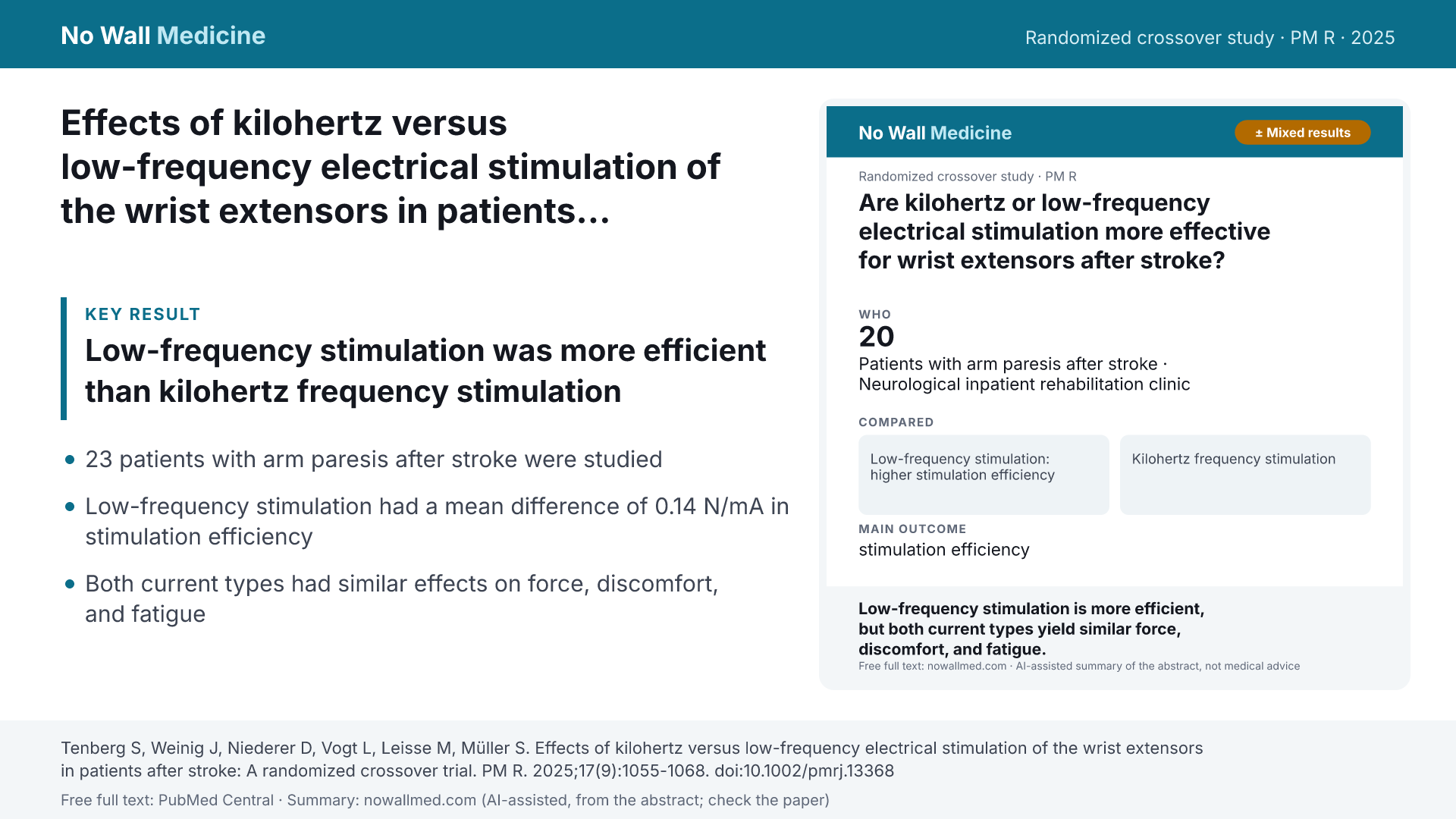
Low-frequency stimulation was more efficient than kilohertz frequency stimulation
Effects of kilohertz versus low-frequency electrical stimulation of the wrist extensors in patients after stroke: A randomized crossover trial
Randomized crossover studyMixed results
Are kilohertz or low-frequency electrical stimulation more effective for wrist extensors after stroke?
Who
20
Patients with arm paresis after stroke · Neurological inpatient rehabilitation clinic in Germany
Compared
Low-frequency stimulation: higher stimulation efficiency
Kilohertz frequency stimulation
Main outcome
stimulation efficiency
Result: mean difference 0.14 (95% confidence interval, 0.01-0.27 N/mA)
Bottom line: Low-frequency stimulation is more efficient, but both current types yield similar force, discomfort, and fatigue.
Limitation: Further research on the long-term treatment effects of both current types is warranted.
PM R · 2025-05-13 · Save PNG
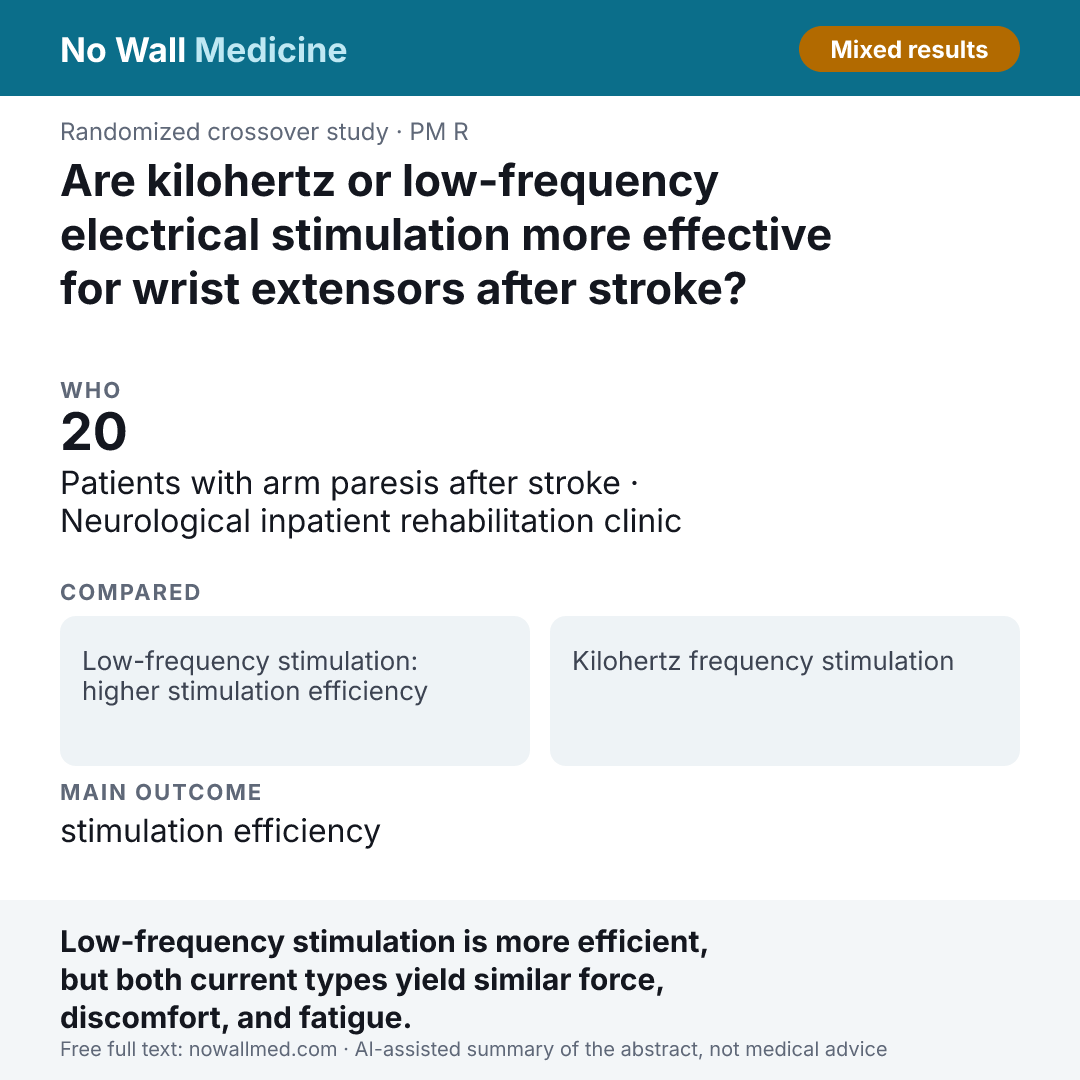
Clinical question: Are kilohertz or low-frequency electrical stimulation more effective for wrist extensors after stroke?
Key points
- 23 patients with arm paresis after stroke were studied.
- Low-frequency stimulation had a mean difference of 0.14 N/mA in stimulation efficiency.
- Both current types had similar effects on force, discomfort, and fatigue.
Headline and key points written with AI from the paper’s abstract, with every number checked against it. Read the paper before relying on them.
Was this summary helpful?
Subject terms
Headline, design, result, key points, caveat and citation as plain text.
Cite this article
Tenberg S, Weinig J, Niederer D, Vogt L, Leisse M, Müller S. Effects of kilohertz versus low-frequency electrical stimulation of the wrist extensors in patients after stroke: A randomized crossover trial. PM R. 2025;17(9):1055-1068. doi:10.1002/pmrj.13368
Spotted a mistake? Suggest a correction