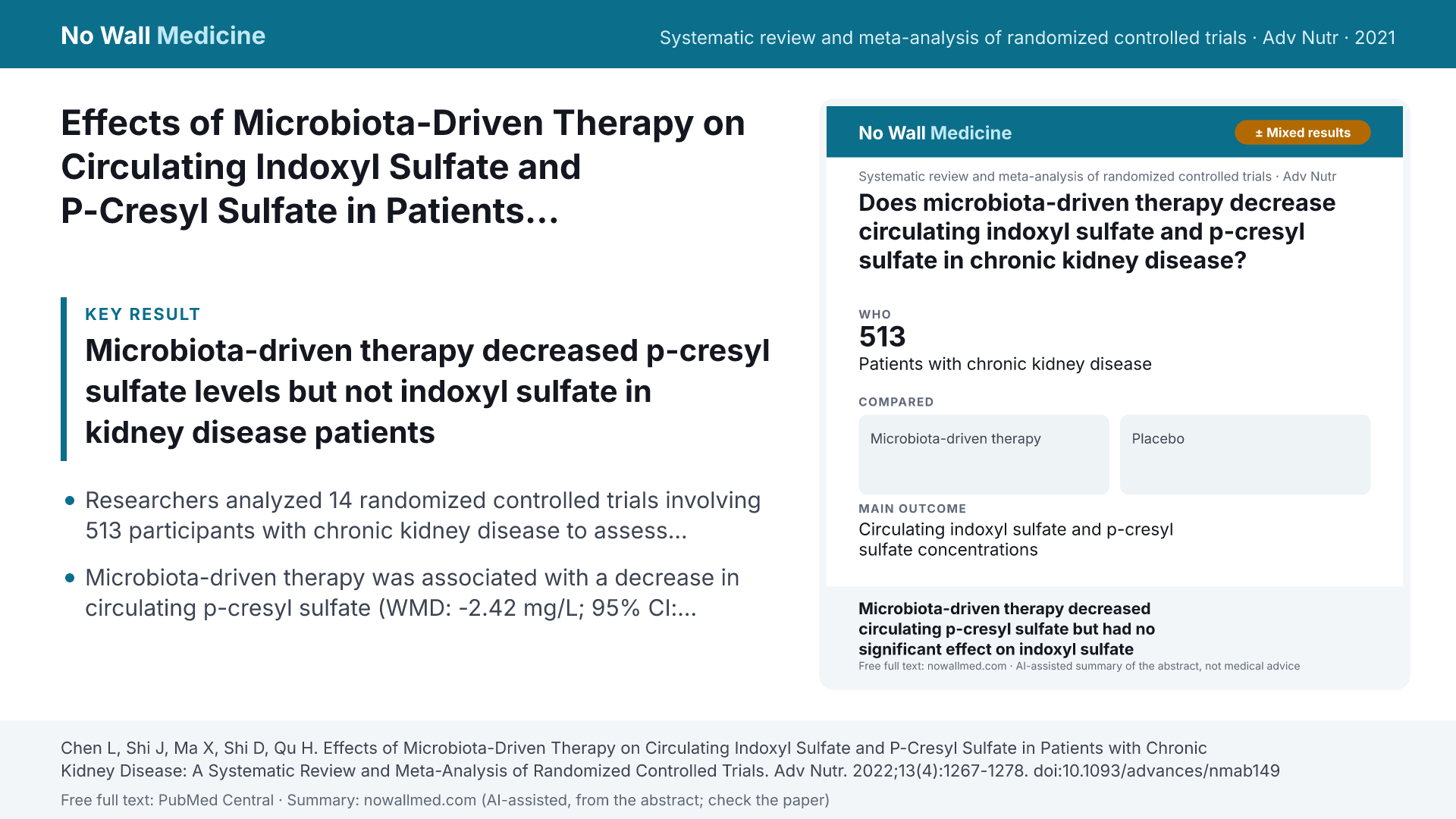
Effects of Microbiota-Driven Therapy on Circulating Indoxyl Sulfate and P-Cresyl Sulfate in Patients with Chronic Kidney Disease: A Systematic Review and Meta-Analysis of Randomized Controlled Trials
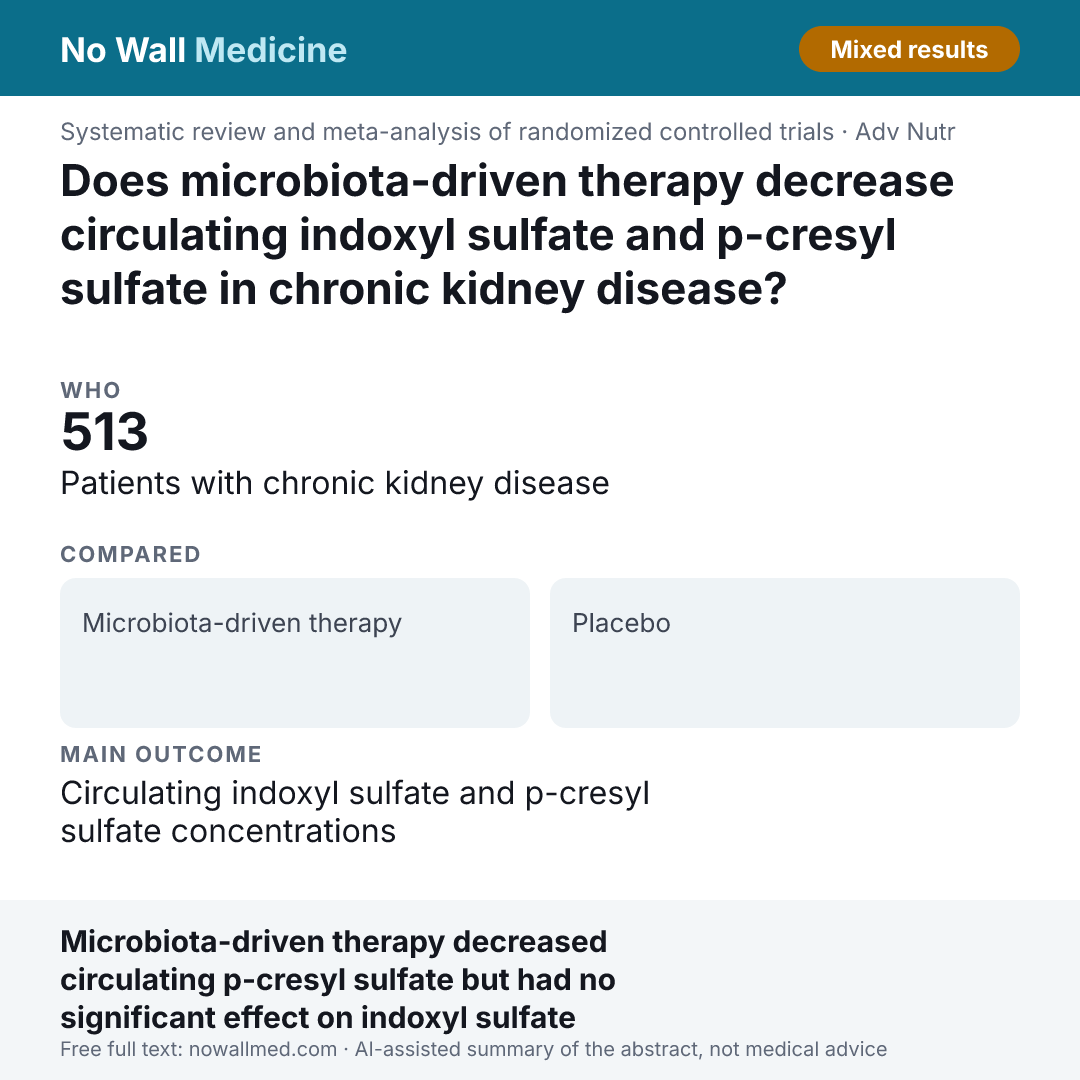
Key result: Microbiota-driven therapy decreased p-cresyl sulfate levels but not indoxyl sulfate in kidney disease patients
Key points
- Researchers analyzed 14 randomized controlled trials involving 513 participants with chronic kidney disease to assess the effects of probiotics, prebiotics, or synbiotics.
- Microbiota-driven therapy was associated with a decrease in circulating p-cresyl sulfate (WMD: -2.42 mg/L; 95% CI: -3.81, -1.04 mg/L; P = 0.001) but had no significant effect on indoxyl sulfate (WMD: -1.64 mg/L; 95% CI: -3.46, 0.18 mg/L; P = 0.077).
- Subgroup analysis showed that prebiotics and synbiotics were associated with lower p-cresyl sulfate levels, while probiotics were not.
Why it matters: The effects of using probiotics, prebiotics, or synbiotics to change levels of protein-bound uremic toxins in chronic kidney disease patients are controversial.
Limitation the authors note: Additional large, well-designed randomized controlled trials with improved methodology and reporting are necessary to assess long-term effects.
Discussion prompts
- Would these patients look like yours? Who was left out?
- Is the main outcome one that matters to patients?
- Is the difference large enough to change what you do?
Cite: Chen L, Shi J, Ma X, Shi D, Qu H. Effects of Microbiota-Driven Therapy on Circulating Indoxyl Sulfate and P-Cresyl Sulfate in Patients with Chronic Kidney Disease: A Systematic Review and Meta-Analysis of Randomized Controlled Trials. Adv Nutr. 2022;13(4):1267-1278. doi:10.1093/advances/nmab149
Free full text: PubMed Central · Summary and visual abstract: nowallmed.com/a/effects-of-microbiota-driven-therapy-on-circulating-indoxyl-sulfate-1eky0he/ (AI-assisted from the abstract; check the paper before relying on it).