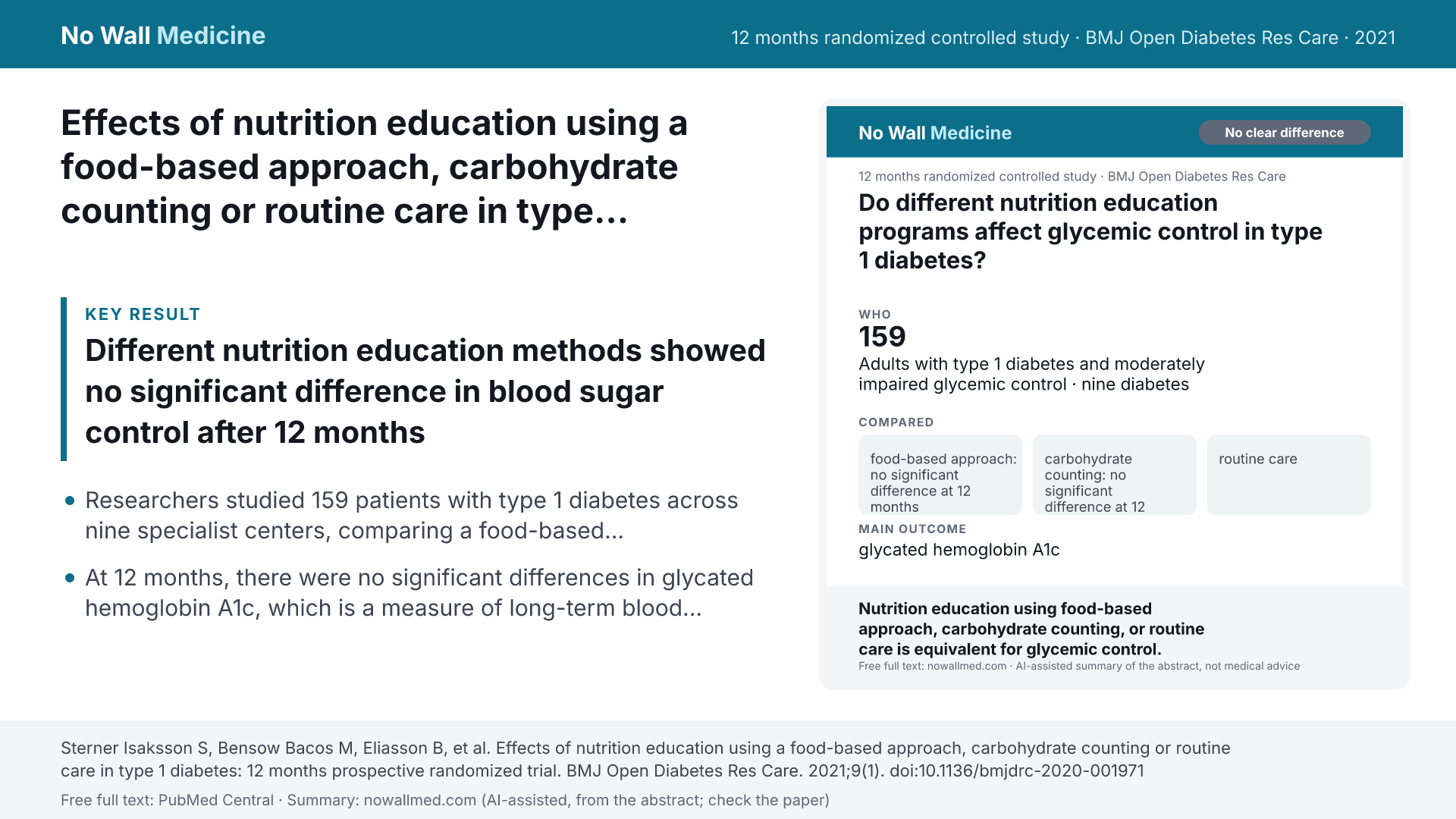
Effects of nutrition education using a food-based approach, carbohydrate counting or routine care in type 1 diabetes: 12 months prospective randomized trial
Key result: Different nutrition education methods showed no significant difference in blood sugar control after 12 months
Key points
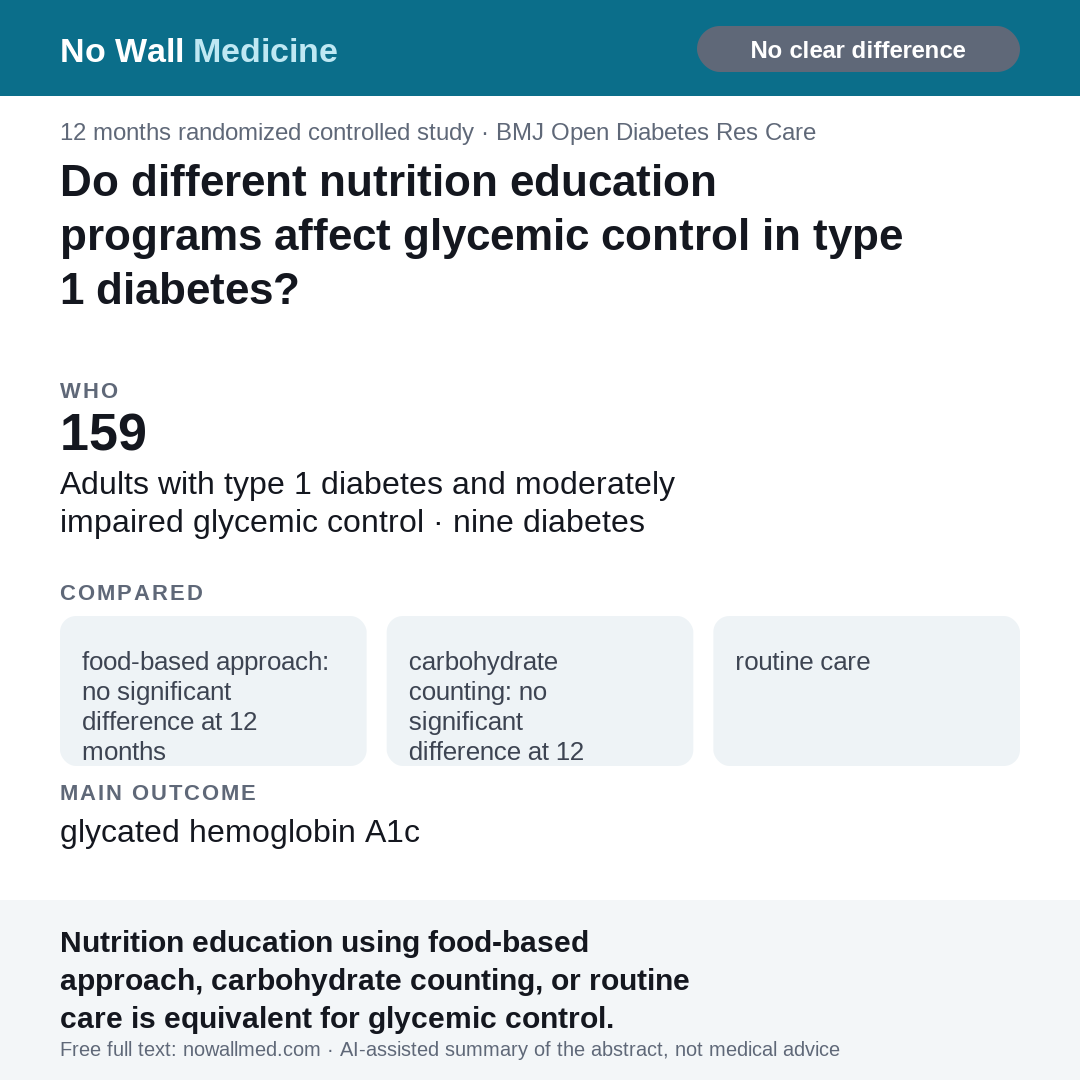
- Researchers studied 159 patients with type 1 diabetes across nine specialist centers, comparing a food-based approach, carbohydrate counting, and routine care.
- At 12 months, there were no significant differences in glycated hemoglobin A1c, which is a measure of long-term blood sugar, between the three groups.
- The food-based approach was associated with an improved intake of legumes, nuts, vegetables, dietary fiber, and healthy fats compared to the other groups.
Why it matters: Evidence is weak regarding how different structured nutrition education programs affect glycemic control and cardiovascular risk in adults with type 1 diabetes and moderately impaired blood sugar levels.
Discussion prompts
- Would these patients look like yours? Who was left out?
- Is the main outcome one that matters to patients?
- Is the difference large enough to change what you do?
Cite: Sterner Isaksson S, Bensow Bacos M, Eliasson B, et al. Effects of nutrition education using a food-based approach, carbohydrate counting or routine care in type 1 diabetes: 12 months prospective randomized trial. BMJ Open Diabetes Res Care. 2021. doi:10.1136/bmjdrc-2020-001971
Free full text: PubMed Central · Summary and visual abstract: nowallmed.com/a/effects-of-nutrition-education-using-a-food-based-approach-1ma0fzu/ (AI-assisted from the abstract; check the paper before relying on it).