Omega-3 fatty acid supplementation did not improve cognitive functioning in youth at risk for psychosis
Effects of omega-3 polyunsaturated fatty acid supplementation on cognitive functioning in youth at ultra-high risk for psychosis: secondary analysis of the NEURAPRO randomised controlled trial
Secondary analysis of a trialNo clear difference
Does omega-3 polyunsaturated fatty acid supplementation improve cognitive functioning in youth at ultra-high risk for psychosis?
Who
225
Individuals at ultra-high risk for psychosis · International, multi-site
Compared
Omega-3 supplementation
Placebo: modest greater improvement over time
Main outcome
Cognitive functioning assessed with Brief Assessment of Cognition in Schizophrenia
Bottom line: Omega-3 supplementation did not improve cognitive functioning in individuals at ultra-high risk for psychosis.
BJPsych Open · 2022-09-08 · Save PNG
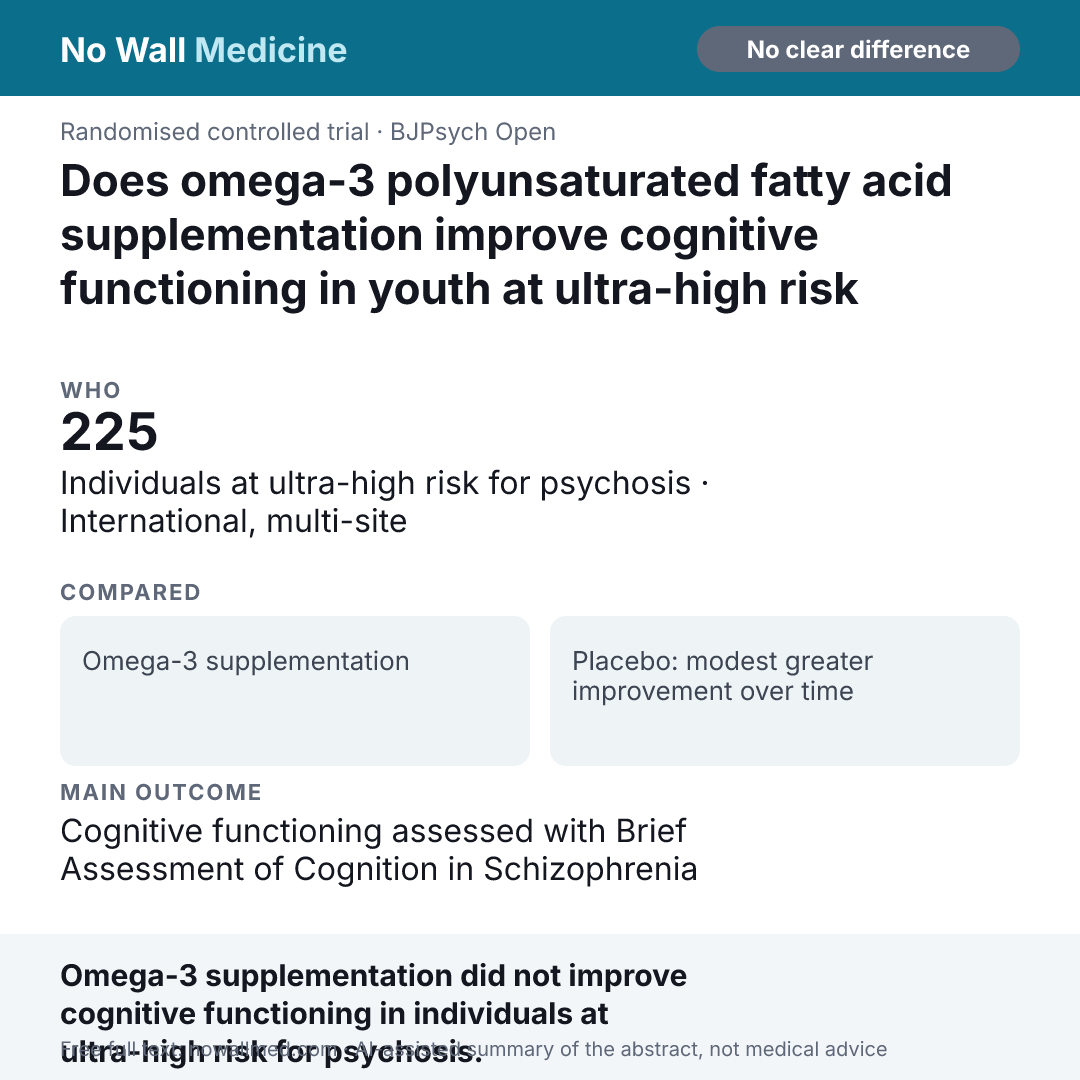
Clinical question: Does omega-3 polyunsaturated fatty acid supplementation improve cognitive functioning in youth at ultra-high risk for psychosis?
Key points
- Researchers analyzed 225 participants in an international trial who received either omega-3 fatty acids or a placebo for 6 months.
- The placebo group showed a modest greater improvement over time than the omega-3 group for motor speed and the Brief Assessment of Cognition in Schizophrenia composite score.
- Changes in red blood cell omega-3 levels were not linked to changes in cognitive performance over the 6 month period.
Headline and key points written with AI from the paper’s abstract, with every number checked against it. Read the paper before relying on them.
Was this summary helpful?
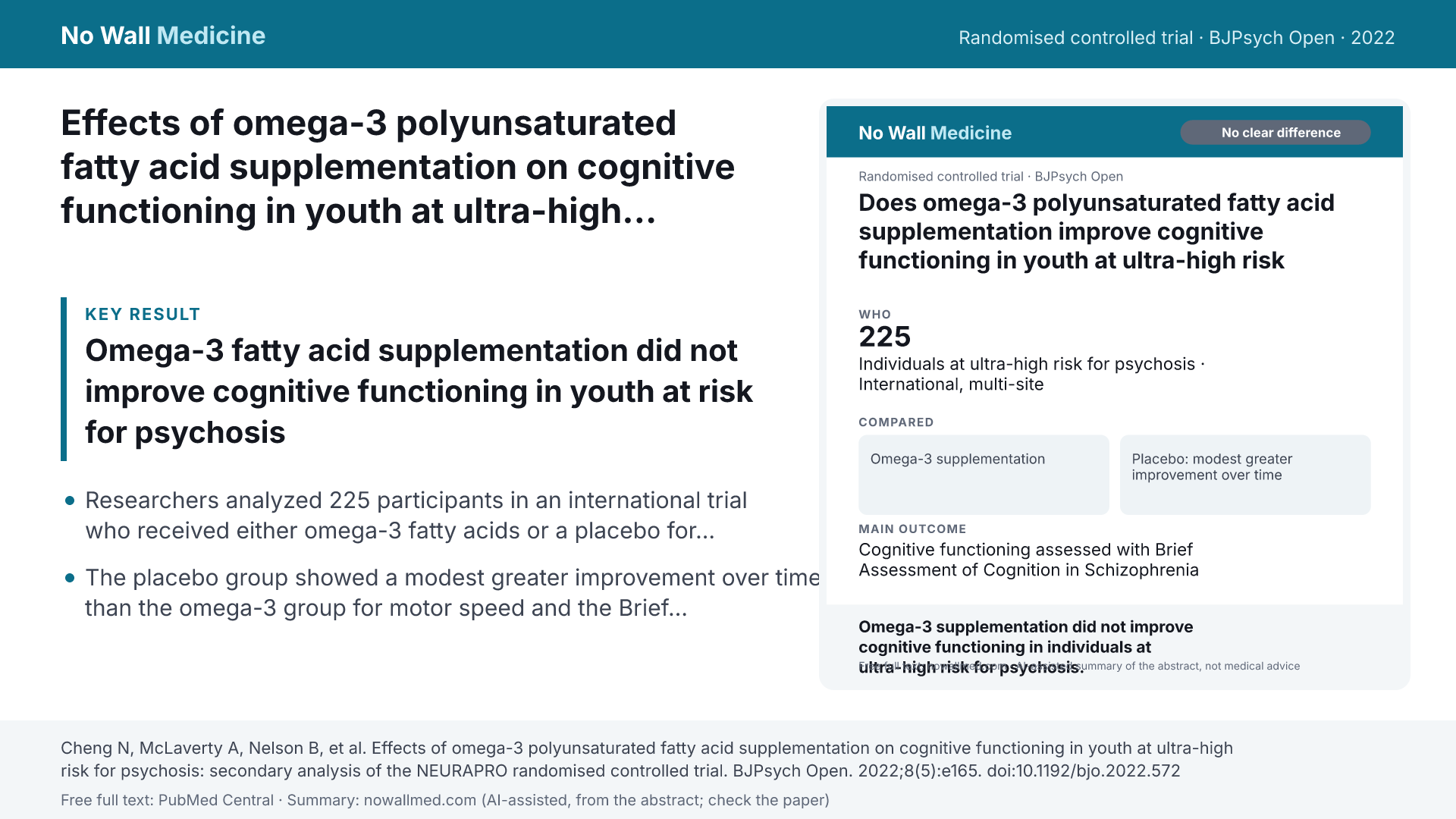
Headline, design, result, key points, caveat and citation as plain text.
Cite this article
Cheng N, McLaverty A, Nelson B, et al. Effects of omega-3 polyunsaturated fatty acid supplementation on cognitive functioning in youth at ultra-high risk for psychosis: secondary analysis of the NEURAPRO randomised controlled trial. BJPsych Open. 2022;8(5):e165. doi:10.1192/bjo.2022.572
Spotted a mistake? Suggest a correction