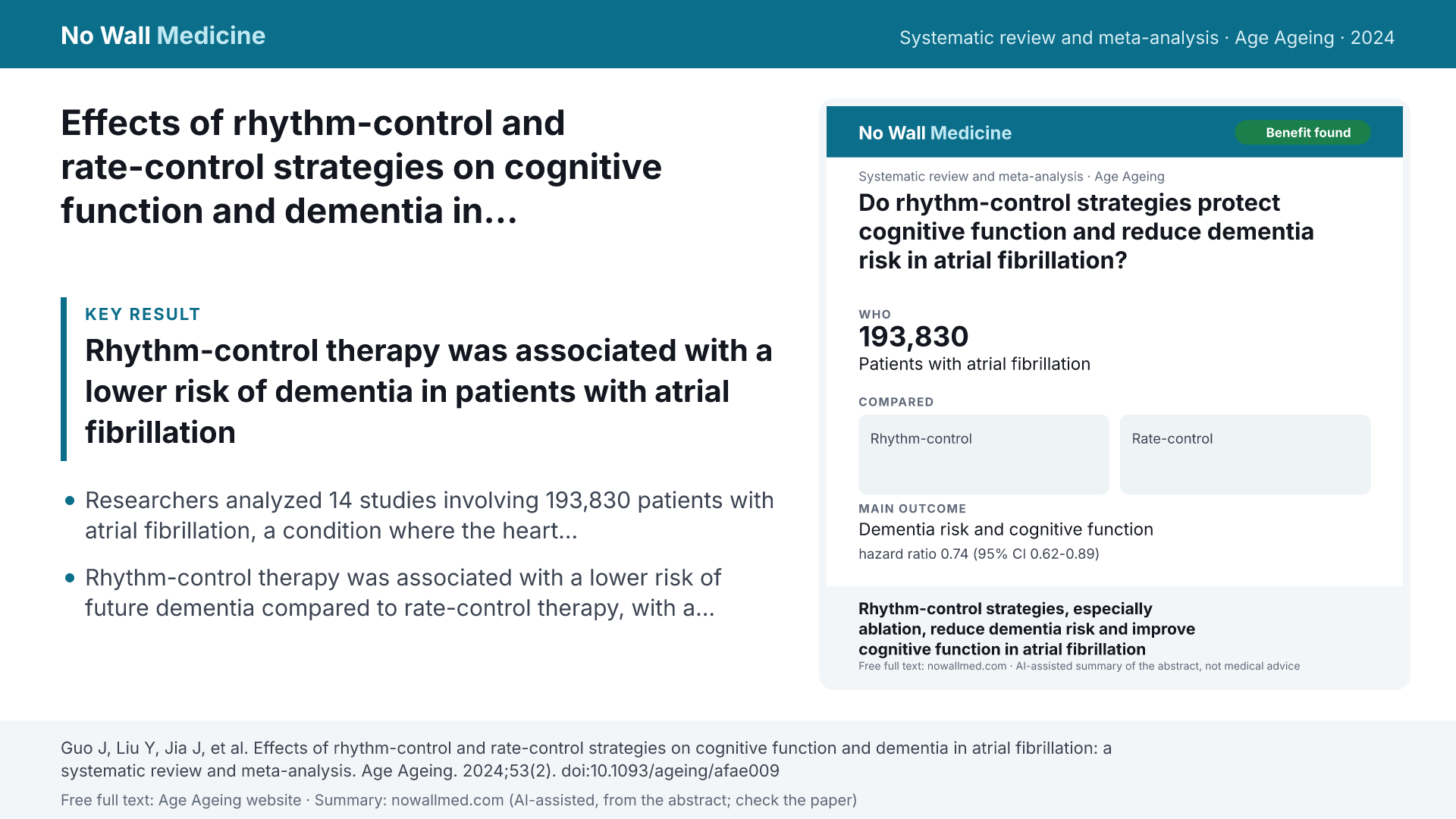
Rhythm-control therapy was associated with a lower risk of dementia in patients with atrial fibrillation
Effects of rhythm-control and rate-control strategies on cognitive function and dementia in atrial fibrillation: a systematic review and meta-analysis
Systematic review and meta-analysisBenefit found
Do rhythm-control strategies protect cognitive function and reduce dementia risk in atrial fibrillation?
Who
193,830
Patients with atrial fibrillation
Compared
Rhythm-control
Rate-control
Main outcome
Dementia risk and cognitive function
Result: hazard ratio 0.74 (95% CI 0.62-0.89)
Bottom line: Rhythm-control strategies, especially ablation, reduce dementia risk and improve cognitive function in atrial fibrillation patients.
Age Ageing · 2024-02-19 · Save PNG
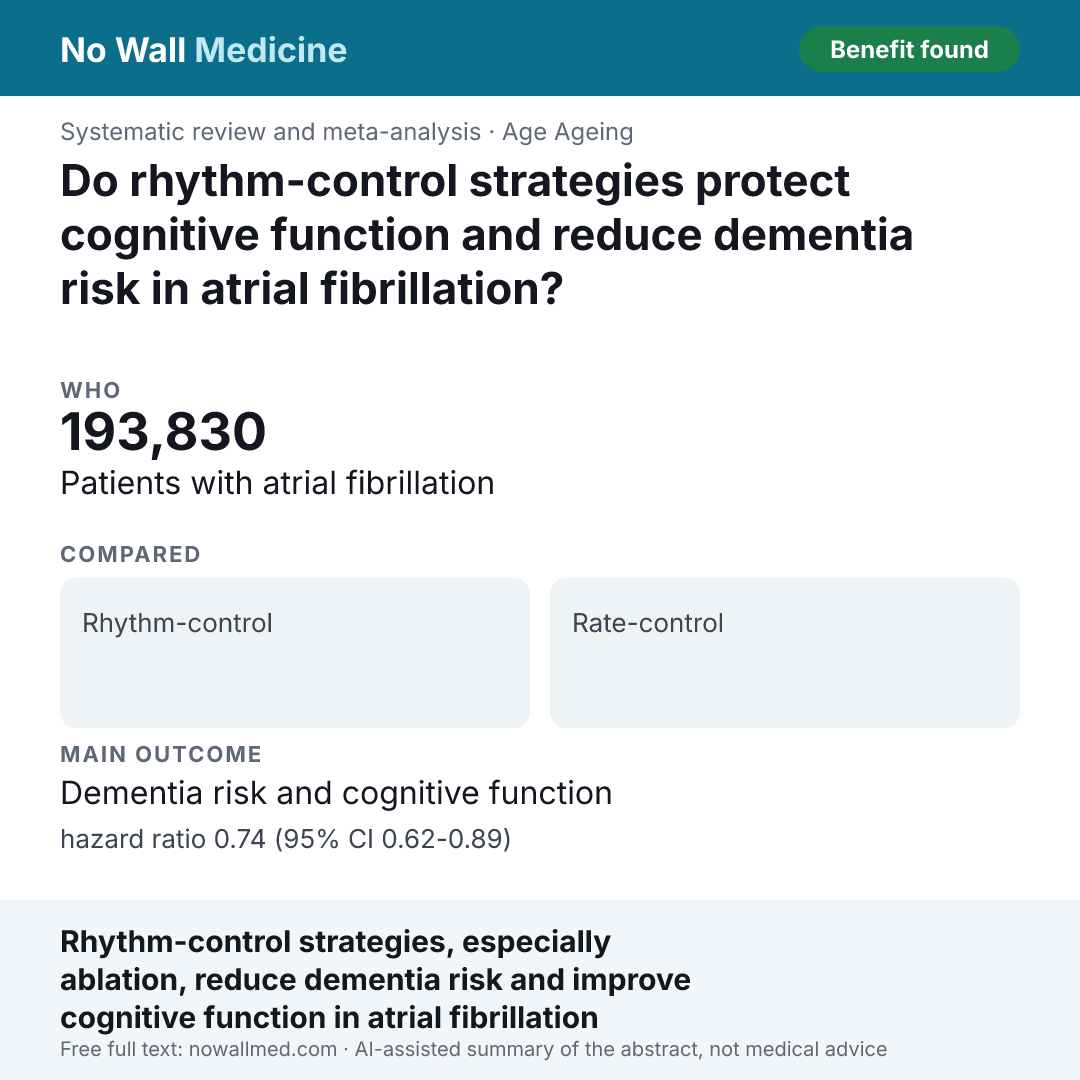
Clinical question: Do rhythm-control strategies protect cognitive function and reduce dementia risk in atrial fibrillation?
Key points
- Researchers analyzed 14 studies involving 193,830 patients with atrial fibrillation, a condition where the heart beats irregularly.
- Rhythm-control therapy was associated with a lower risk of future dementia compared to rate-control therapy, with a hazard ratio of 0.74.
- Atrial fibrillation ablation, a procedure to restore normal heart rhythm, was associated with lower risks of Alzheimer's disease and vascular dementia.
Headline and key points written with AI from the paper’s abstract, with every number checked against it. Read the paper before relying on them.
Was this summary helpful?
Subject terms
Headline, design, result, key points, caveat and citation as plain text.
Cite this article
Guo J, Liu Y, Jia J, et al. Effects of rhythm-control and rate-control strategies on cognitive function and dementia in atrial fibrillation: a systematic review and meta-analysis. Age Ageing. 2024;53(2). doi:10.1093/ageing/afae009
Spotted a mistake? Suggest a correction