Effects of robot-assisted training on balance function in patients with stroke: A systematic review and meta-analysis
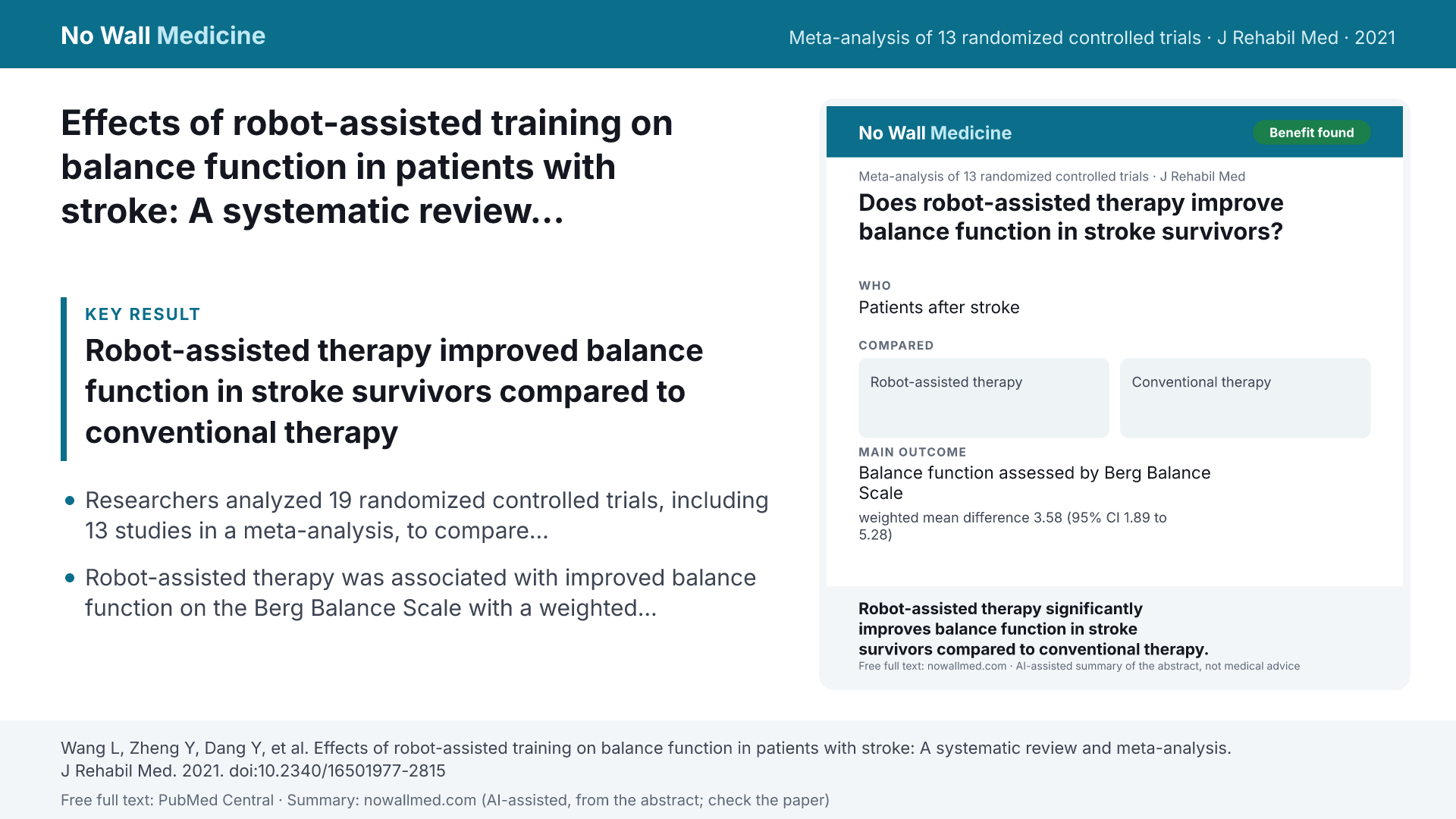
Key result: Robot-assisted therapy improved balance function in stroke survivors compared to conventional therapy
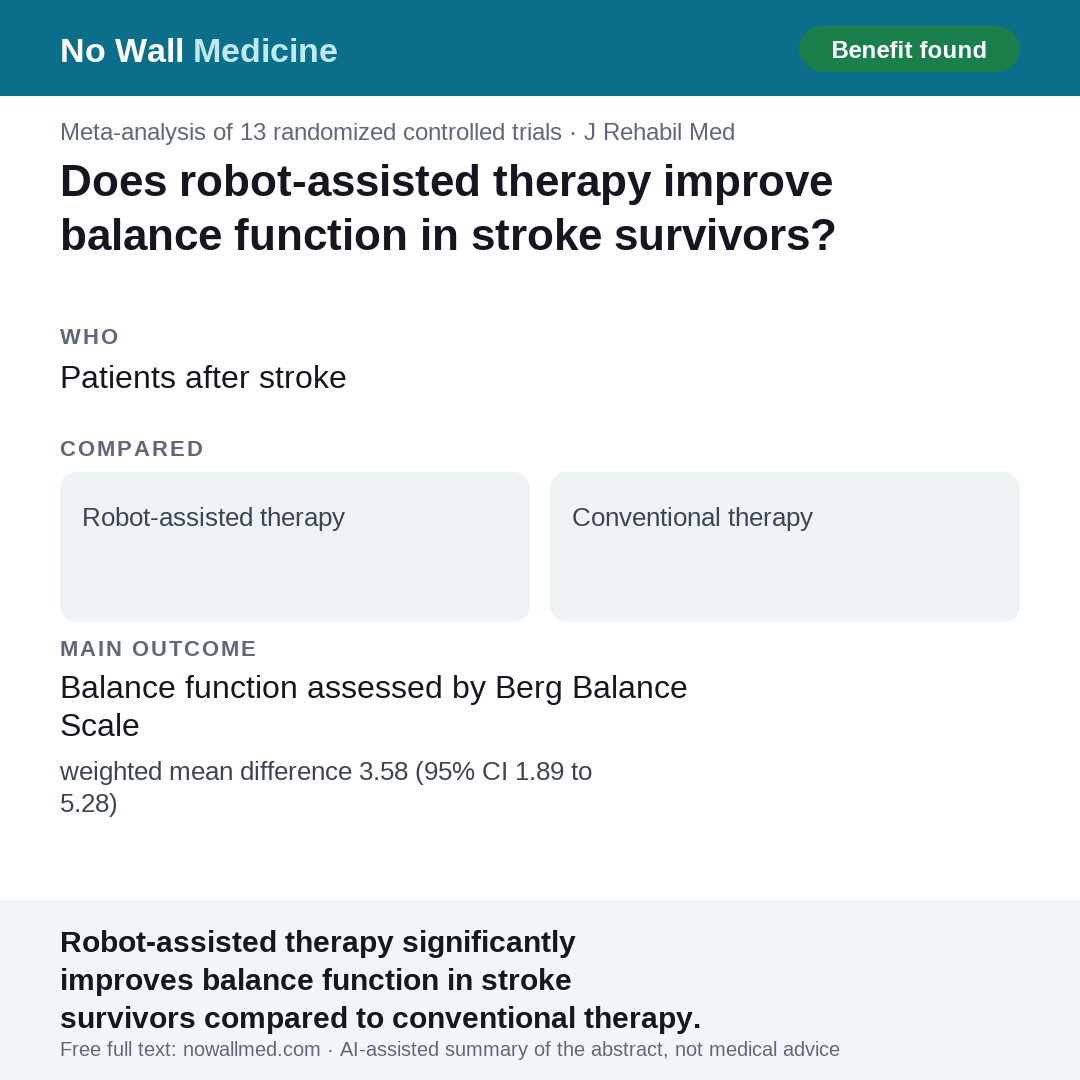
Meta-analysis of 13 randomized controlled trialsBenefit found
Does robot-assisted therapy improve balance function in stroke survivors?
Who
Patients after stroke
Compared
Robot-assisted therapy
Conventional therapy
Main outcome
Balance function assessed by Berg Balance Scale
Result: weighted mean difference 3.58 (95% CI 1.89 to 5.28)
Bottom line: Robot-assisted therapy significantly improves balance function in stroke survivors compared to conventional therapy.
J Rehabil Med · 2021-04-01Download image
Key points
- Researchers analyzed 19 randomized controlled trials, including 13 studies in a meta-analysis, to compare robot-assisted therapy with conventional therapy for stroke survivors.
- Robot-assisted therapy was associated with improved balance function on the Berg Balance Scale with a weighted mean difference of 3.58 (95% CI 1.89-5.28, p < 0.001).
- Significant differences in balance recovery were found in acute or subacute stroke stages (WMD 5.40, 95% CI 3.94-6.86, p < 0.001) but not in chronic stages.
Discussion prompts
- Would these patients look like yours? Who was left out?
- Is the main outcome one that matters to patients?
- Is the difference large enough to change what you do?
Cite: Wang L, Zheng Y, Dang Y, et al. Effects of robot-assisted training on balance function in patients with stroke: A systematic review and meta-analysis. J Rehabil Med. 2021. doi:10.2340/16501977-2815
Free full text: PubMed Central · Summary and visual abstract: nowallmed.com/a/effects-of-robot-assisted-training-on-balance-function-in-patients-6rhplr/ (AI-assisted from the abstract; check the paper before relying on it).