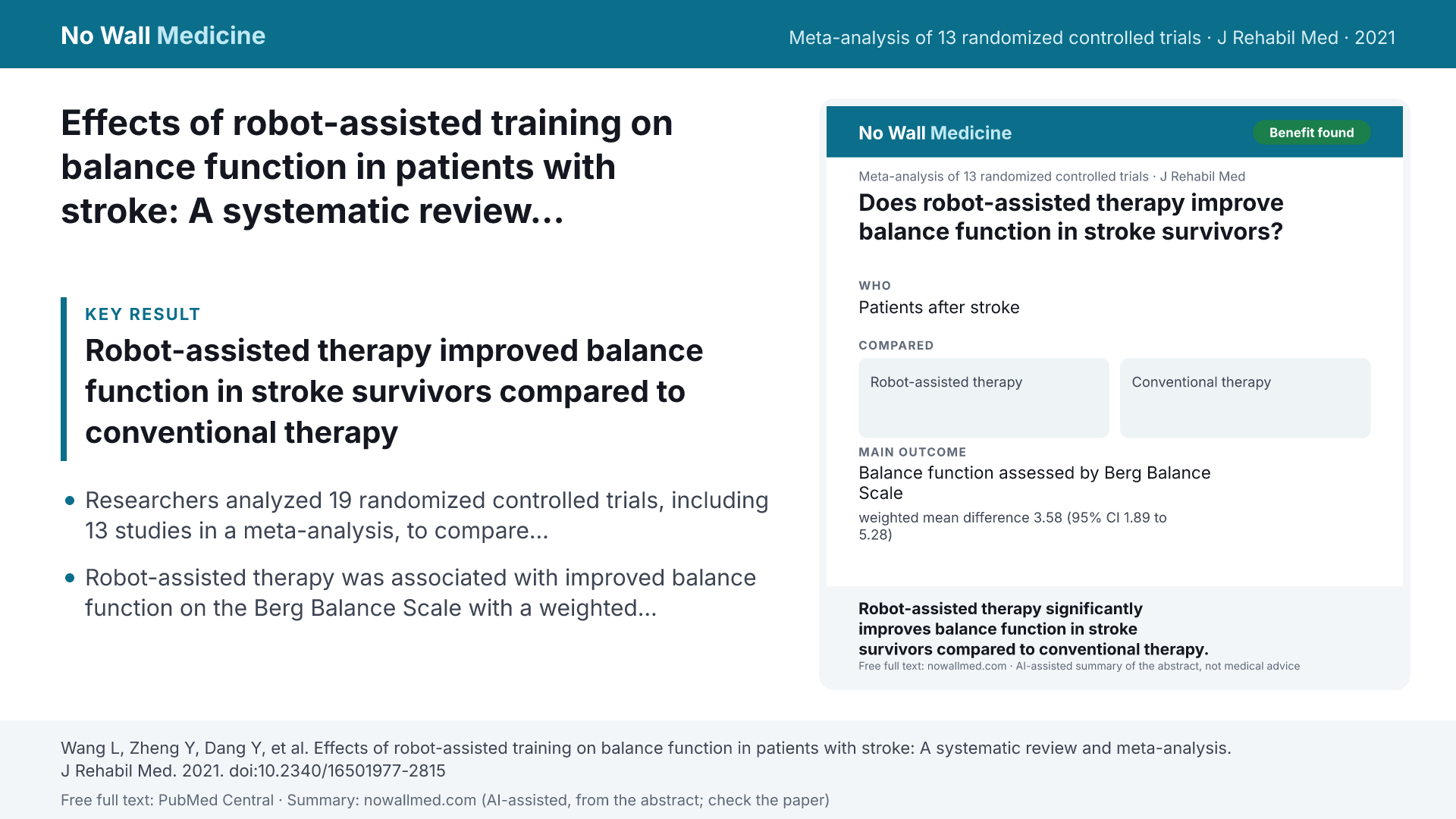
Robot-assisted therapy improved balance function in stroke survivors compared to conventional therapy
Effects of robot-assisted training on balance function in patients with stroke: A systematic review and meta-analysis
Meta-analysis of 13 randomized controlled trialsBenefit found
Does robot-assisted therapy improve balance function in stroke survivors?
Who
Patients after stroke
Compared
Robot-assisted therapy
Conventional therapy
Main outcome
Balance function assessed by Berg Balance Scale
Result: weighted mean difference 3.58 (95% CI 1.89 to 5.28)
Bottom line: Robot-assisted therapy significantly improves balance function in stroke survivors compared to conventional therapy.
J Rehabil Med · 2021-04-01Download image
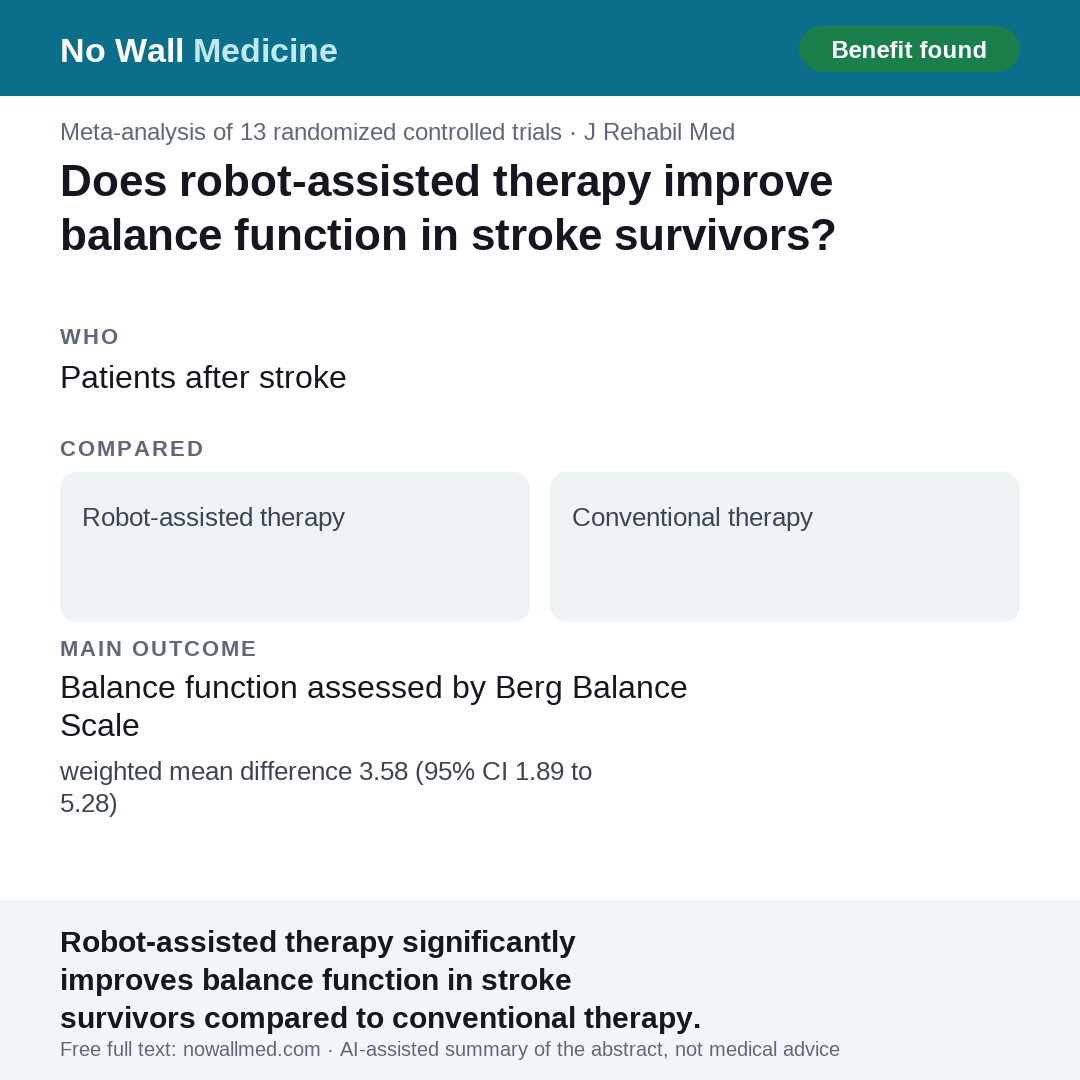
Clinical question: Does robot-assisted therapy improve balance function in stroke survivors?
Key points
- Researchers analyzed 19 randomized controlled trials, including 13 studies in a meta-analysis, to compare robot-assisted therapy with conventional therapy for stroke survivors.
- Robot-assisted therapy was associated with improved balance function on the Berg Balance Scale with a weighted mean difference of 3.58 (95% CI 1.89-5.28, p < 0.001).
- Significant differences in balance recovery were found in acute or subacute stroke stages (WMD 5.40, 95% CI 3.94-6.86, p < 0.001) but not in chronic stages.
Headline and key points written with AI from the paper’s abstract, with every number checked against it. Read the paper before relying on them.
Was this summary helpful?
Subject terms
Cite this article
Wang L, Zheng Y, Dang Y, et al. Effects of robot-assisted training on balance function in patients with stroke: A systematic review and meta-analysis. J Rehabil Med. 2021. doi:10.2340/16501977-2815
Spotted a mistake? Suggest a correction