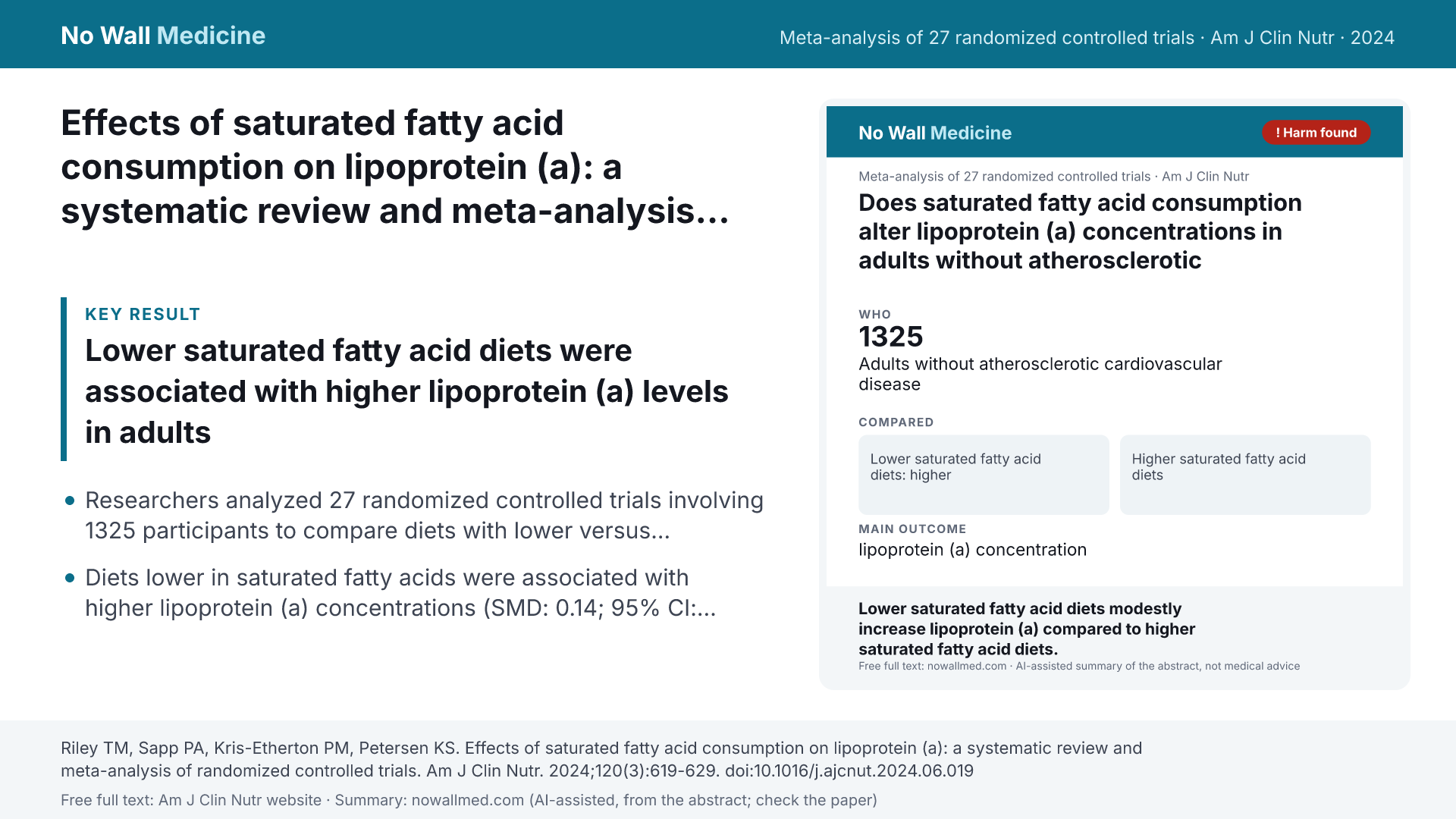
Lower saturated fatty acid diets were associated with higher lipoprotein (a) levels in adults
Effects of saturated fatty acid consumption on lipoprotein (a): a systematic review and meta-analysis of randomized controlled trials
Meta-analysis of 27 randomized controlled trialsHarm found
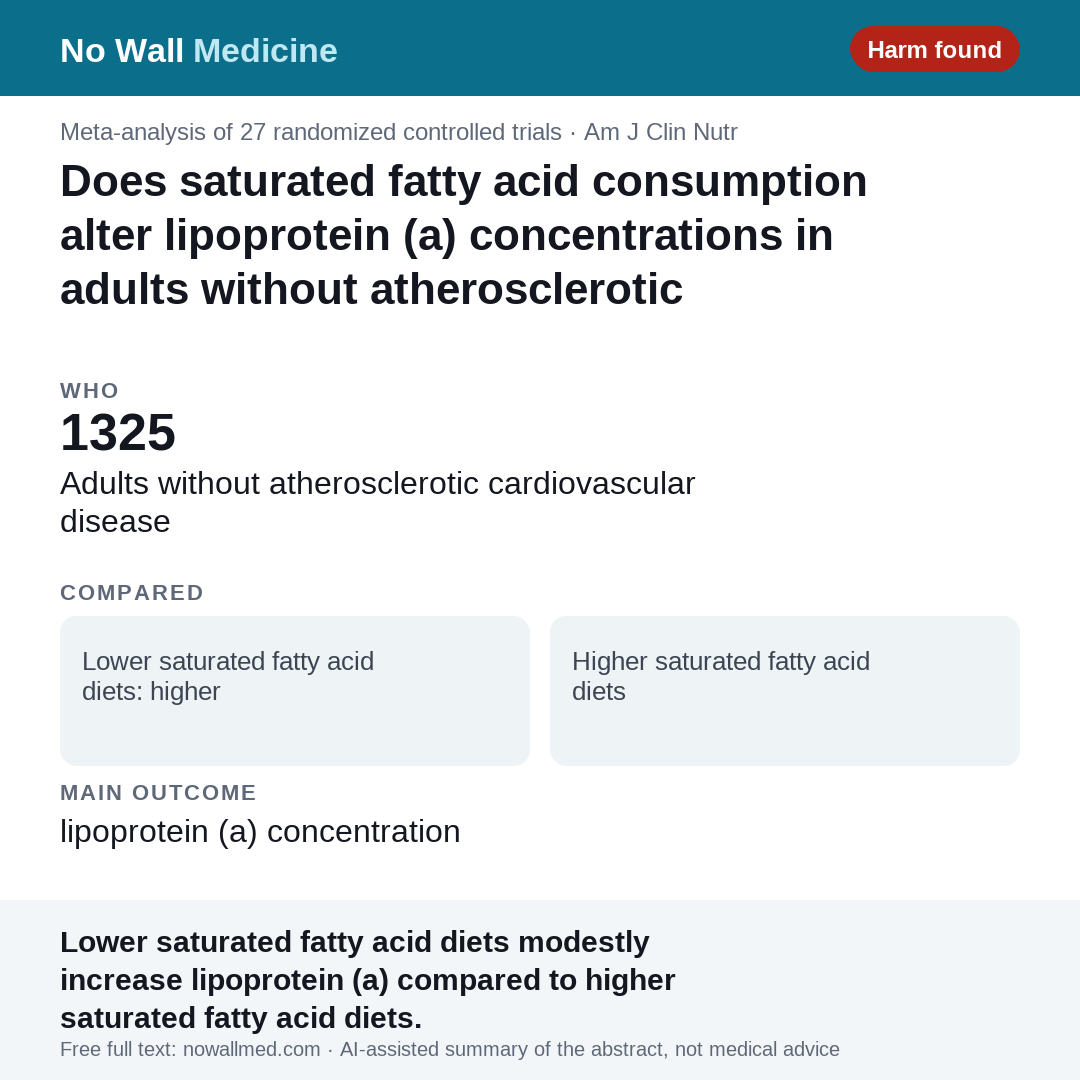
Does saturated fatty acid consumption alter lipoprotein (a) concentrations in adults without atherosclerotic cardiovascular disease?
Who
1325
Adults without atherosclerotic cardiovascular disease
Compared
Lower saturated fatty acid diets: higher
Higher saturated fatty acid diets
Main outcome
lipoprotein (a) concentration
Result: standardized mean difference 0.14 (95% CI 0.03, 0.24)
Bottom line: Lower saturated fatty acid diets modestly increase lipoprotein (a) compared to higher saturated fatty acid diets.
Limitation: Research investigating the atherogenicity of diet-induced lipoprotein (a) changes is needed.
Am J Clin Nutr · 2024-07-02Download image
Clinical question: Does saturated fatty acid consumption alter lipoprotein (a) concentrations in adults without atherosclerotic cardiovascular disease?
Why it matters: The exact effect of saturated fatty acid consumption on lipoprotein (a) concentrations in adults without atherosclerotic cardiovascular disease had not been quantified.
Key points
- Researchers analyzed 27 randomized controlled trials involving 1325 participants to compare diets with lower versus higher saturated fatty acid intake.
- Diets lower in saturated fatty acids were associated with higher lipoprotein (a) concentrations (SMD: 0.14; 95% CI: 0.03, 0.24) compared to higher intake diets.
- The increase in lipoprotein (a) was associated with replacing saturated fatty acids with carbohydrates or trans fatty acids, but not with monounsaturated or polyunsaturated fats.
Headline and key points written with AI from the paper’s abstract, with every number checked against it. Read the paper before relying on them.
Was this summary helpful?
Subject terms
Headline, design, result, key points, caveat and citation as plain text.
Cite this article
Riley TM, Sapp PA, Kris-Etherton PM, Petersen KS. Effects of saturated fatty acid consumption on lipoprotein (a): a systematic review and meta-analysis of randomized controlled trials. Am J Clin Nutr. 2024. doi:10.1016/j.ajcnut.2024.06.019
Spotted a mistake? Suggest a correction