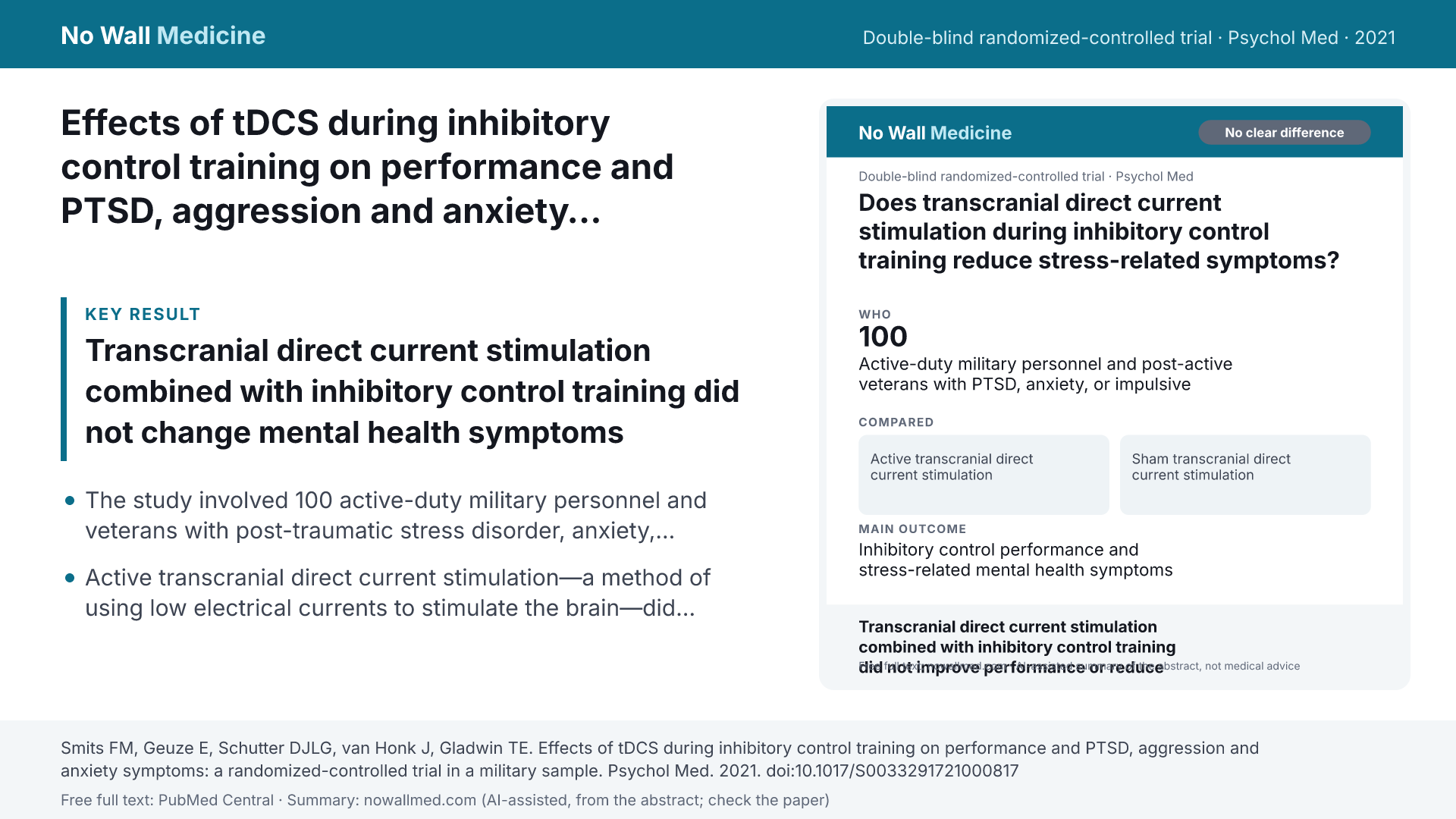
Effects of tDCS during inhibitory control training on performance and PTSD, aggression and anxiety symptoms: a randomized-controlled trial in a military sample
Key result: Transcranial direct current stimulation combined with inhibitory control training did not change mental health symptoms
Double-blind randomized-controlled trialNo clear difference
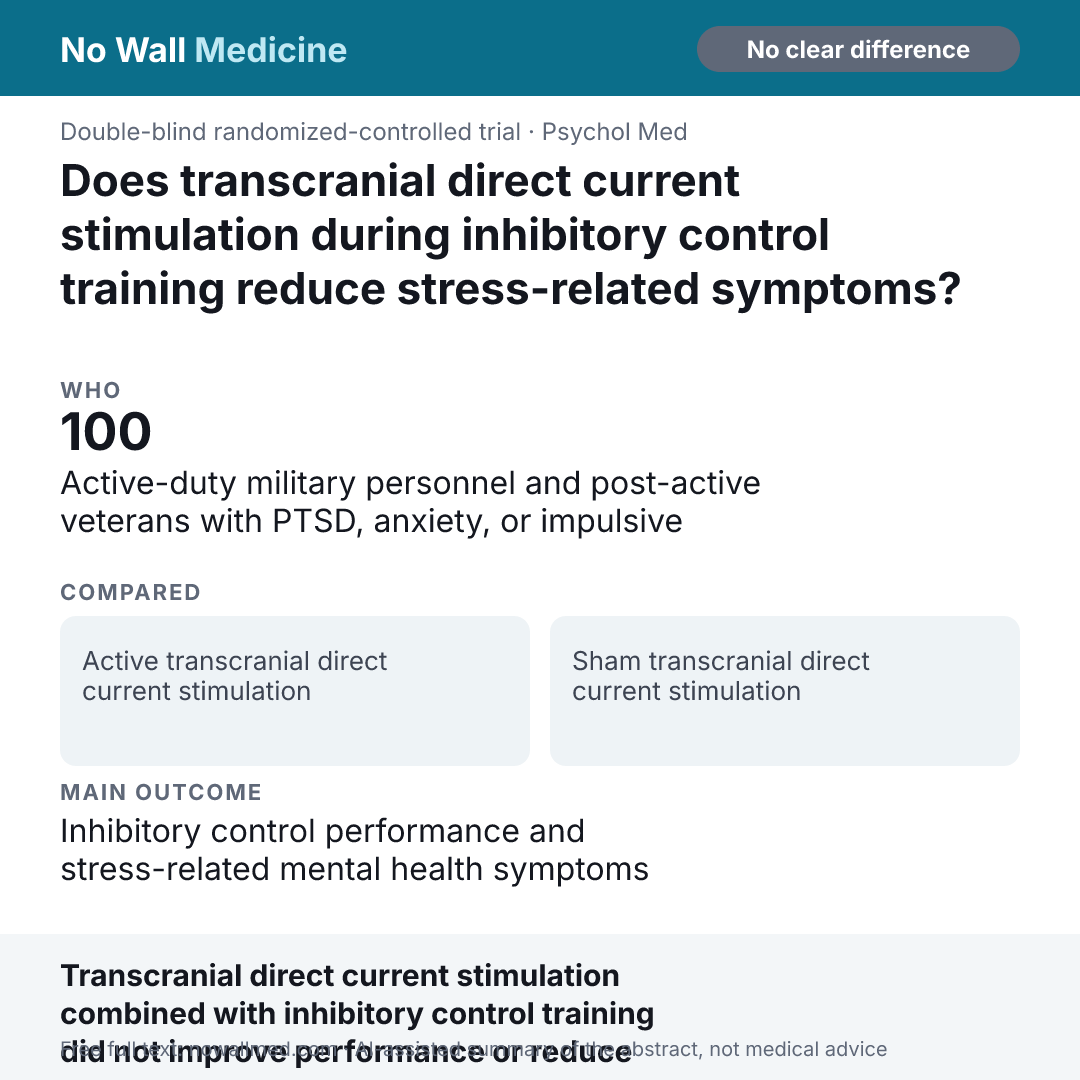
Does transcranial direct current stimulation during inhibitory control training reduce stress-related symptoms?
Who
100
Active-duty military personnel and post-active veterans with PTSD, anxiety, or impulsive aggression
Compared
Active transcranial direct current stimulation
Sham transcranial direct current stimulation
Main outcome
Inhibitory control performance and stress-related mental health symptoms
Bottom line: Transcranial direct current stimulation combined with inhibitory control training did not improve performance or reduce stress-related symptoms.
Limitation: Applying different stimulation parameters or more challenging tasks might be required.
Psychol Med · 2021-03-24 · Save PNG
Key points
- The study involved 100 active-duty military personnel and veterans with post-traumatic stress disorder, anxiety, or impulsive aggression symptoms.
- Active transcranial direct current stimulation—a method of using low electrical currents to stimulate the brain—did not significantly influence self-reported symptoms of PTSD, anxiety, impulsive aggression, or depression.
- The intervention also did not influence performance during inhibitory control training or on assessment tasks compared to a sham treatment.
Discussion prompts
- Would these patients look like yours? Who was left out?
- Is the main outcome one that matters to patients?
- Is the difference large enough to change what you do?
Cite: Smits FM, Geuze E, Schutter DJLG, van Honk J, Gladwin TE. Effects of tDCS during inhibitory control training on performance and PTSD, aggression and anxiety symptoms: a randomized-controlled trial in a military sample. Psychol Med. 2021. doi:10.1017/S0033291721000817
Free full text: PubMed Central · Summary and visual abstract: nowallmed.com/a/effects-of-tdcs-during-inhibitory-control-training-on-performance-and-ge8jkb/ (AI-assisted from the abstract; check the paper before relying on it).