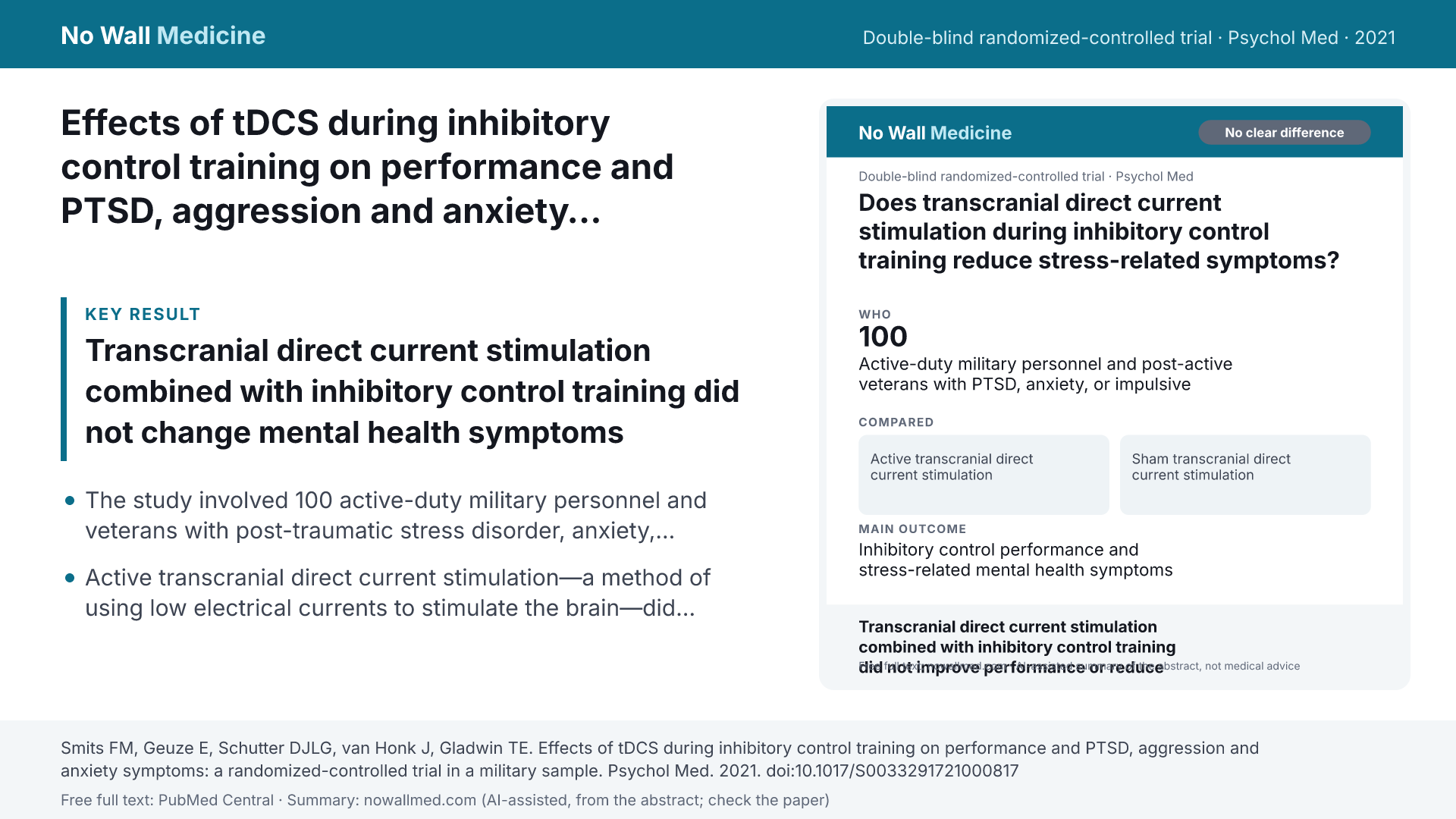
Transcranial direct current stimulation combined with inhibitory control training did not change mental health symptoms
Effects of tDCS during inhibitory control training on performance and PTSD, aggression and anxiety symptoms: a randomized-controlled trial in a military sample
Double-blind randomized-controlled trialNo clear difference
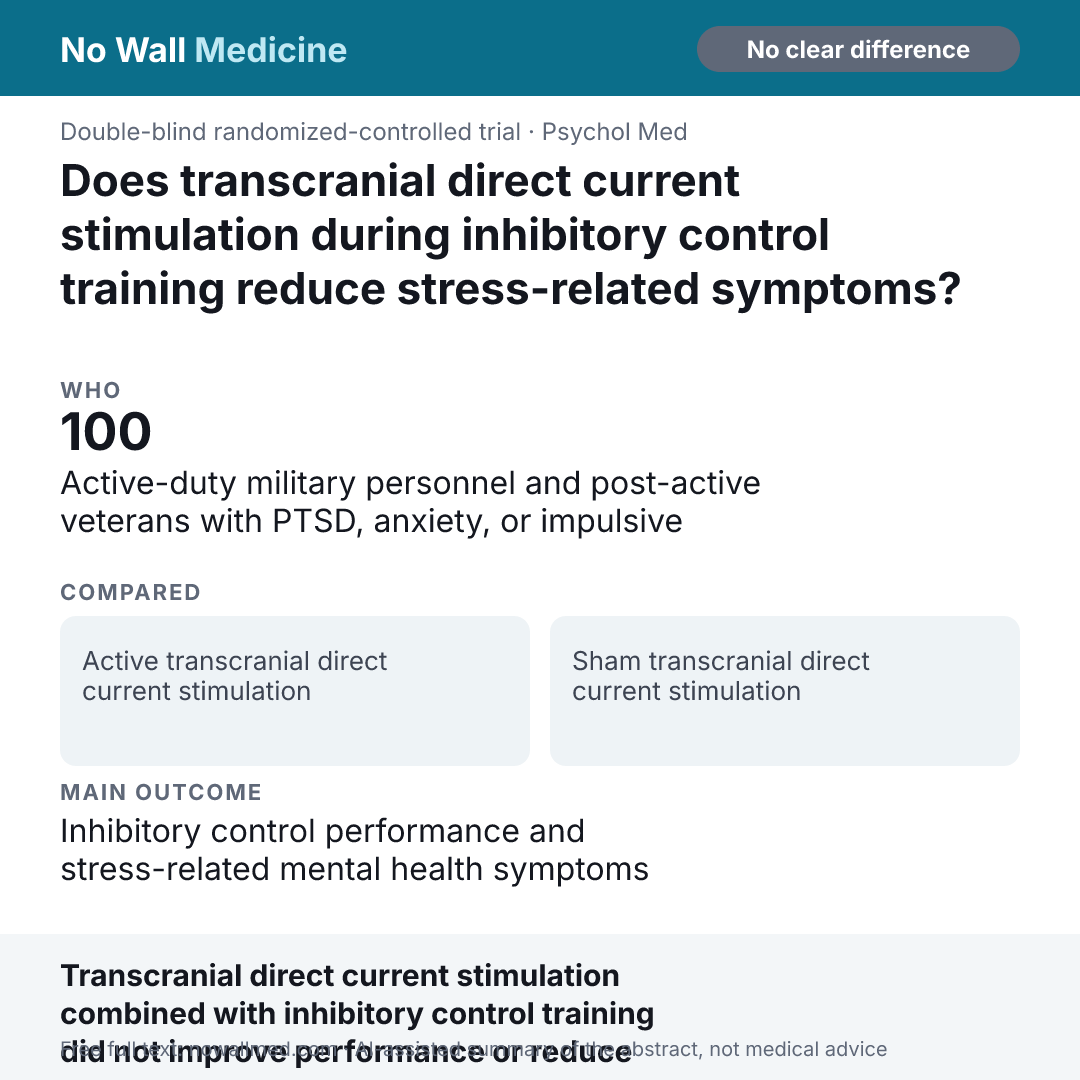
Does transcranial direct current stimulation during inhibitory control training reduce stress-related symptoms?
Who
100
Active-duty military personnel and post-active veterans with PTSD, anxiety, or impulsive aggression
Compared
Active transcranial direct current stimulation
Sham transcranial direct current stimulation
Main outcome
Inhibitory control performance and stress-related mental health symptoms
Bottom line: Transcranial direct current stimulation combined with inhibitory control training did not improve performance or reduce stress-related symptoms.
Limitation: Applying different stimulation parameters or more challenging tasks might be required.
Psychol Med · 2021-03-24 · Save PNG
Clinical question: Does transcranial direct current stimulation during inhibitory control training reduce stress-related symptoms?
Key points
- The study involved 100 active-duty military personnel and veterans with post-traumatic stress disorder, anxiety, or impulsive aggression symptoms.
- Active transcranial direct current stimulation—a method of using low electrical currents to stimulate the brain—did not significantly influence self-reported symptoms of PTSD, anxiety, impulsive aggression, or depression.
- The intervention also did not influence performance during inhibitory control training or on assessment tasks compared to a sham treatment.
Headline and key points written with AI from the paper’s abstract, with every number checked against it. Read the paper before relying on them.
Was this summary helpful?
Headline, design, result, key points, caveat and citation as plain text.
Cite this article
Smits FM, Geuze E, Schutter DJLG, van Honk J, Gladwin TE. Effects of tDCS during inhibitory control training on performance and PTSD, aggression and anxiety symptoms: a randomized-controlled trial in a military sample. Psychol Med. 2021. doi:10.1017/S0033291721000817
Spotted a mistake? Suggest a correction