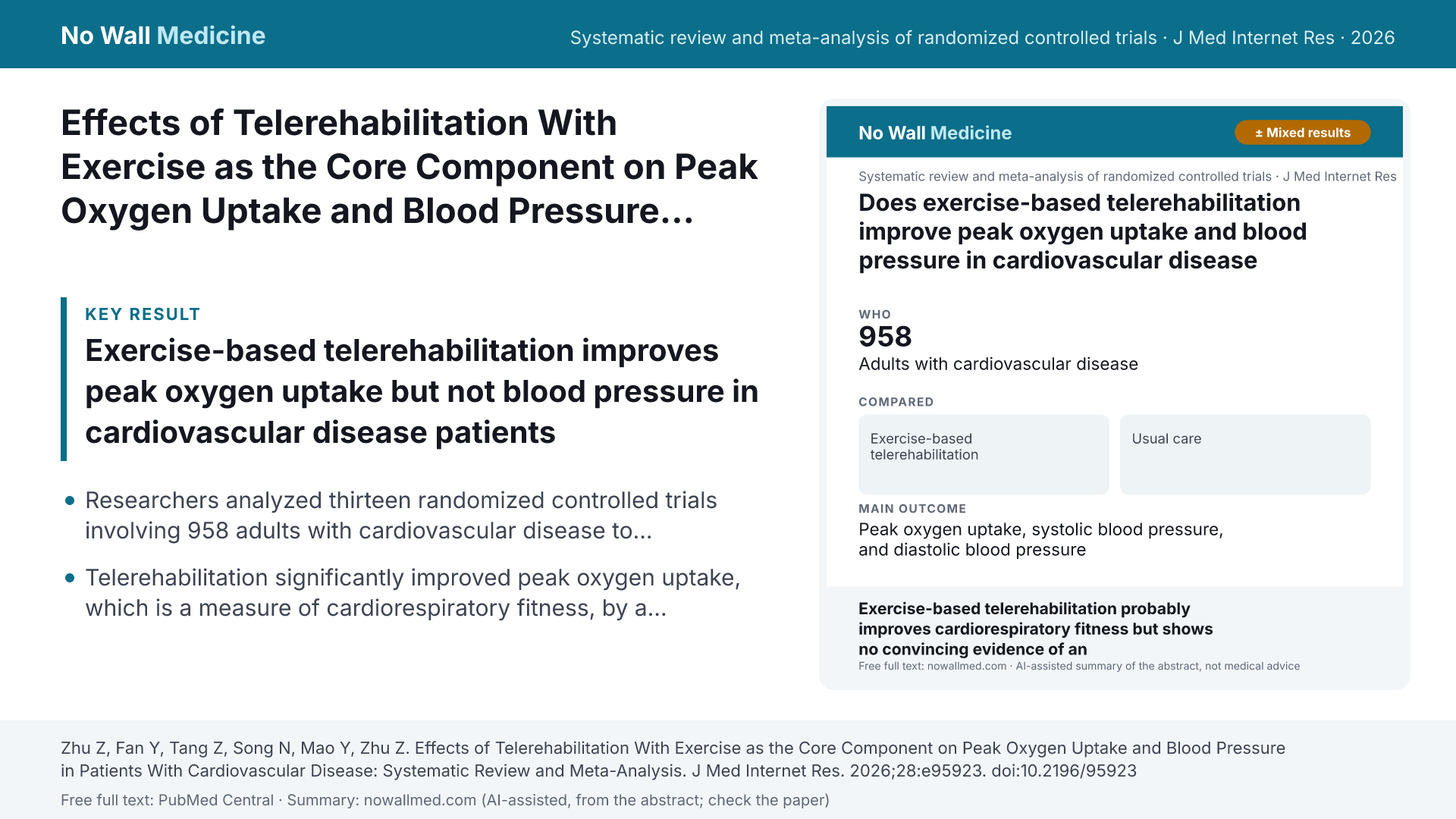
Effects of Telerehabilitation With Exercise as the Core Component on Peak Oxygen Uptake and Blood Pressure in Patients With Cardiovascular Disease: Systematic Review and Meta-Analysis
Key result: Exercise-based telerehabilitation improves peak oxygen uptake but not blood pressure in cardiovascular disease patients
Key points
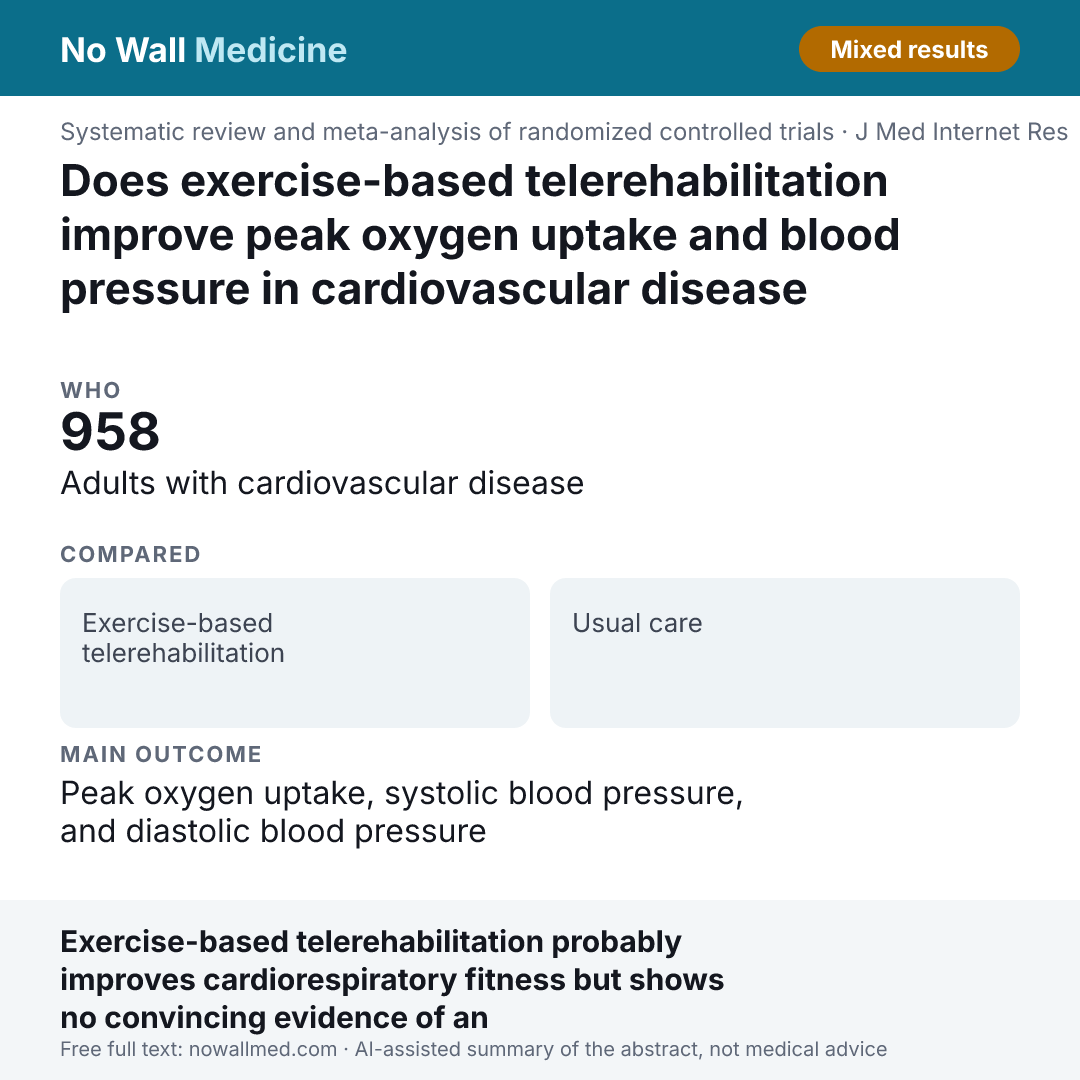
- Researchers analyzed thirteen randomized controlled trials involving 958 adults with cardiovascular disease to compare exercise-based telerehabilitation with usual care.
- Telerehabilitation significantly improved peak oxygen uptake, which is a measure of cardiorespiratory fitness, by a mean difference of 2.58 mL/kg/min.
- No significant changes were found for systolic blood pressure or diastolic blood pressure following the telerehabilitation interventions.
Limitation the authors note: The authors stated that the certainty of evidence was very low across all outcomes.
Discussion prompts
- Would these patients look like yours? Who was left out?
- Is the main outcome one that matters to patients?
- Is the difference large enough to change what you do?
Cite: Zhu Z, Fan Y, Tang Z, Song N, Mao Y, Zhu Z. Effects of Telerehabilitation With Exercise as the Core Component on Peak Oxygen Uptake and Blood Pressure in Patients With Cardiovascular Disease: Systematic Review and Meta-Analysis. J Med Internet Res. 2026;28:e95923. doi:10.2196/95923
Free full text: PubMed Central · Summary and visual abstract: nowallmed.com/a/effects-of-telerehabilitation-with-exercise-as-the-core-component-on-18nuell/ (AI-assisted from the abstract; check the paper before relying on it).