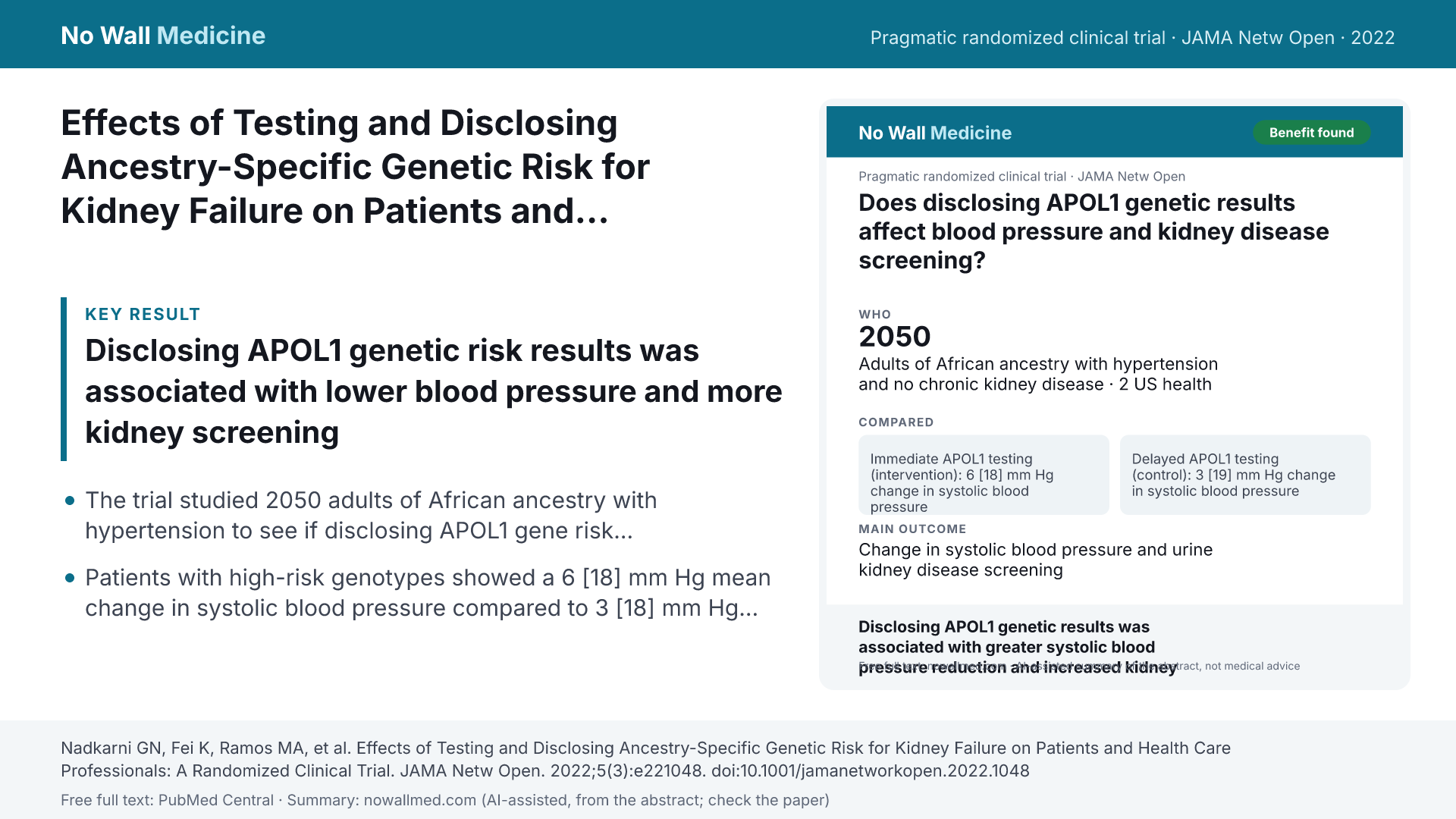
Effects of Testing and Disclosing Ancestry-Specific Genetic Risk for Kidney Failure on Patients and Health Care Professionals: A Randomized Clinical Trial
Key result: Disclosing APOL1 genetic risk results was associated with lower blood pressure and more kidney screening
Key points
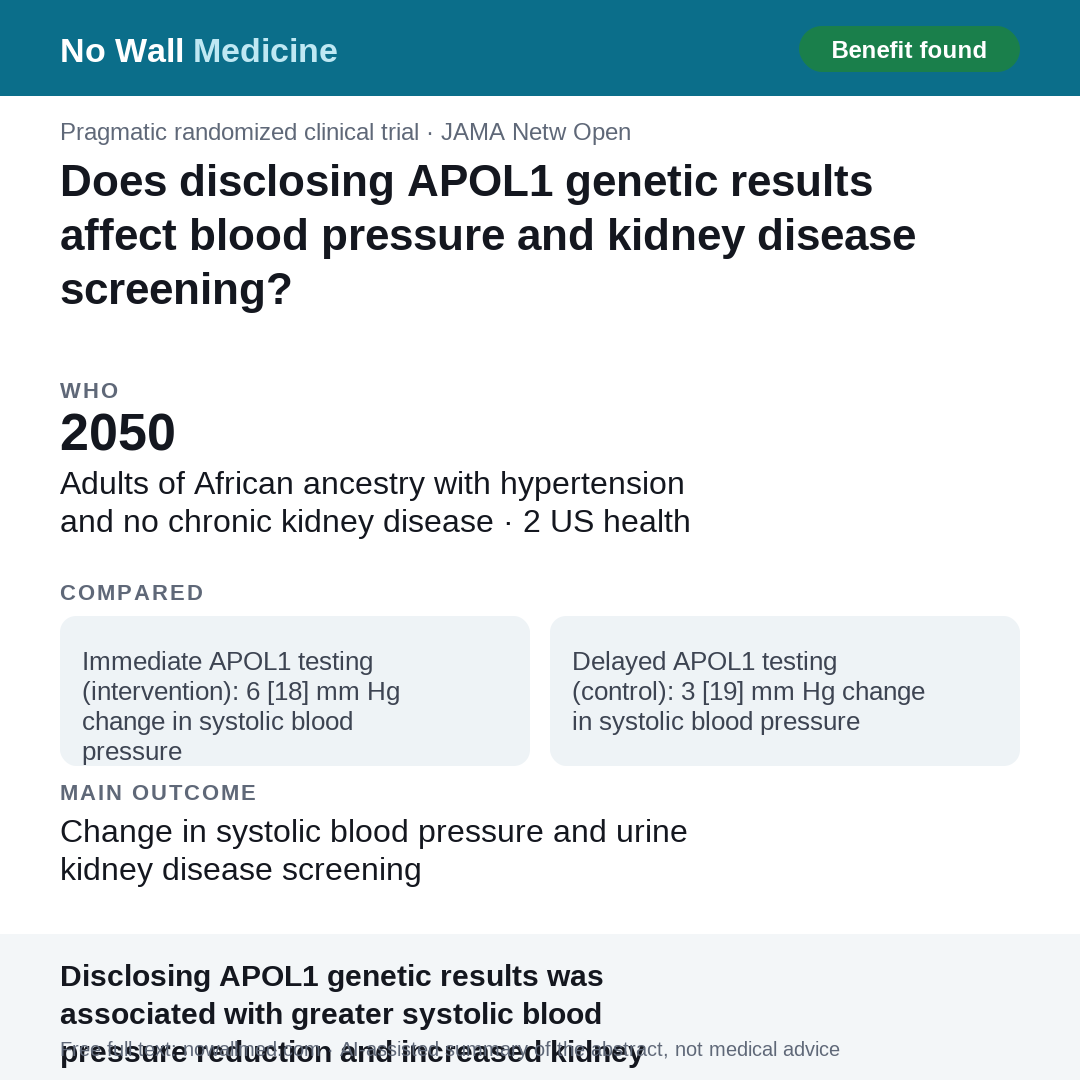
- The trial studied 2050 adults of African ancestry with hypertension to see if disclosing APOL1 gene risk results affected health behaviors.
- Patients with high-risk genotypes showed a 6 [18] mm Hg mean change in systolic blood pressure compared to 3 [18] mm Hg in low-risk patients.
- High-risk patients had a 12% increase in urine kidney disease screening, while low-risk patients had a 6% increase and controls had a 7% increase.
Why it matters: It was unknown if sharing APOL1 genetic testing results for kidney failure risk with patients and clinicians affects blood pressure, kidney screening, or patient behaviors.
Discussion prompts
- Would these patients look like yours? Who was left out?
- Is the main outcome one that matters to patients?
- Is the difference large enough to change what you do?
Cite: Nadkarni GN, Fei K, Ramos MA, et al. Effects of Testing and Disclosing Ancestry-Specific Genetic Risk for Kidney Failure on Patients and Health Care Professionals: A Randomized Clinical Trial. JAMA Netw Open. 2022. doi:10.1001/jamanetworkopen.2022.1048
Free full text: PubMed Central · Summary and visual abstract: nowallmed.com/a/effects-of-testing-and-disclosing-ancestry-specific-genetic-risk-for-rip9ib/ (AI-assisted from the abstract; check the paper before relying on it).