Effects of trying to conceive using an every-other-day strategy versus fertile window monitoring on stress: a 12-month randomized controlled trial
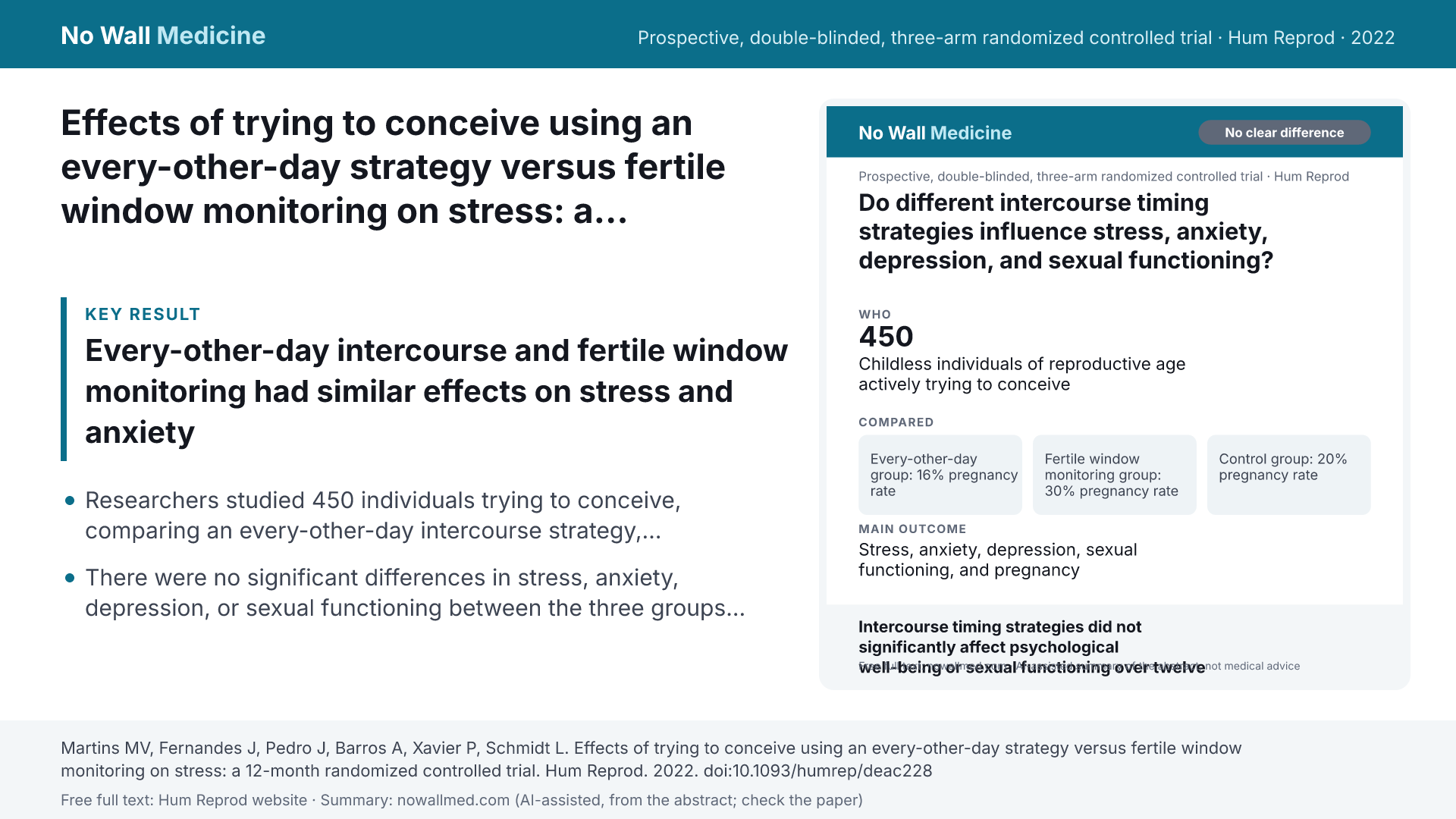
Key result: Every-other-day intercourse and fertile window monitoring had similar effects on stress and anxiety
Key points
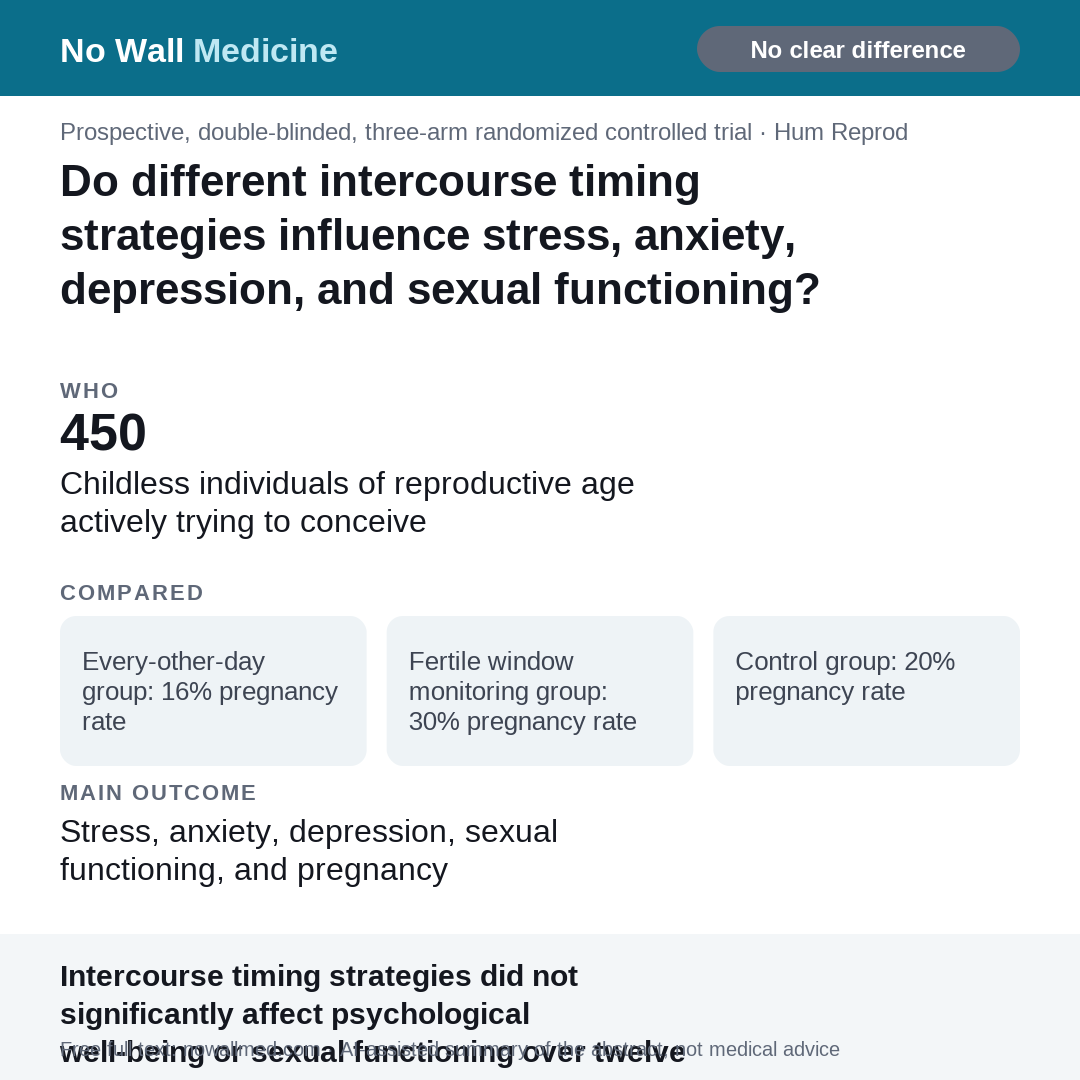
- Researchers studied 450 individuals trying to conceive, comparing an every-other-day intercourse strategy, fertile window monitoring, and a control group with no intervention.
- There were no significant differences in stress, anxiety, depression, or sexual functioning between the three groups over the 12-month period.
- Depression and sexual dysfunction significantly increased over time for all groups, while pregnancy rates were 16% for the every-other-day group, 30% for fertile window monitoring, and 20% for the control group.
Why it matters: It is unknown if different timing strategies for intercourse affect the psychological well-being and sexual functioning of individuals trying to conceive.
Limitation the authors note: The study might be prone to bias because almost 30% of the sample met the chronological criteria for infertility and other reproductive strategies may have been used before recruitment.
Discussion prompts
- Would these patients look like yours? Who was left out?
- Is the main outcome one that matters to patients?
- Is the difference large enough to change what you do?
Cite: Martins MV, Fernandes J, Pedro J, Barros A, Xavier P, Schmidt L. Effects of trying to conceive using an every-other-day strategy versus fertile window monitoring on stress: a 12-month randomized controlled trial. Hum Reprod. 2022. doi:10.1093/humrep/deac228
Free full text: Hum Reprod website · Summary and visual abstract: nowallmed.com/a/effects-of-trying-to-conceive-using-an-every-other-day-strategy-1ifdevv/ (AI-assisted from the abstract; check the paper before relying on it).