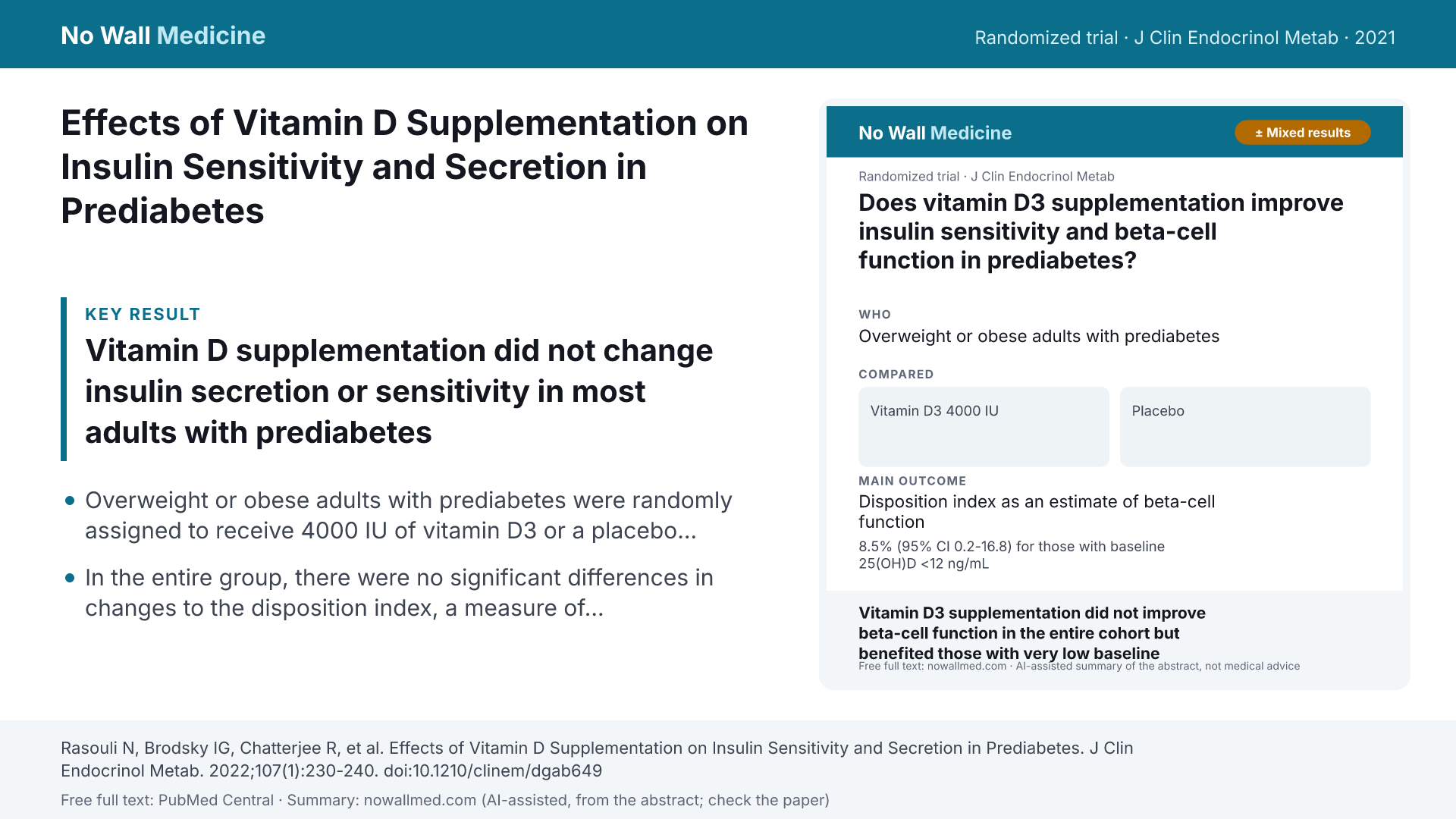
Vitamin D supplementation did not change insulin secretion or sensitivity in most adults with prediabetes
Effects of Vitamin D Supplementation on Insulin Sensitivity and Secretion in Prediabetes
Randomized trialMixed results
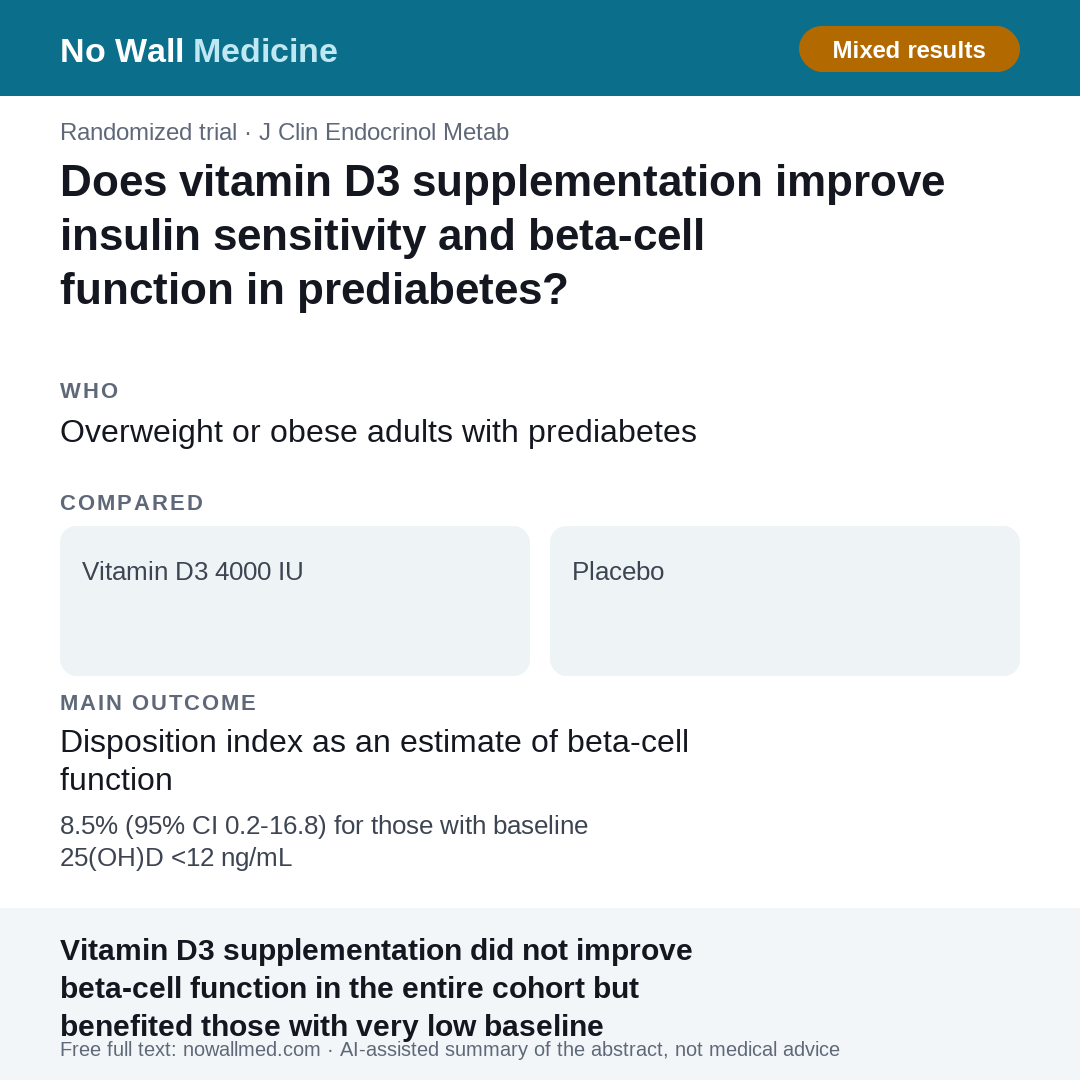
Does vitamin D3 supplementation improve insulin sensitivity and beta-cell function in prediabetes?
Who
Overweight or obese adults with prediabetes
Compared
Vitamin D3 4000 IU
Placebo
Main outcome
Disposition index as an estimate of beta-cell function
Result: 8.5% (95% CI 0.2-16.8) for those with baseline 25(OH)D <12 ng/mL
Bottom line: Vitamin D3 supplementation did not improve beta-cell function in the entire cohort but benefited those with very low baseline levels.
J Clin Endocrinol Metab · 2021-09-03Download image
Clinical question: Does vitamin D3 supplementation improve insulin sensitivity and beta-cell function in prediabetes?
Key points
- Overweight or obese adults with prediabetes were randomly assigned to receive 4000 IU of vitamin D3 or a placebo daily for 24 months.
- In the entire group, there were no significant differences in changes to the disposition index, a measure of beta-cell function, between the two groups.
- Among participants starting with vitamin D levels below 12 ng/mL, the mean percent difference for the disposition index between groups was 8.5%.
Headline and key points written with AI from the paper’s abstract, with every number checked against it. Read the paper before relying on them.
Was this summary helpful?
Subject terms
Cite this article
Rasouli N, Brodsky IG, Chatterjee R, et al. Effects of Vitamin D Supplementation on Insulin Sensitivity and Secretion in Prediabetes. J Clin Endocrinol Metab. 2021. doi:10.1210/clinem/dgab649
Spotted a mistake? Suggest a correction