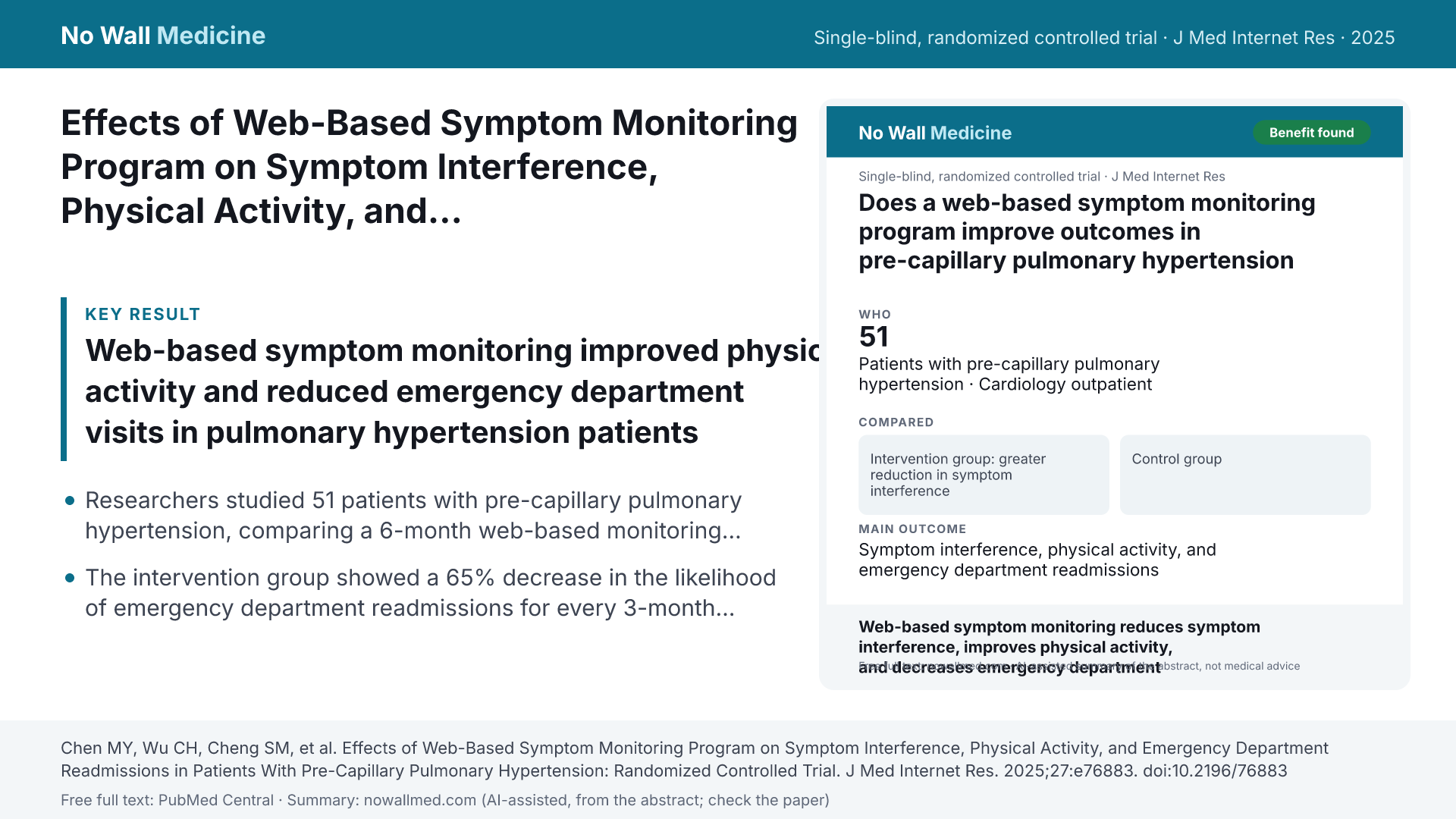
Effects of Web-Based Symptom Monitoring Program on Symptom Interference, Physical Activity, and Emergency Department Readmissions in Patients With Pre-Capillary Pulmonary Hypertension: Randomized Controlled Trial
Key result: Web-based symptom monitoring improved physical activity and reduced emergency department visits in pulmonary hypertension patients
Key points
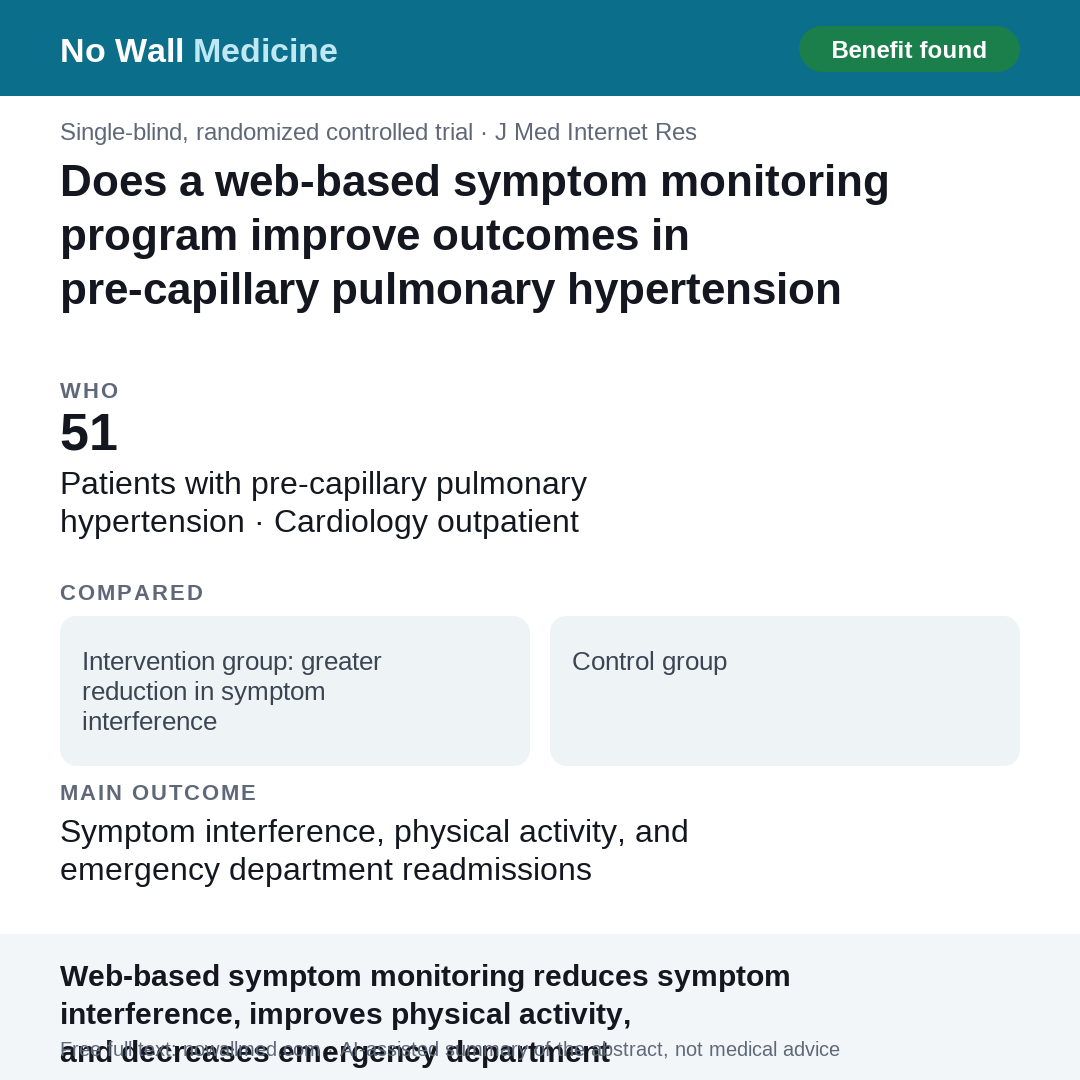
- Researchers studied 51 patients with pre-capillary pulmonary hypertension, comparing a 6-month web-based monitoring program to standard care.
- The intervention group showed a 65% decrease in the likelihood of emergency department readmissions for every 3-month interval during the 9-month study.
- Patients using the web-based program had greater reductions in symptom interference and improved 6-minute walk test distances by an average of 9.8 meters every 3 months.
Why it matters: Patients with pre-capillary pulmonary hypertension face high morbidity and frequent emergency department visits, creating a need for effective self-management and early detection of worsening symptoms.
Discussion prompts
- Would these patients look like yours? Who was left out?
- Is the main outcome one that matters to patients?
- Is the difference large enough to change what you do?
Cite: Chen MY, Wu CH, Cheng SM, et al. Effects of Web-Based Symptom Monitoring Program on Symptom Interference, Physical Activity, and Emergency Department Readmissions in Patients With Pre-Capillary Pulmonary Hypertension: Randomized Controlled Trial. J Med Internet Res. 2025. doi:10.2196/76883
Free full text: PubMed Central · Summary and visual abstract: nowallmed.com/a/effects-of-web-based-symptom-monitoring-program-on-symptom-16s0w9h/ (AI-assisted from the abstract; check the paper before relying on it).