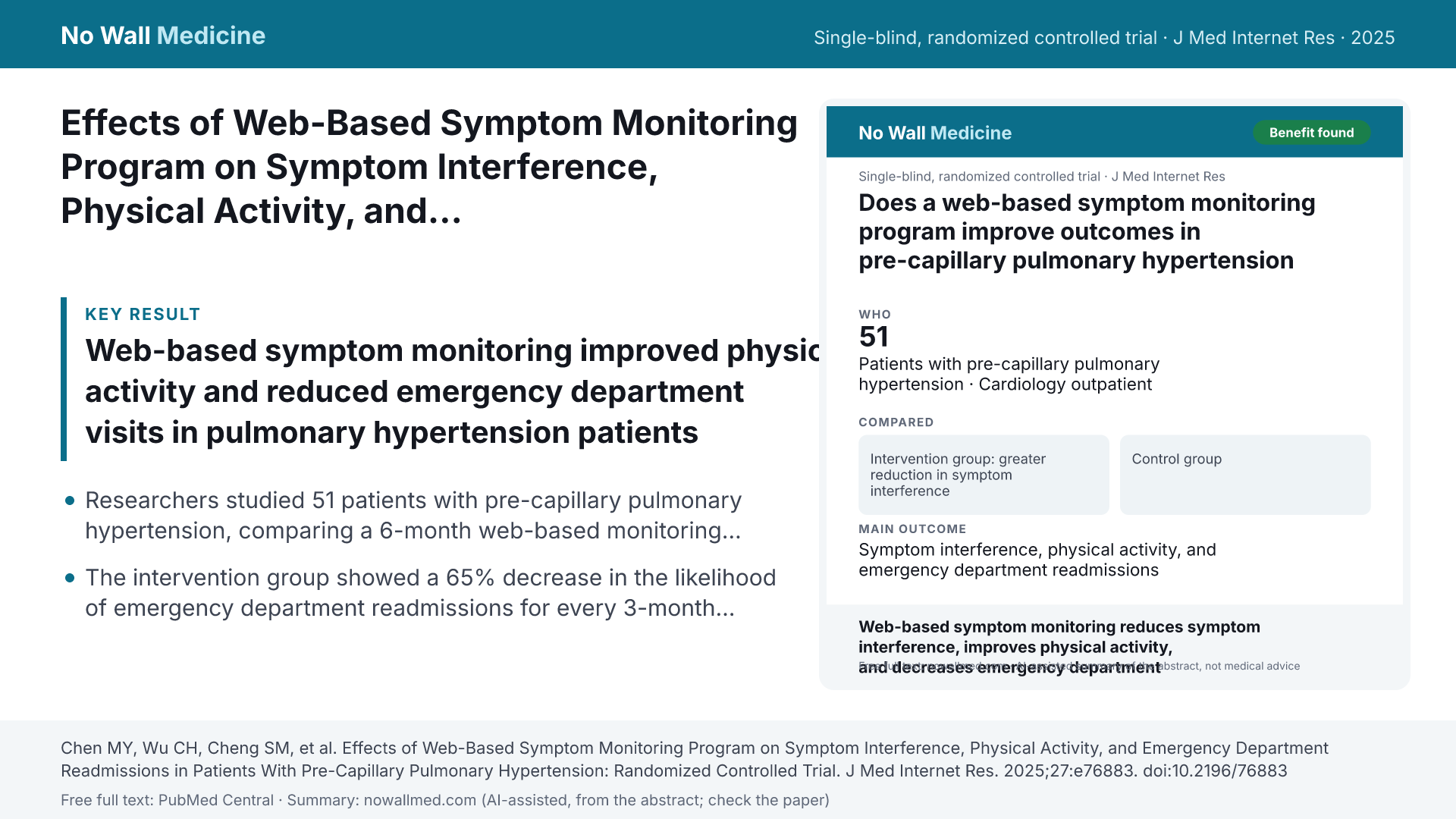
Web-based symptom monitoring improved physical activity and reduced emergency department visits in pulmonary hypertension patients
Effects of Web-Based Symptom Monitoring Program on Symptom Interference, Physical Activity, and Emergency Department Readmissions in Patients With Pre-Capillary Pulmonary Hypertension: Randomized Controlled Trial
Single-blind, randomized controlled trialBenefit found
Does a web-based symptom monitoring program improve outcomes in pre-capillary pulmonary hypertension patients?
Who
51
Patients with pre-capillary pulmonary hypertension · Cardiology outpatient department in northern Taiwan
Compared
Intervention group: greater reduction in symptom interference
Control group
Main outcome
Symptom interference, physical activity, and emergency department readmissions
Result: OR=0.35 (95% CI 0.93 to 18.70 for 6-minute walk test; OR=0.35 for emergency department readmissions)
Bottom line: Web-based symptom monitoring reduces symptom interference, improves physical activity, and decreases emergency department readmissions in pulmonary hypertension patients.
J Med Internet Res · 2025-09-15Download image
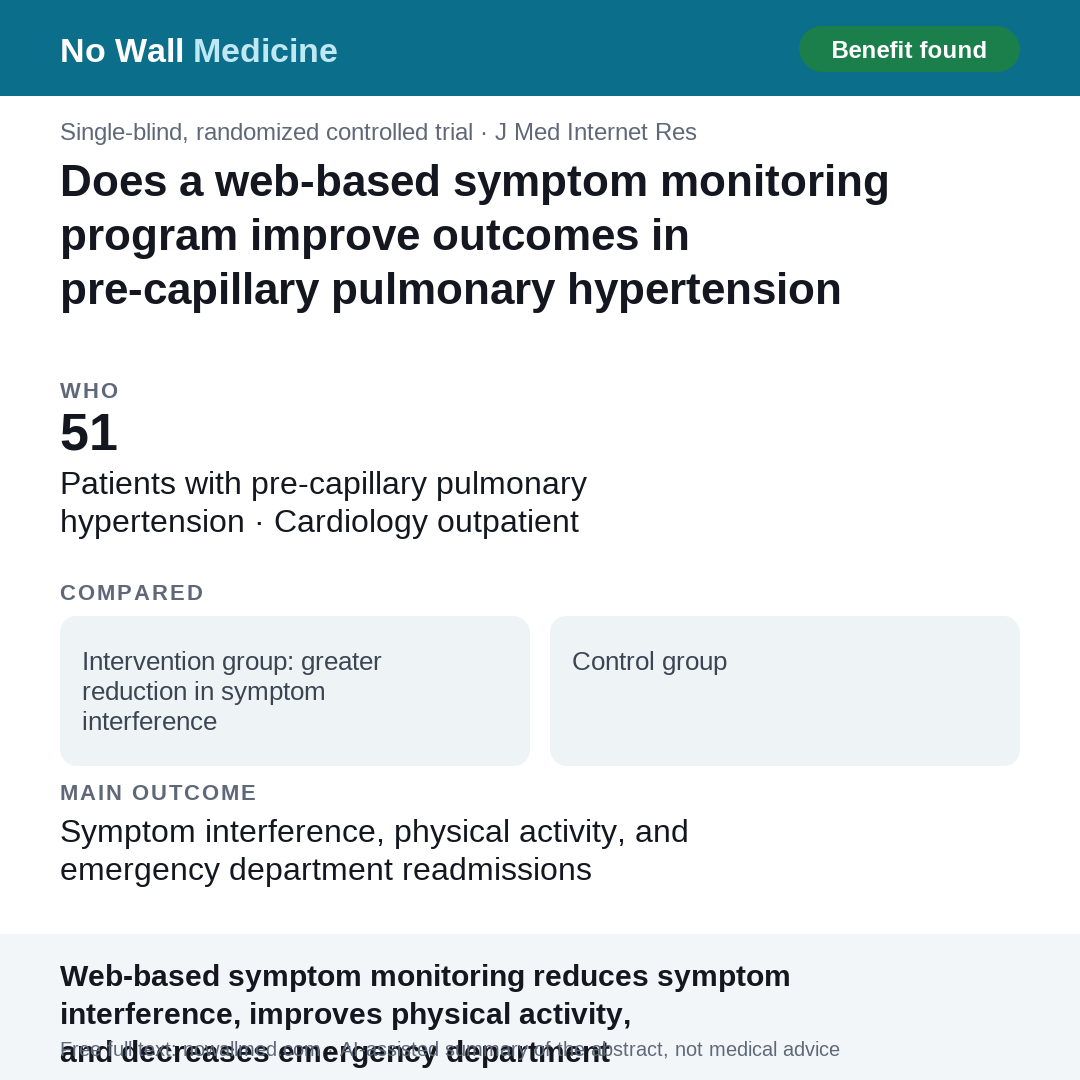
Clinical question: Does a web-based symptom monitoring program improve outcomes in pre-capillary pulmonary hypertension patients?
Why it matters: Patients with pre-capillary pulmonary hypertension face high morbidity and frequent emergency department visits, creating a need for effective self-management and early detection of worsening symptoms.
Key points
- Researchers studied 51 patients with pre-capillary pulmonary hypertension, comparing a 6-month web-based monitoring program to standard care.
- The intervention group showed a 65% decrease in the likelihood of emergency department readmissions for every 3-month interval during the 9-month study.
- Patients using the web-based program had greater reductions in symptom interference and improved 6-minute walk test distances by an average of 9.8 meters every 3 months.
Headline and key points written with AI from the paper’s abstract, with every number checked against it. Read the paper before relying on them.
Was this summary helpful?
Subject terms
Cite this article
Chen MY, Wu CH, Cheng SM, et al. Effects of Web-Based Symptom Monitoring Program on Symptom Interference, Physical Activity, and Emergency Department Readmissions in Patients With Pre-Capillary Pulmonary Hypertension: Randomized Controlled Trial. J Med Internet Res. 2025. doi:10.2196/76883
Spotted a mistake? Suggest a correction