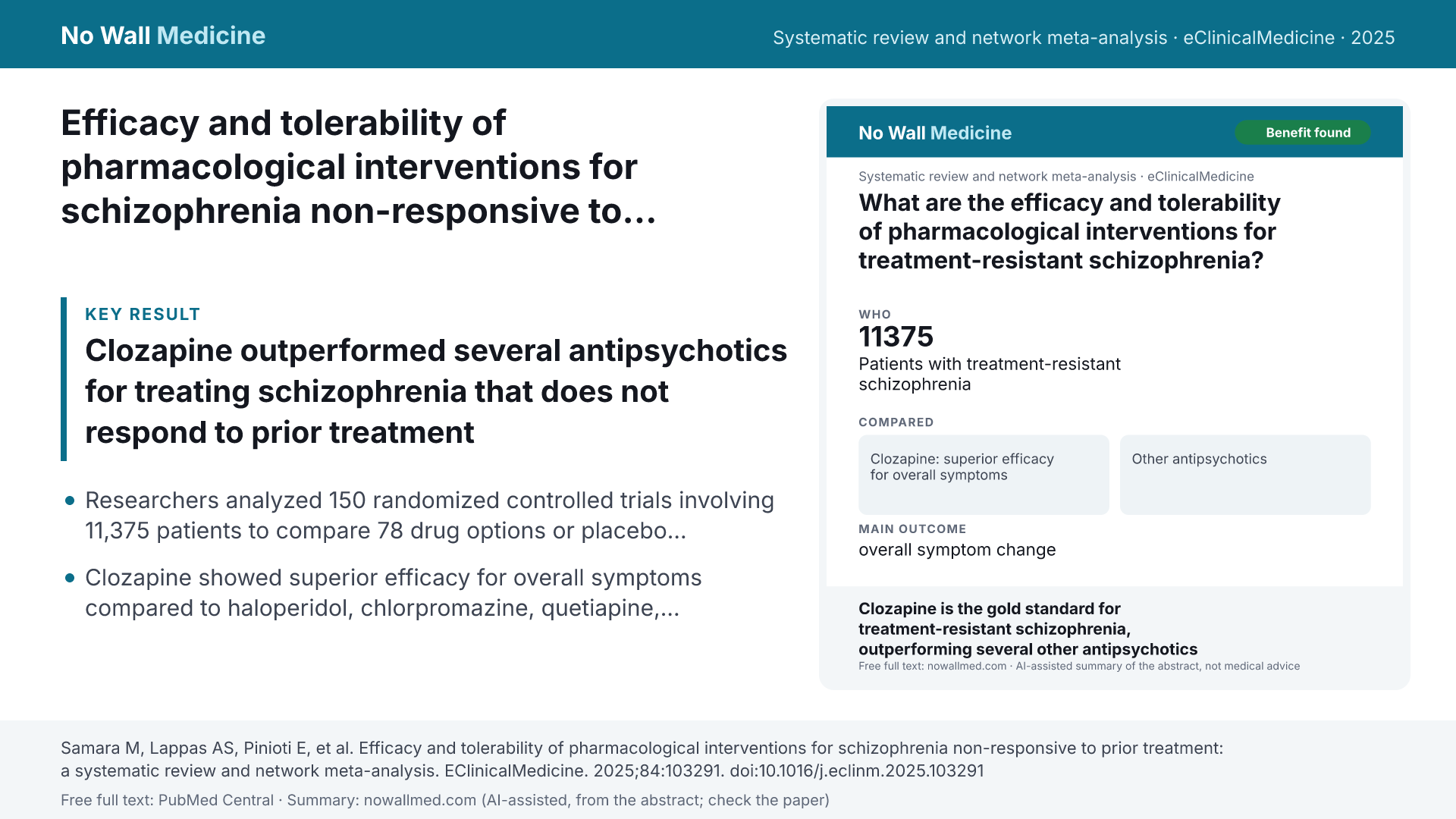
Clozapine outperformed several antipsychotics for treating schizophrenia that does not respond to prior treatment
Efficacy and tolerability of pharmacological interventions for schizophrenia non-responsive to prior treatment: a systematic review and network meta-analysis
Systematic review and network meta-analysisBenefit found
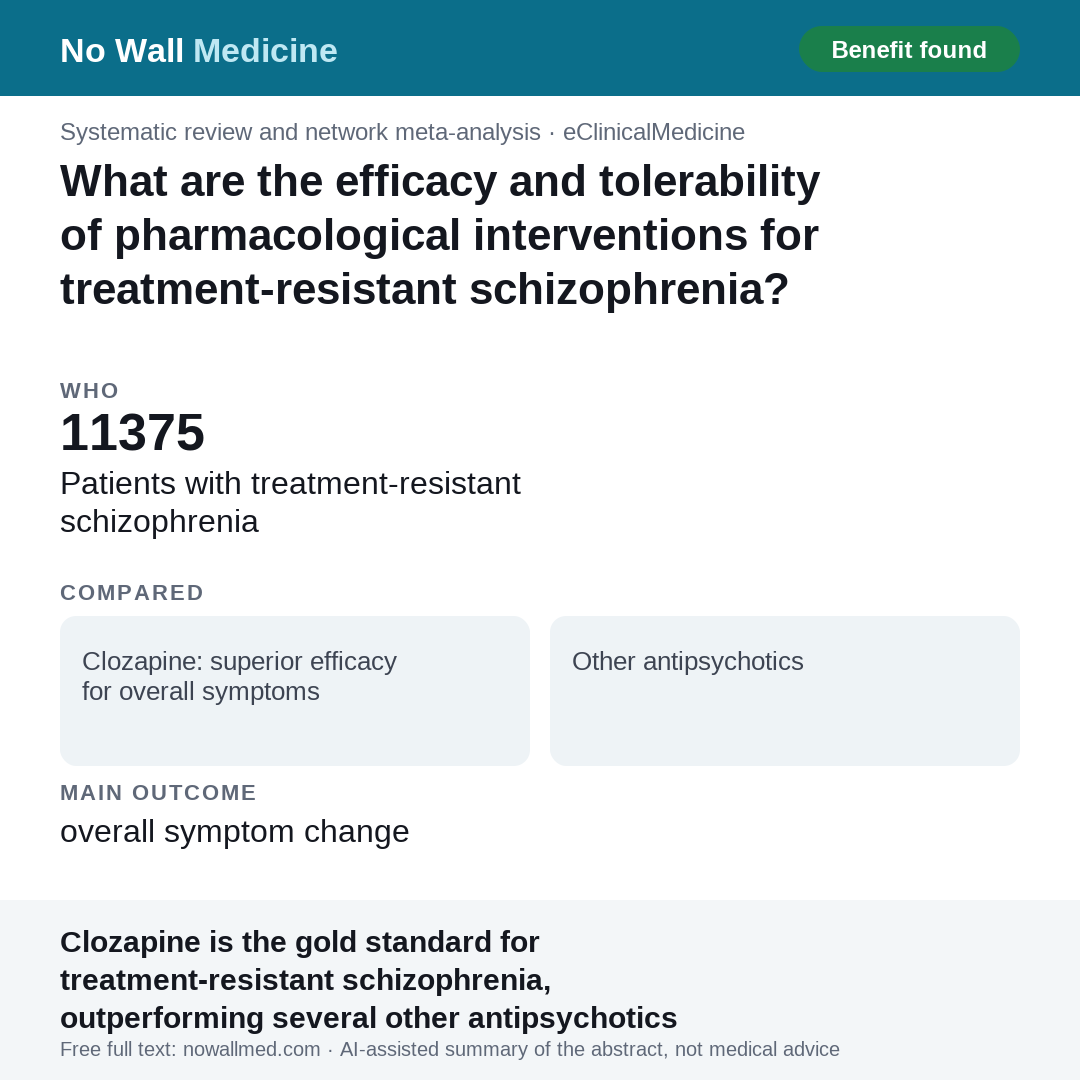
What are the efficacy and tolerability of pharmacological interventions for treatment-resistant schizophrenia?
Who
11375
Patients with treatment-resistant schizophrenia
Compared
Clozapine: superior efficacy for overall symptoms
Other antipsychotics
Main outcome
overall symptom change
Bottom line: Clozapine is the gold standard for treatment-resistant schizophrenia, outperforming several other antipsychotics and certain combinations.
Limitation: Confidence in most estimates was low or very low and network sparsity increases chance findings.
eClinicalMedicine · 2025-06-07Download image
Clinical question: What are the efficacy and tolerability of pharmacological interventions for treatment-resistant schizophrenia?
Why it matters: Clinicians face challenges in choosing the most effective and tolerable pharmacological options for patients with schizophrenia who do not respond to initial treatments.
Key points
- Researchers analyzed 150 randomized controlled trials involving 11,375 patients to compare 78 drug options or placebo for treatment-resistant schizophrenia.
- Clozapine showed superior efficacy for overall symptoms compared to haloperidol, chlorpromazine, quetiapine, and sulpiride with standardized mean differences of 0.35 to 1.00.
- Combinations of clozapine with drugs like amisulpride, duloxetine, and memantine were associated with improved overall symptoms compared to clozapine monotherapy.
Limitation the authors note: Confidence in most estimates was low or very low, and network sparsity increases the likelihood of chance findings for estimates based on single studies.
Headline and key points written with AI from the paper’s abstract, with every number checked against it. Read the paper before relying on them.
Was this summary helpful?
Cite this article
Samara M, Lappas AS, Pinioti E, et al. Efficacy and tolerability of pharmacological interventions for schizophrenia non-responsive to prior treatment: a systematic review and network meta-analysis. eClinicalMedicine. 2025. doi:10.1016/j.eclinm.2025.103291
Spotted a mistake? Suggest a correction