Efficacy and tolerability of pharmacological interventions for schizophrenia non-responsive to prior treatment: a systematic review and network meta-analysis
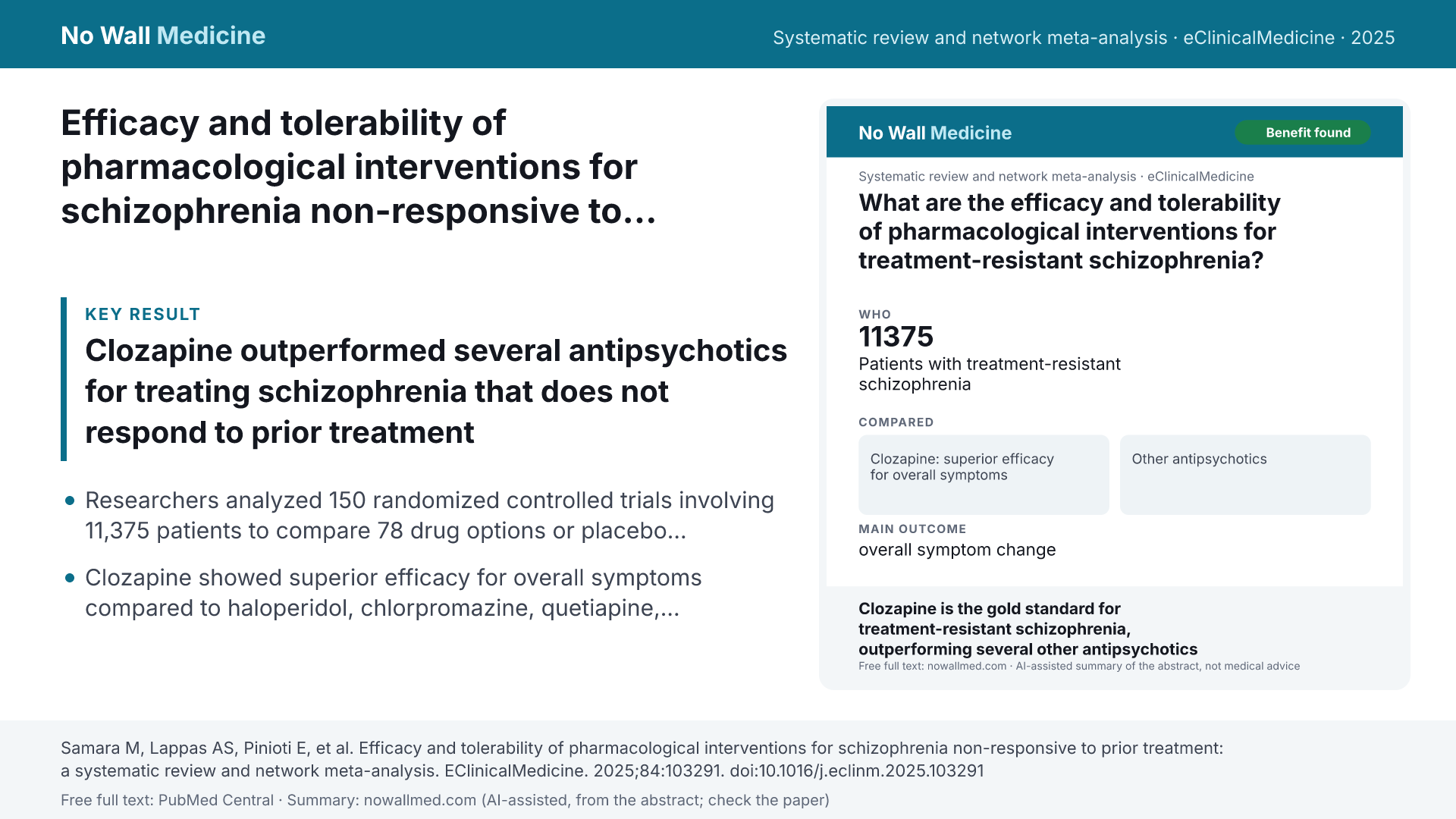
Key result: Clozapine outperformed several antipsychotics for treating schizophrenia that does not respond to prior treatment
Key points
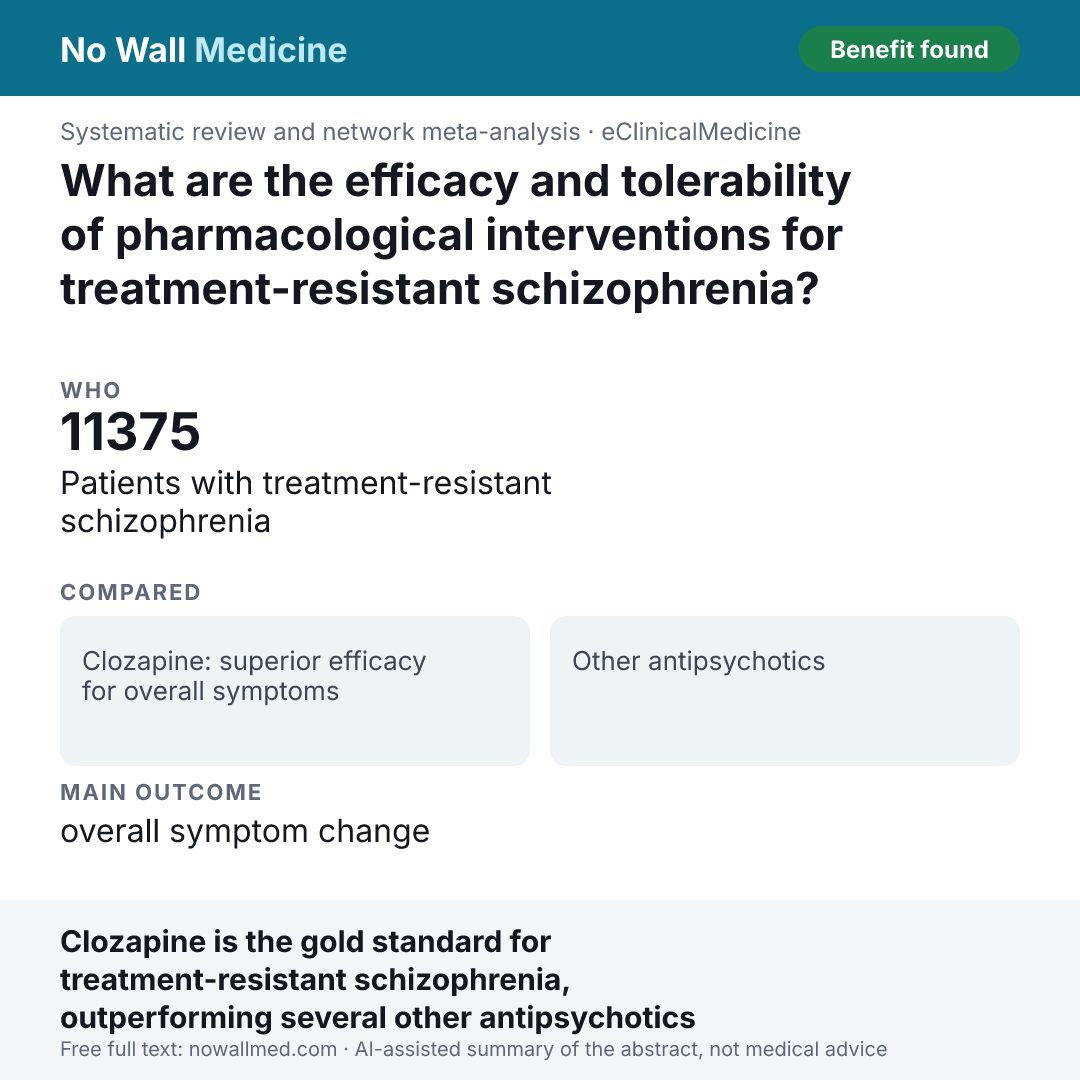
- Researchers analyzed 150 randomized controlled trials involving 11,375 patients to compare 78 drug options or placebo for treatment-resistant schizophrenia.
- Clozapine showed superior efficacy for overall symptoms compared to haloperidol, chlorpromazine, quetiapine, and sulpiride with standardized mean differences of 0.35 to 1.00.
- Combinations of clozapine with drugs like amisulpride, duloxetine, and memantine were associated with improved overall symptoms compared to clozapine monotherapy.
Why it matters: Clinicians face challenges in choosing the most effective and tolerable pharmacological options for patients with schizophrenia who do not respond to initial treatments.
Limitation the authors note: Confidence in most estimates was low or very low, and network sparsity increases the likelihood of chance findings for estimates based on single studies.
Discussion prompts
- Would these patients look like yours? Who was left out?
- Is the main outcome one that matters to patients?
- Is the difference large enough to change what you do?
Cite: Samara M, Lappas AS, Pinioti E, et al. Efficacy and tolerability of pharmacological interventions for schizophrenia non-responsive to prior treatment: a systematic review and network meta-analysis. EClinicalMedicine. 2025;84:103291. doi:10.1016/j.eclinm.2025.103291
Free full text: PubMed Central · Summary and visual abstract: nowallmed.com/a/efficacy-and-tolerability-of-pharmacological-interventions-for-q96zk4/ (AI-assisted from the abstract; check the paper before relying on it).