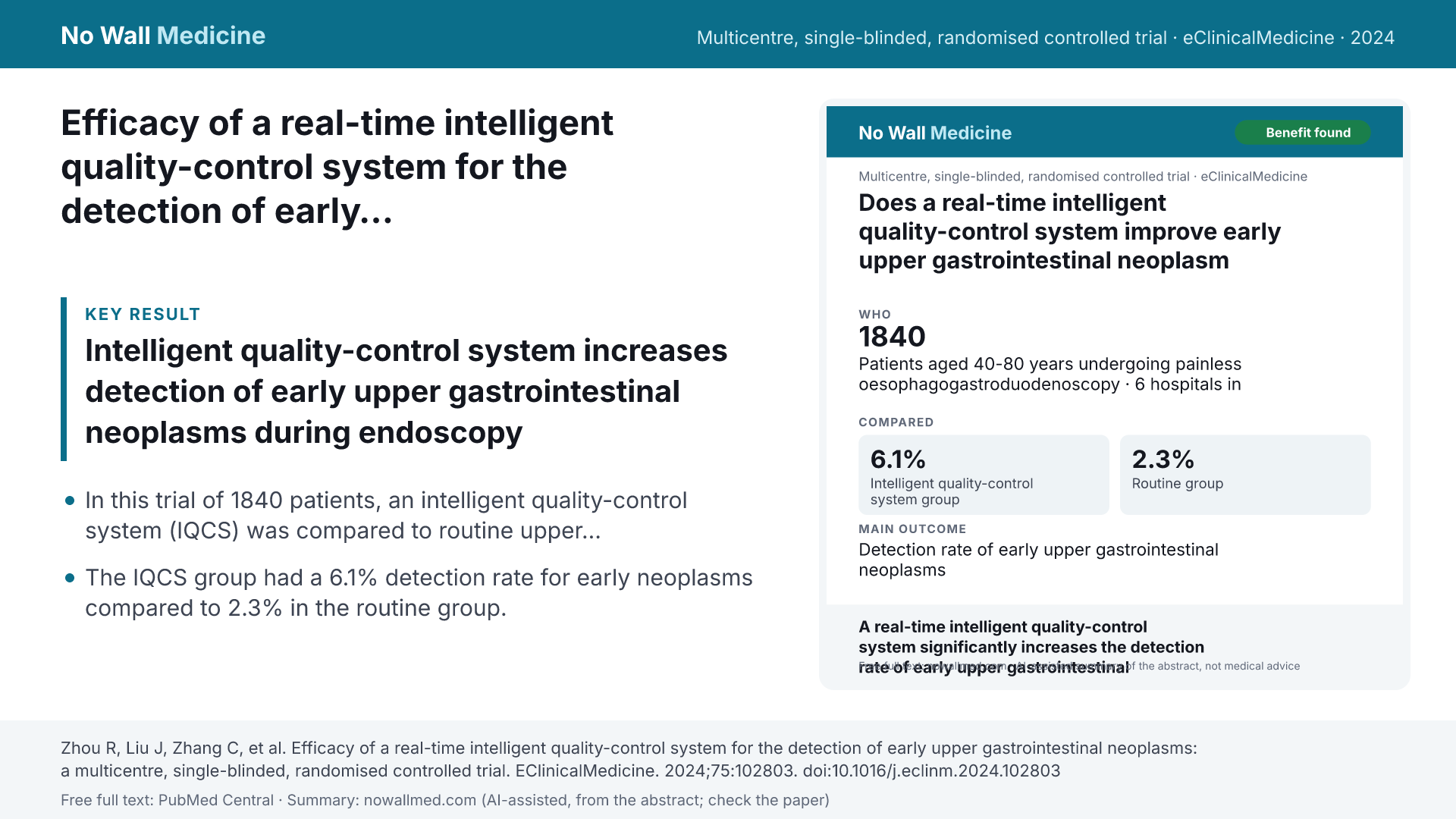
Efficacy of a real-time intelligent quality-control system for the detection of early upper gastrointestinal neoplasms: a multicentre, single-blinded, randomised controlled trial
Key result: Intelligent quality-control system increases detection of early upper gastrointestinal neoplasms during endoscopy
Key points
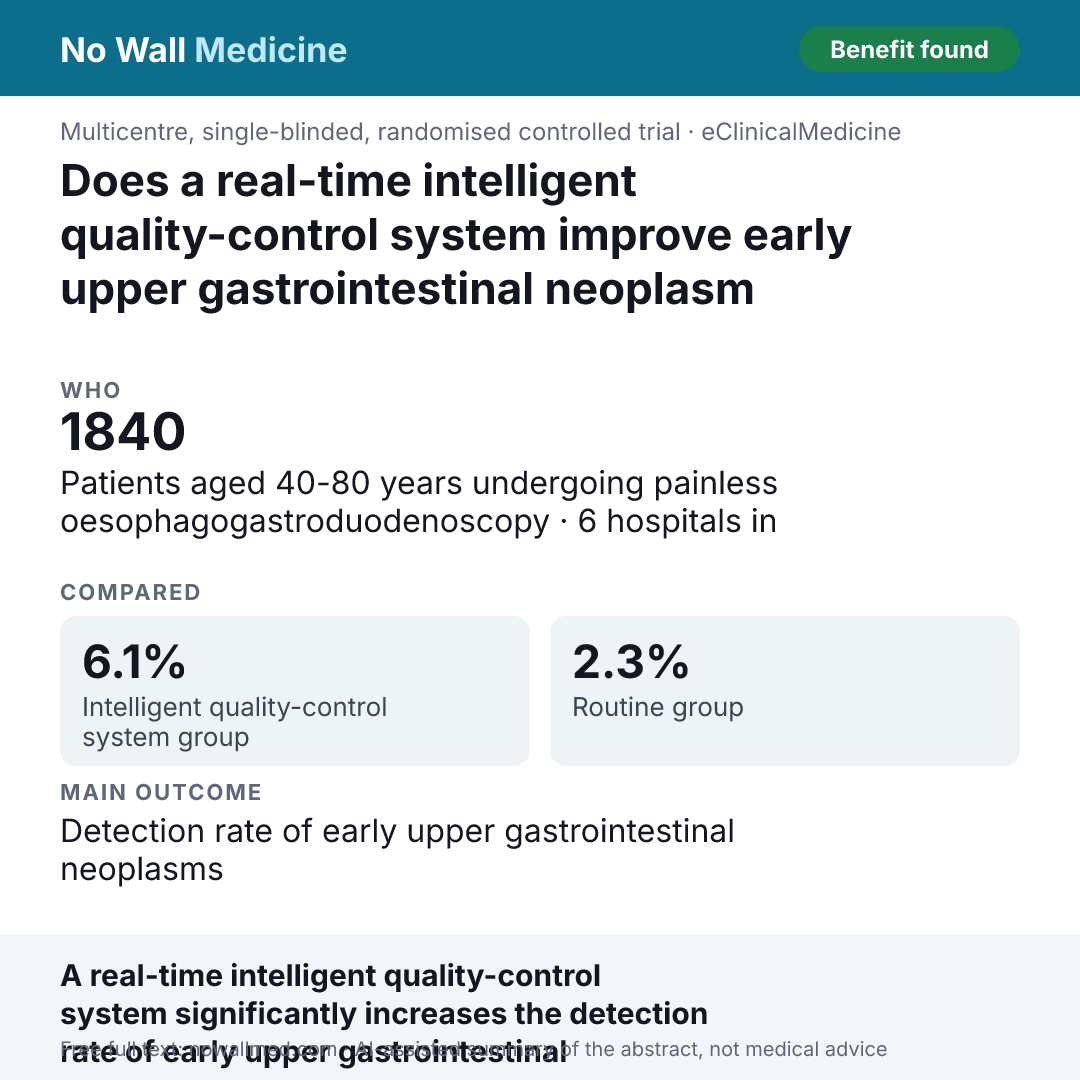
- In this trial of 1840 patients, an intelligent quality-control system (IQCS) was compared to routine upper gastrointestinal endoscopy (OGD) procedures.
- The IQCS group had a 6.1% detection rate for early neoplasms compared to 2.3% in the routine group.
- The IQCS group showed fewer blind spots and higher stomach cleanliness scores across multiple regions compared to the routine group.
In absolute numbers: Intelligent quality-control system group 6.1% vs Routine group 2.3%, a difference of 3.8 percentage points (about 27 people treated for one more to benefit).
Why it matters: The optimal method for quality control during daily upper gastrointestinal endoscopy procedures is currently lacking.
Discussion prompts
- Would these patients look like yours? Who was left out?
- Is the main outcome one that matters to patients?
- Is the difference large enough to change what you do?
Cite: Zhou R, Liu J, Zhang C, et al. Efficacy of a real-time intelligent quality-control system for the detection of early upper gastrointestinal neoplasms: a multicentre, single-blinded, randomised controlled trial. EClinicalMedicine. 2024;75:102803. doi:10.1016/j.eclinm.2024.102803
Free full text: PubMed Central · Summary and visual abstract: nowallmed.com/a/efficacy-of-a-real-time-intelligent-quality-control-system-for-the-16pznol/ (AI-assisted from the abstract; check the paper before relying on it).