Aqueous olanexidine showed no significant difference from chlorhexidine-alcohol in preventing surgical site infections
Efficacy of aqueous olanexidine compared with alcohol-based chlorhexidine for surgical skin antisepsis regarding the incidence of surgical-site infections in clean-contaminated surgery: a randomized superiority trial
Multicentre randomized superiority trialNo clear difference
Is aqueous olanexidine as effective as chlorhexidine-alcohol for preventing surgical-site infections?
Who
700
Patients undergoing clean-contaminated gastrointestinal and hepatobiliary-pancreatic surgeries · Five hospitals
Compared
12.4%aqueous olanexidine (43 of 347)
13.6%chlorhexidine-alcohol (47 of 345)
Main outcome
30-day surgical-site infection rate
Result: adjusted risk ratio 0.911 (95% c.i. 0.625 to 1.327)
Bottom line: Aqueous olanexidine did not significantly reduce surgical-site infection rates compared with chlorhexidine-alcohol in clean-contaminated surgery.
Br J Surg · 2025-03-30Download image
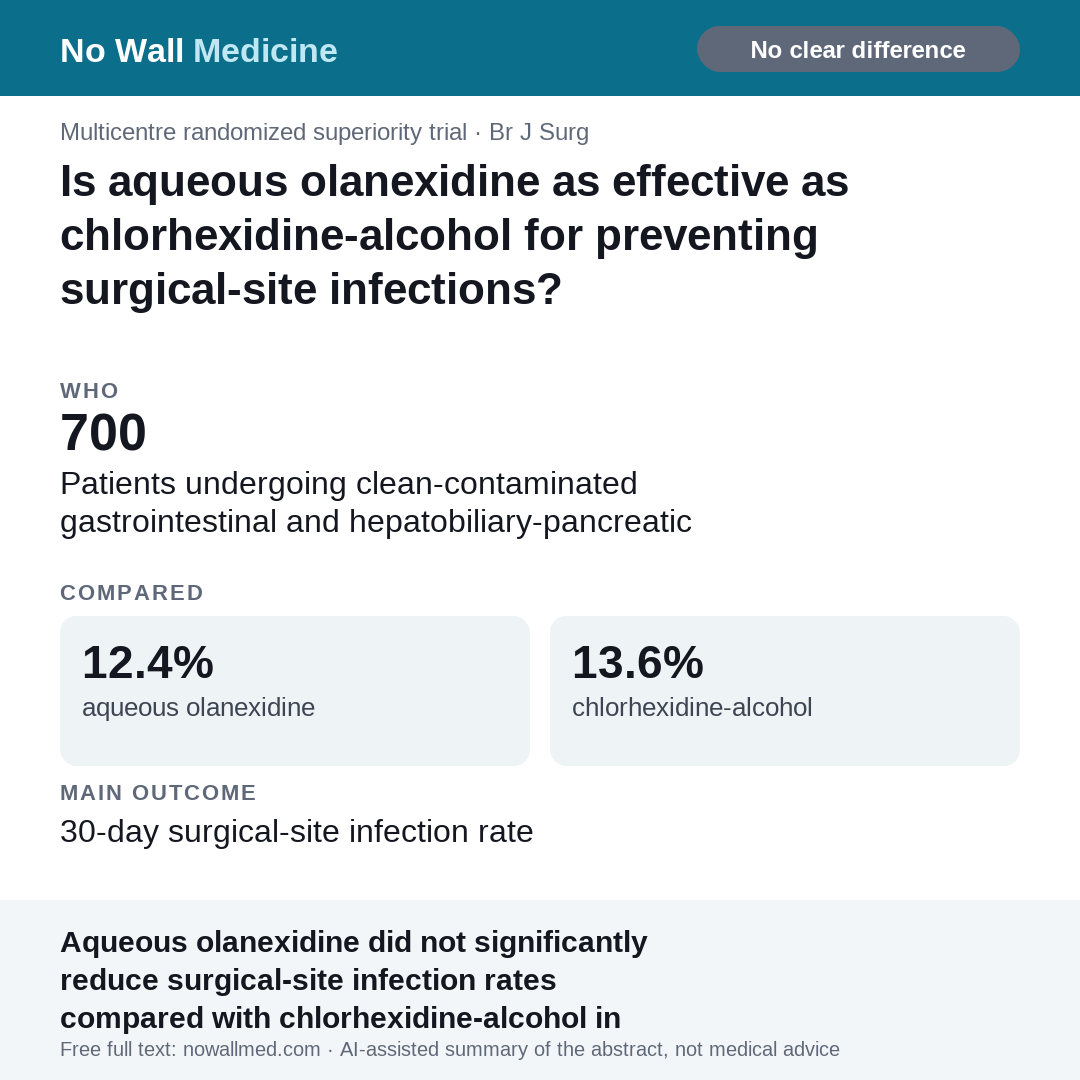
Clinical question: Is aqueous olanexidine as effective as chlorhexidine-alcohol for preventing surgical-site infections?
Why it matters: An optimal recommendation for the best antiseptic to use during skin preparation for clean-contaminated surgery has not been established.
Key points
- Researchers conducted a multicentre randomized trial involving 700 patients undergoing gastrointestinal or hepatobiliary-pancreatic surgeries.
- The 30-day surgical site infection rate was 12.4% (43 of 347) for olanexidine and 13.6% (47 of 345) for chlorhexidine-alcohol.
- No significant differences were observed between the two groups regarding infection types or reoperation caused by infection.
Headline and key points written with AI from the paper’s abstract, with every number checked against it. Read the paper before relying on them.
Was this summary helpful?
Subject terms
Cite this article
Takeuchi M, Obara H, Furube T, Kawakubo H, Kitago M, Okabayashi K. Efficacy of aqueous olanexidine compared with alcohol-based chlorhexidine for surgical skin antisepsis regarding the incidence of surgical-site infections in clean-contaminated surgery: a randomized superiority trial. Br J Surg. 2025. doi:10.1093/bjs/znaf065
Spotted a mistake? Suggest a correction
Top studies every Monday
The week’s key trials and guidelines in your specialties, plus any topics you follow. By email, free.
Get the weekly digest