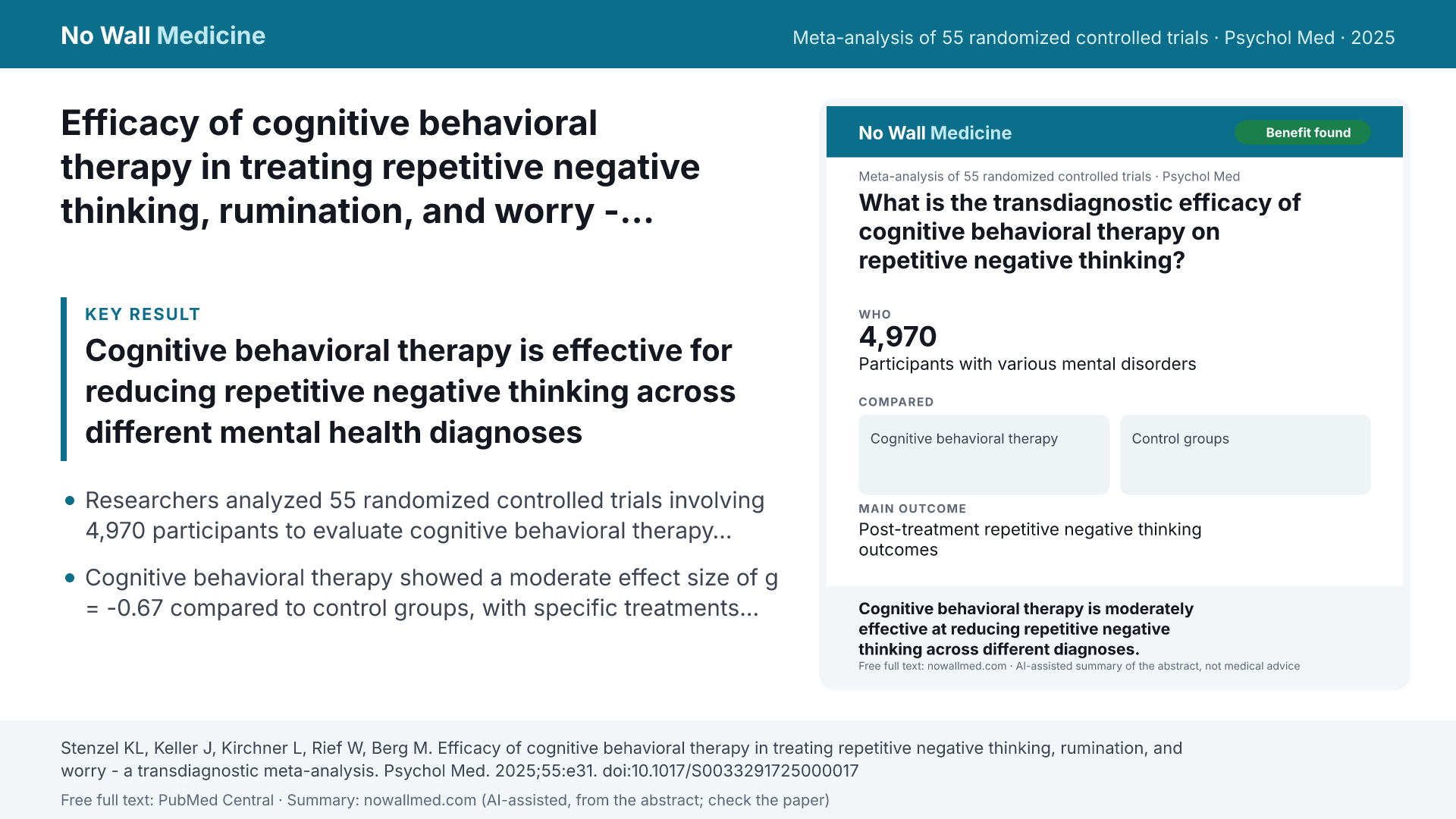
Cognitive behavioral therapy is effective for reducing repetitive negative thinking across different mental health diagnoses
Efficacy of cognitive behavioral therapy in treating repetitive negative thinking, rumination, and worry - a transdiagnostic meta-analysis
Meta-analysis of 55 randomized controlled trialsBenefit found
What is the transdiagnostic efficacy of cognitive behavioral therapy on repetitive negative thinking?
Who
4,970
Participants with various mental disorders
Compared
Cognitive behavioral therapy
Control groups
Main outcome
Post-treatment repetitive negative thinking outcomes
Result: g = -0.67
Bottom line: Cognitive behavioral therapy is moderately effective at reducing repetitive negative thinking across different diagnoses.
Psychol Med · 2025-02-07Download image
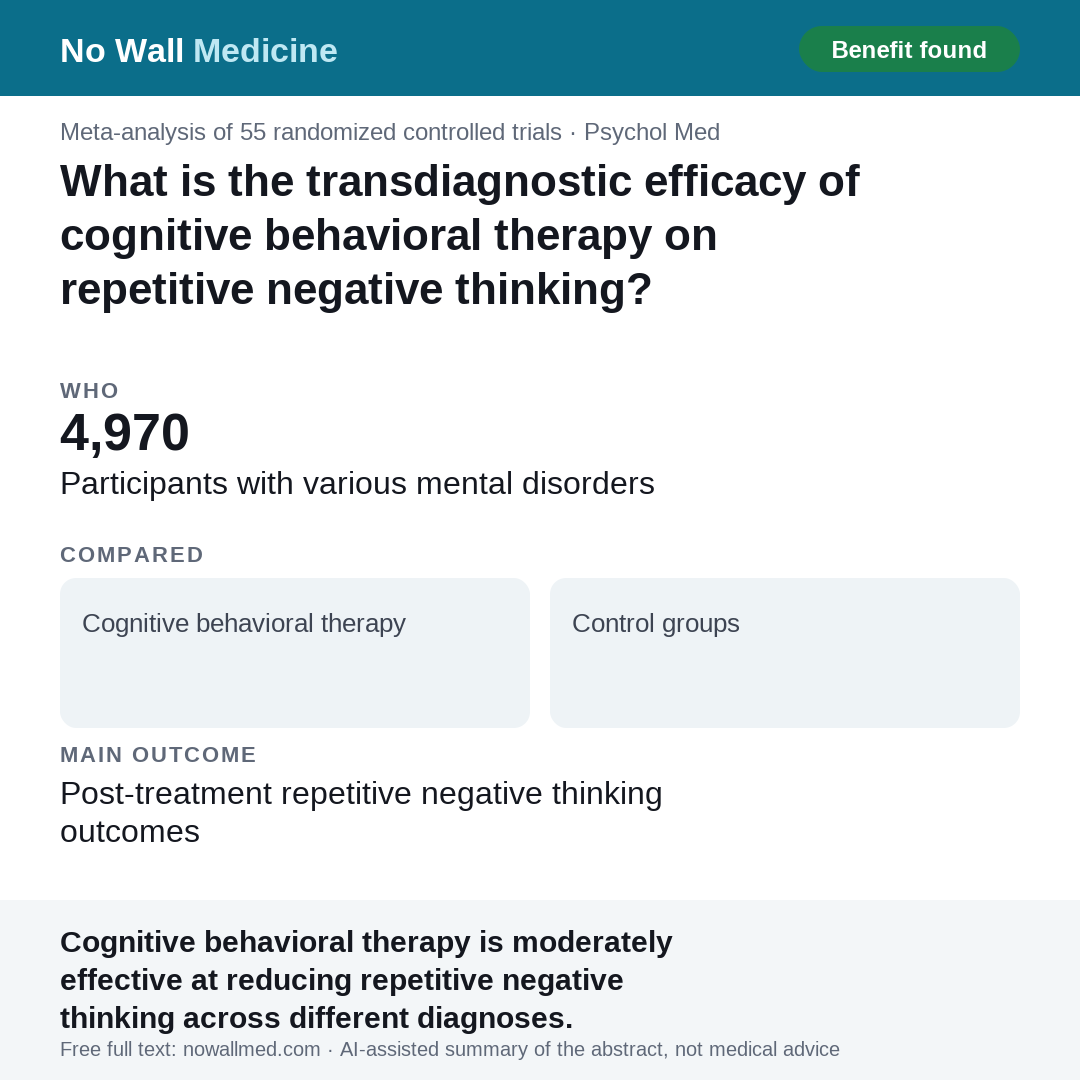
Clinical question: What is the transdiagnostic efficacy of cognitive behavioral therapy on repetitive negative thinking?
Why it matters: It was unknown if cognitive behavioral therapy is effective across different diagnoses and whether treatments specifically targeting repetitive negative thinking are superior to general approaches.
Key points
- Researchers analyzed 55 randomized controlled trials involving 4,970 participants to evaluate cognitive behavioral therapy for repetitive negative thinking, which includes processes like worry and rumination.
- Cognitive behavioral therapy showed a moderate effect size of g = -0.67 compared to control groups, with specific treatments (g = -0.99) being more effective than less specific approaches (g = -0.56).
- The effectiveness of the treatment did not differ significantly based on whether the RNT construct was worry or rumination, or if the sessions were in-person or individual.
Headline and key points written with AI from the paper’s abstract, with every number checked against it. Read the paper before relying on them.
Was this summary helpful?
Subject terms
Cite this article
Stenzel KL, Keller J, Kirchner L, Rief W, Berg M. Efficacy of cognitive behavioral therapy in treating repetitive negative thinking, rumination, and worry - a transdiagnostic meta-analysis. Psychol Med. 2025. doi:10.1017/S0033291725000017
Spotted a mistake? Suggest a correction
Top studies every Monday
The week’s key trials and guidelines in your specialties, plus any topics you follow. By email, free.
Get the weekly digest