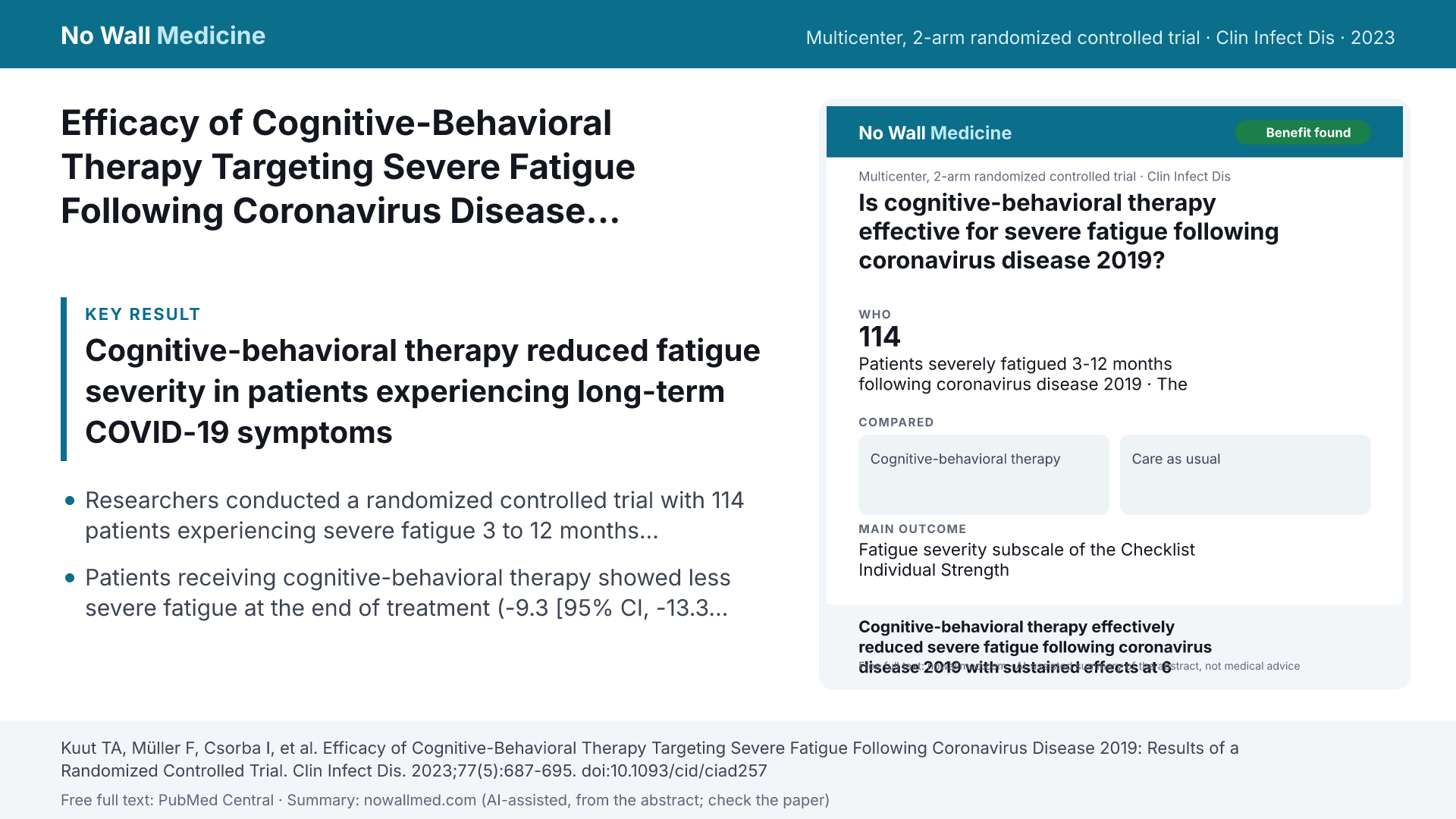
Efficacy of Cognitive-Behavioral Therapy Targeting Severe Fatigue Following Coronavirus Disease 2019: Results of a Randomized Controlled Trial
Key result: Cognitive-behavioral therapy reduced fatigue severity in patients experiencing long-term COVID-19 symptoms
Multicenter, 2-arm randomized controlled trialBenefit found
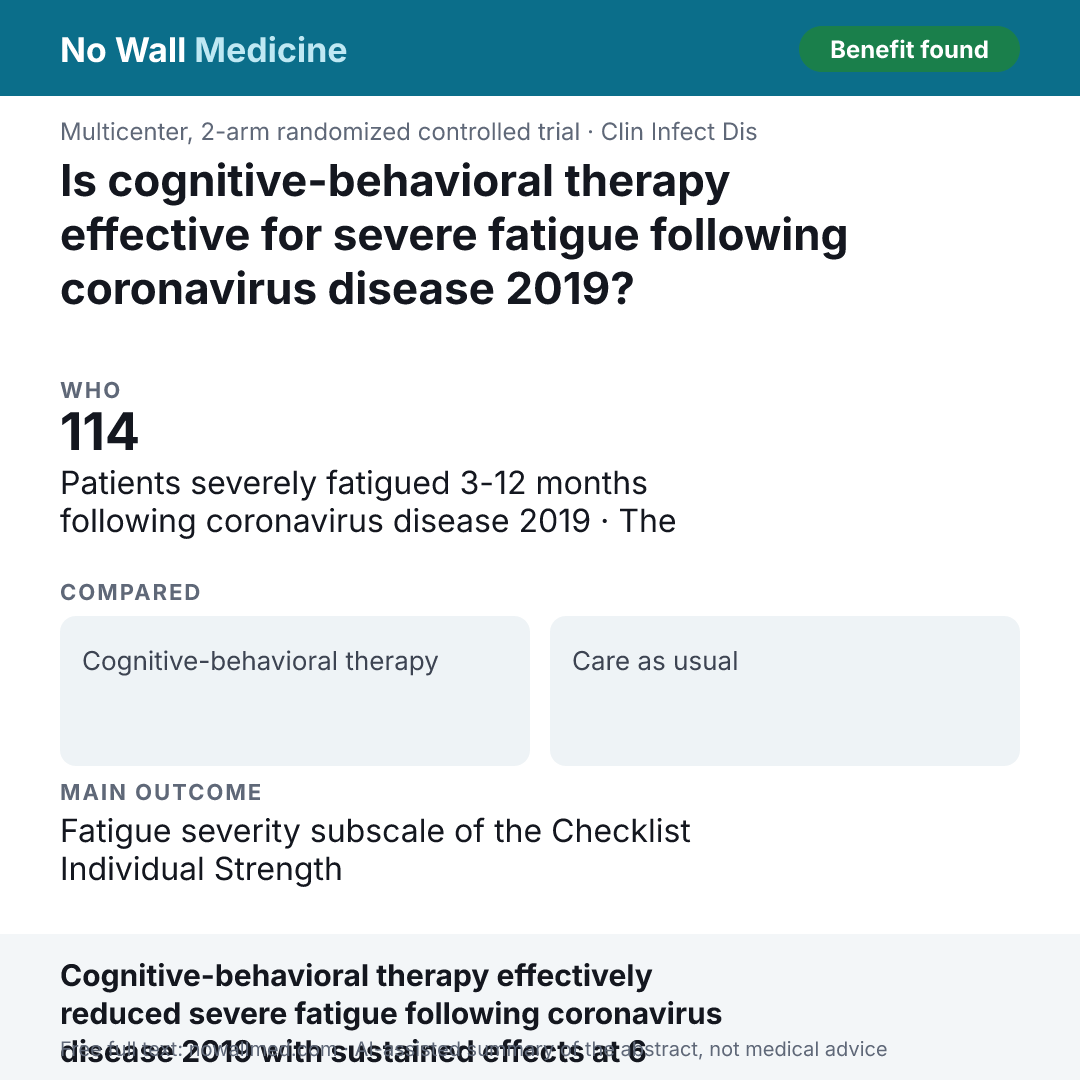
Is cognitive-behavioral therapy effective for severe fatigue following coronavirus disease 2019?
Who
114
Patients severely fatigued 3-12 months following coronavirus disease 2019 · The Netherlands
Compared
Cognitive-behavioral therapy
Care as usual
Main outcome
Fatigue severity subscale of the Checklist Individual Strength
Result: -8.8 (95% confidence interval, -11.9 to -5.8)
Bottom line: Cognitive-behavioral therapy effectively reduced severe fatigue following coronavirus disease 2019 with sustained effects at 6 months.
Clin Infect Dis · 2023-05-08 · Save PNG
Key points
- Researchers conducted a randomized controlled trial with 114 patients experiencing severe fatigue 3 to 12 months after COVID-19 infection.
- Patients receiving cognitive-behavioral therapy showed less severe fatigue at the end of treatment (-9.3 [95% CI, -13.3 to -5.3]) and at 6 months (-8.4 [95% CI, -13.1 to -3.7]).
- Eight adverse events occurred during the cognitive-behavioral therapy group compared to 20 in the care as usual group, with no serious adverse events recorded.
Discussion prompts
- Would these patients look like yours? Who was left out?
- Is the main outcome one that matters to patients?
- Is the difference large enough to change what you do?
Cite: Kuut TA, Müller F, Csorba I, et al. Efficacy of Cognitive-Behavioral Therapy Targeting Severe Fatigue Following Coronavirus Disease 2019: Results of a Randomized Controlled Trial. Clin Infect Dis. 2023;77(5):687-695. doi:10.1093/cid/ciad257
Free full text: PubMed Central · Summary and visual abstract: nowallmed.com/a/efficacy-of-cognitive-behavioral-therapy-targeting-severe-fatigue-1lijini/ (AI-assisted from the abstract; check the paper before relying on it).