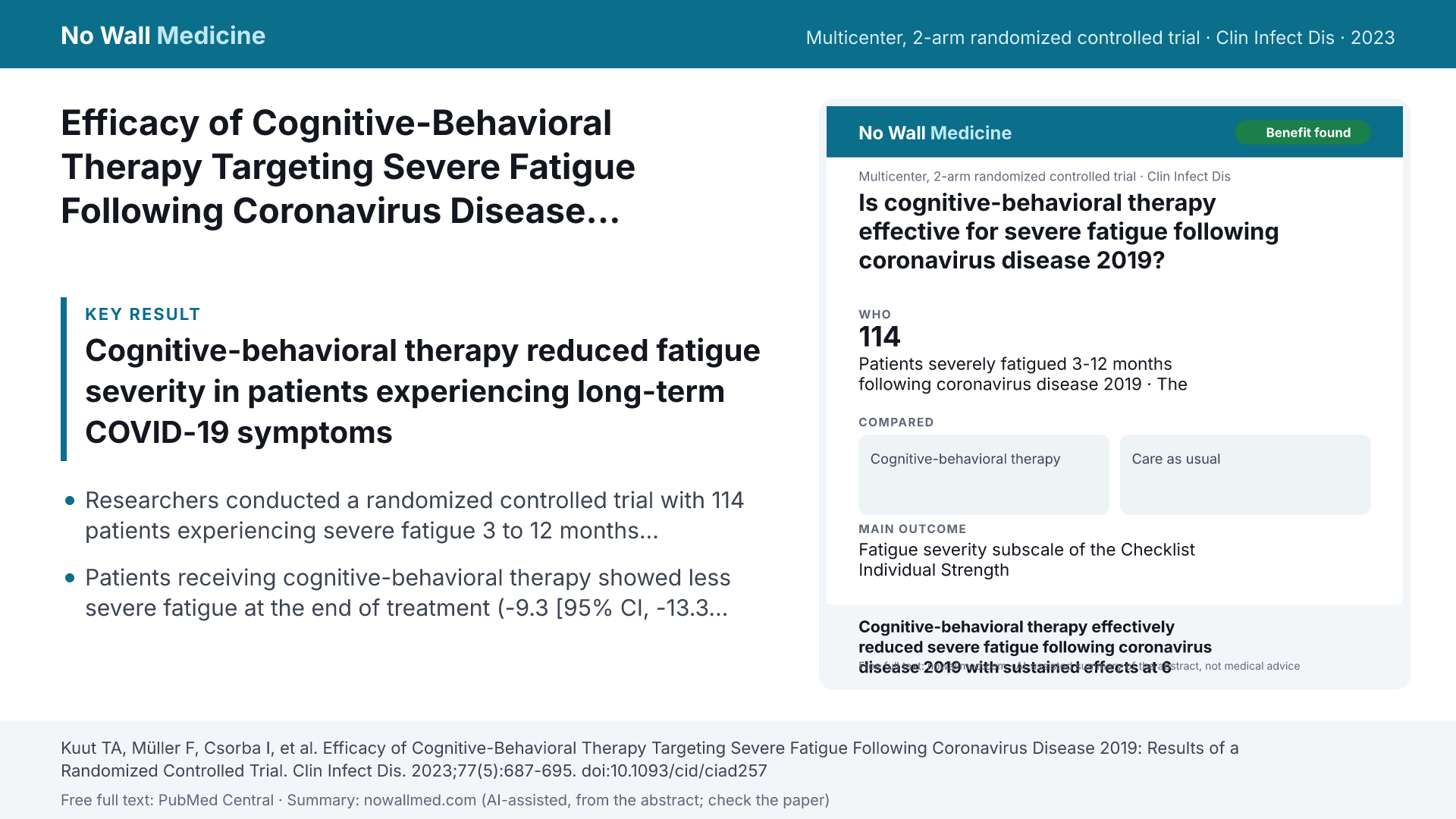
Cognitive-behavioral therapy reduced fatigue severity in patients experiencing long-term COVID-19 symptoms
Efficacy of Cognitive-Behavioral Therapy Targeting Severe Fatigue Following Coronavirus Disease 2019: Results of a Randomized Controlled Trial
Multicenter, 2-arm randomized controlled trialBenefit found
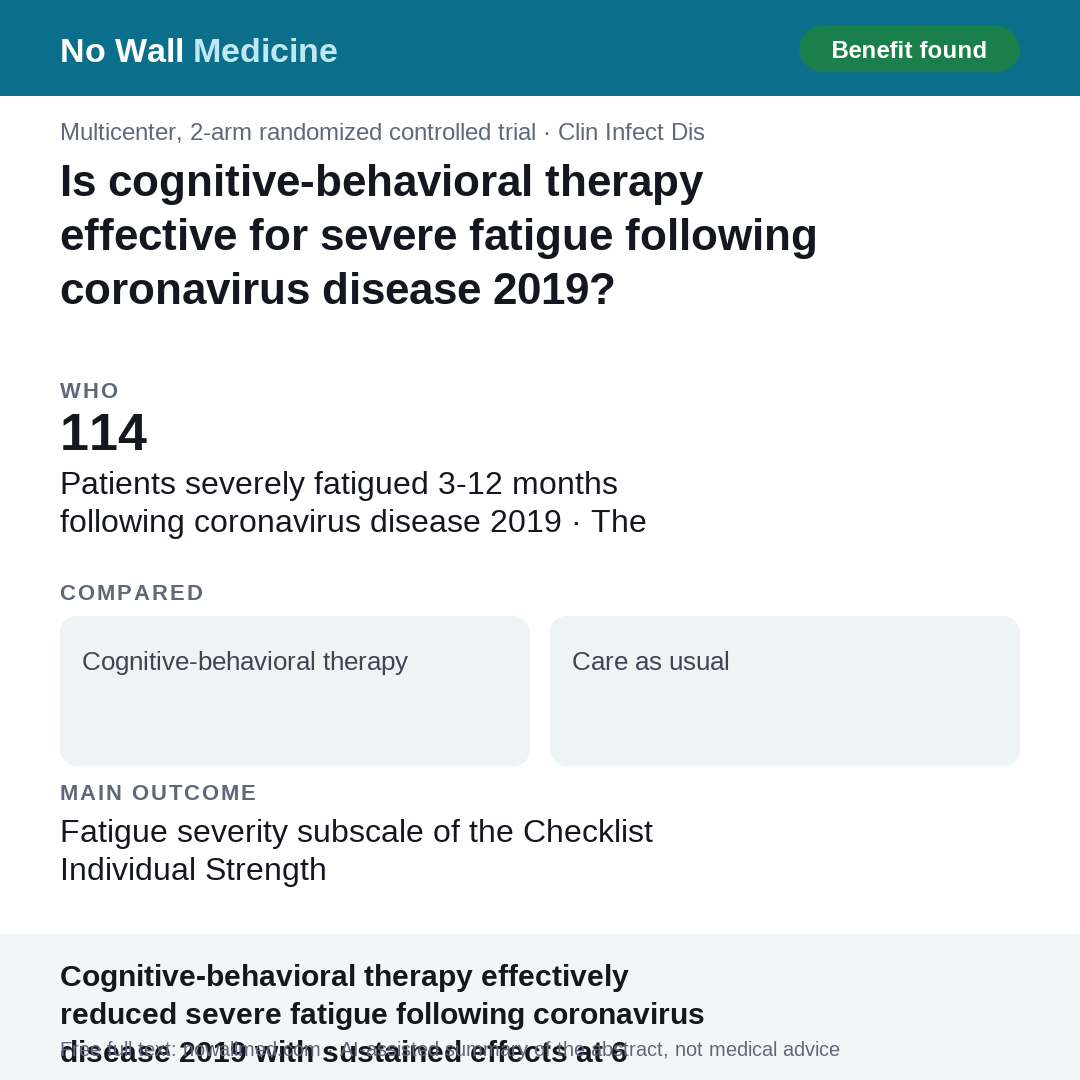
Is cognitive-behavioral therapy effective for severe fatigue following coronavirus disease 2019?
Who
114
Patients severely fatigued 3-12 months following coronavirus disease 2019 · The Netherlands
Compared
Cognitive-behavioral therapy
Care as usual
Main outcome
Fatigue severity subscale of the Checklist Individual Strength
Result: -8.8 (95% confidence interval, -11.9 to -5.8)
Bottom line: Cognitive-behavioral therapy effectively reduced severe fatigue following coronavirus disease 2019 with sustained effects at 6 months.
Clin Infect Dis · 2023-05-08Download image
Clinical question: Is cognitive-behavioral therapy effective for severe fatigue following coronavirus disease 2019?
Why it matters: It was unknown if cognitive-behavioral therapy, a type of psychological treatment, is effective for managing severe fatigue following a COVID-19 infection.
Key points
- Researchers conducted a randomized controlled trial with 114 patients experiencing severe fatigue 3 to 12 months after COVID-19 infection.
- Patients receiving cognitive-behavioral therapy showed less severe fatigue at the end of treatment (-9.3 [95% CI, -13.3 to -5.3]) and at 6 months (-8.4 [95% CI, -13.1 to -3.7]).
- Eight adverse events occurred during the cognitive-behavioral therapy group compared to 20 in the care as usual group, with no serious adverse events recorded.
Headline and key points written with AI from the paper’s abstract, with every number checked against it. Read the paper before relying on them.
Was this summary helpful?
Subject terms
Cite this article
Kuut TA, Müller F, Csorba I, Braamse A, Aldenkamp A, Appelman B. Efficacy of Cognitive-Behavioral Therapy Targeting Severe Fatigue Following Coronavirus Disease 2019: Results of a Randomized Controlled Trial. Clin Infect Dis. 2023. doi:10.1093/cid/ciad257
Spotted a mistake? Suggest a correction
Top studies every Monday
The week’s key trials and guidelines in your specialties, plus any topics you follow. By email, free.
Get the weekly digest