Video chat speech intervention improved communication participation goals in people with primary progressive aphasia
Efficacy of Communication Bridge-2 for primary progressive aphasia: A randomized controlled trial of communication intervention
Phase 2, Stage II, parallel-group randomized controlled trialBenefit found
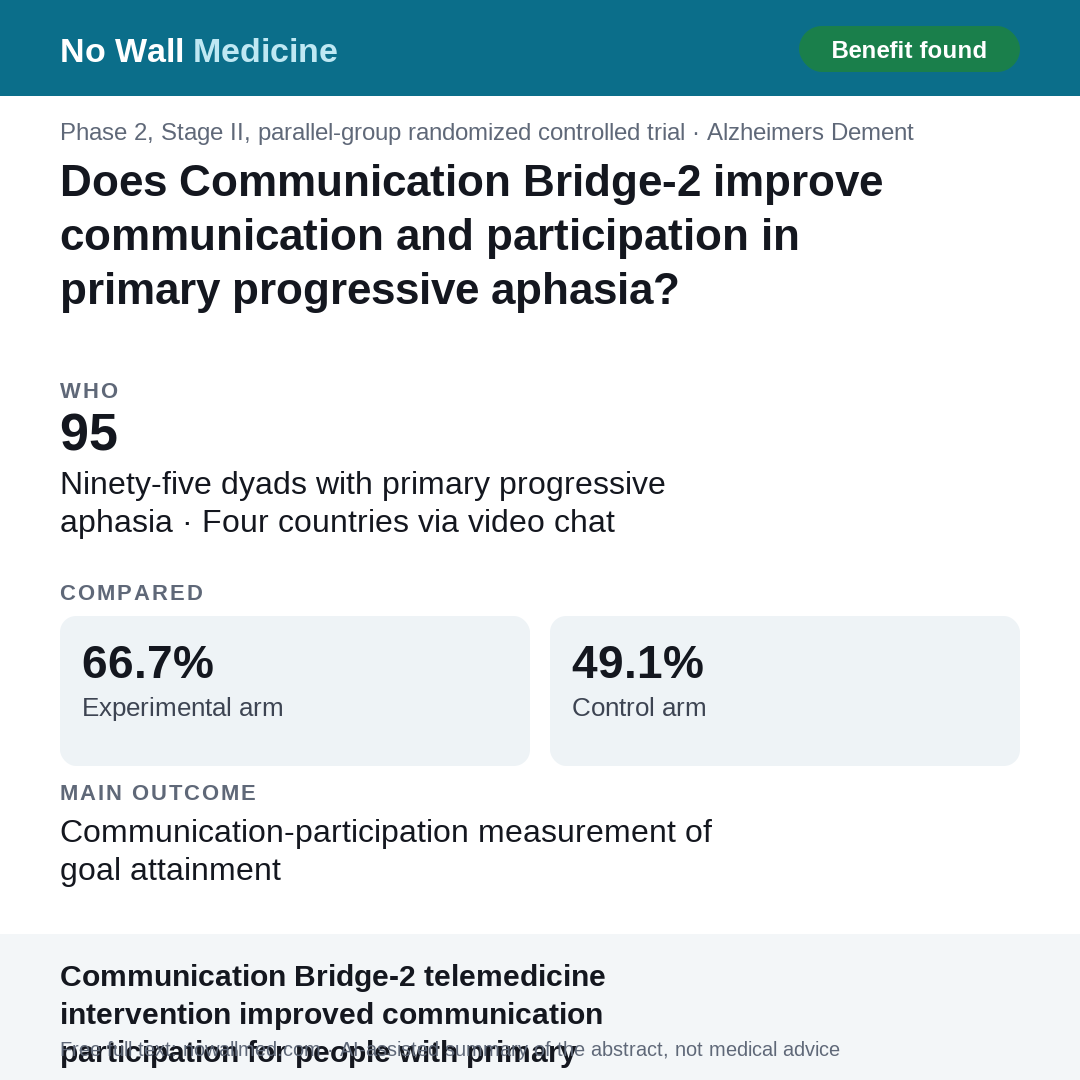
Does Communication Bridge-2 improve communication and participation in primary progressive aphasia?
Who
95
Ninety-five dyads with primary progressive aphasia · Four countries via video chat
Compared
66.7%Experimental arm
49.1%Control arm
Main outcome
Communication-participation measurement of goal attainment
Result: 66.7% vs 49.1% (p = 0.006)
Bottom line: Communication Bridge-2 telemedicine intervention improved communication participation for people with primary progressive aphasia.
Alzheimers Dement · 2025-03-27Download image
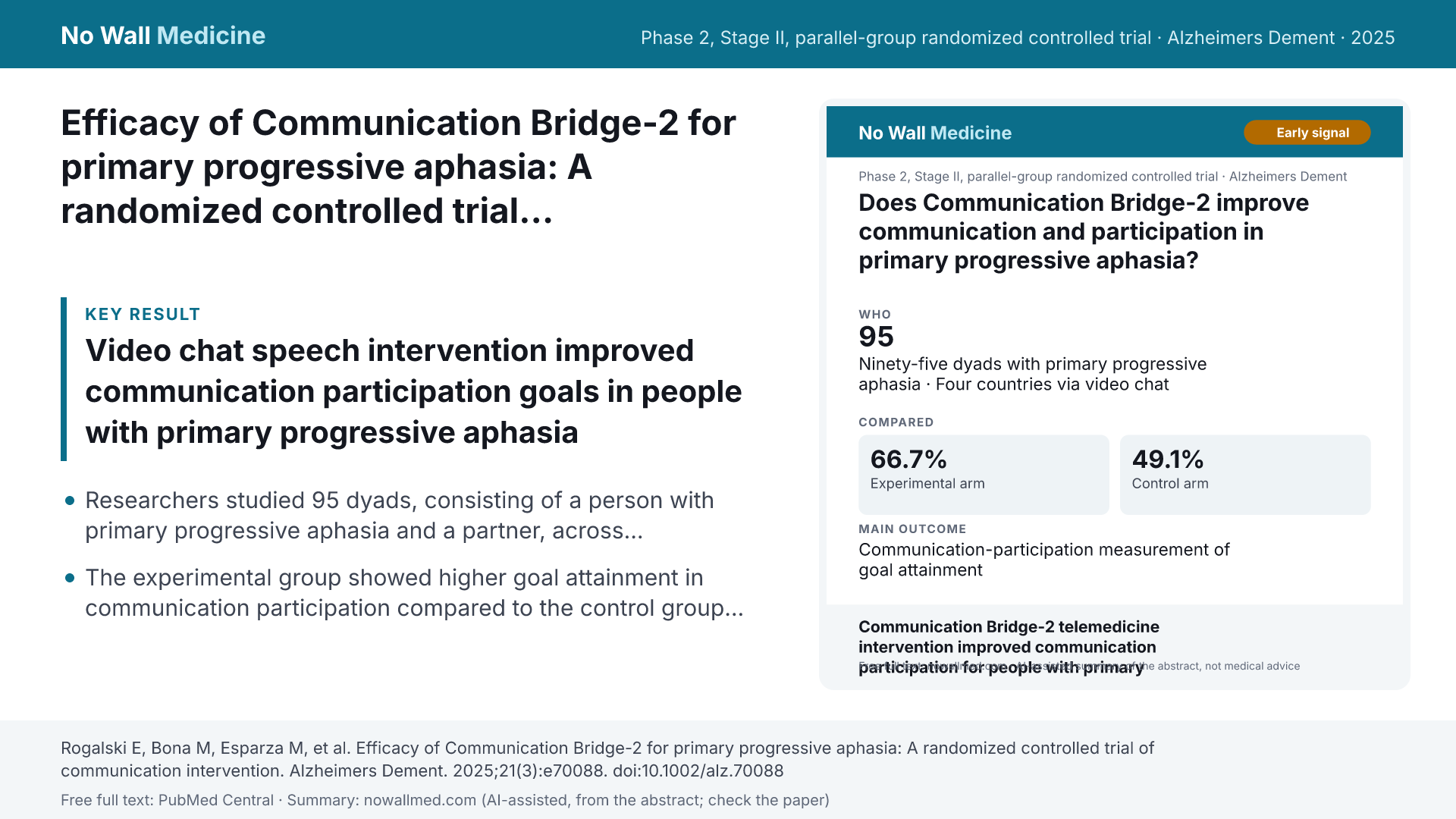
Clinical question: Does Communication Bridge-2 improve communication and participation in primary progressive aphasia?
Why it matters: It was unknown if a person-centered telemedicine speech-language intervention could effectively improve communication participation for individuals with primary progressive aphasia.
Key points
- Researchers studied 95 dyads, consisting of a person with primary progressive aphasia and a partner, across four countries using a video chat speech-language intervention.
- The experimental group showed higher goal attainment in communication participation compared to the control group at 66.7% vs 49.1% (p = 0.006).
- The results were supported by post-study interviews regarding the effectiveness of the person-centered telemedicine approach.
Headline and key points written with AI from the paper’s abstract, with every number checked against it. Read the paper before relying on them.
Was this summary helpful?
Subject terms
Cite this article
Rogalski E, Bona M, Esparza M, Fegter O, Schafer R, Mooney A. Efficacy of Communication Bridge-2 for primary progressive aphasia: A randomized controlled trial of communication intervention. Alzheimers Dement. 2025. doi:10.1002/alz.70088
Spotted a mistake? Suggest a correction
Top studies every Monday
The week’s key trials and guidelines in your specialties, plus any topics you follow. By email, free.
Get the weekly digest