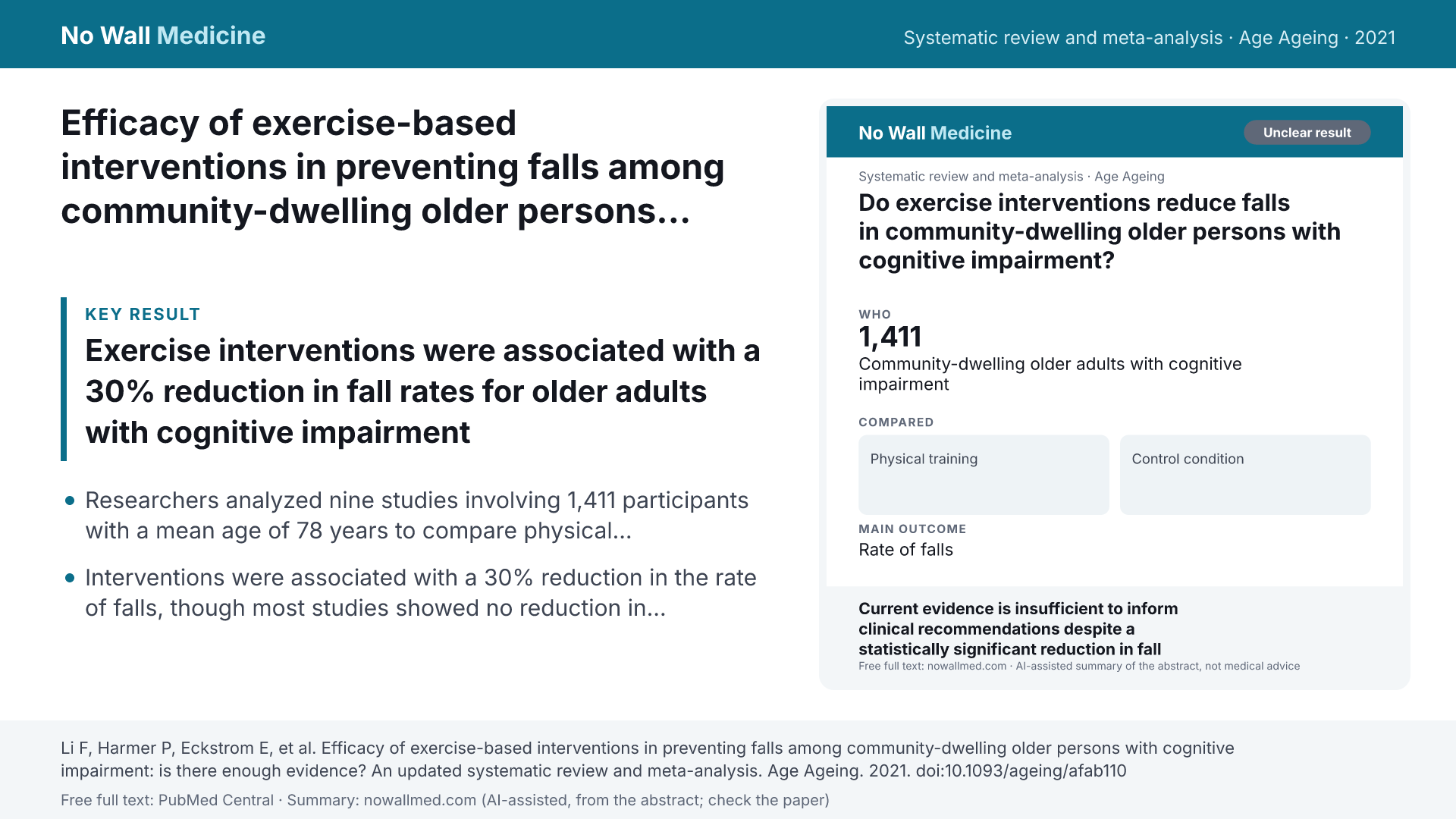
Exercise interventions were associated with a 30% reduction in fall rates for older adults with cognitive impairment
Efficacy of exercise-based interventions in preventing falls among community-dwelling older persons with cognitive impairment: is there enough evidence? An updated systematic review and meta-analysis
Systematic review and meta-analysisUnclear result
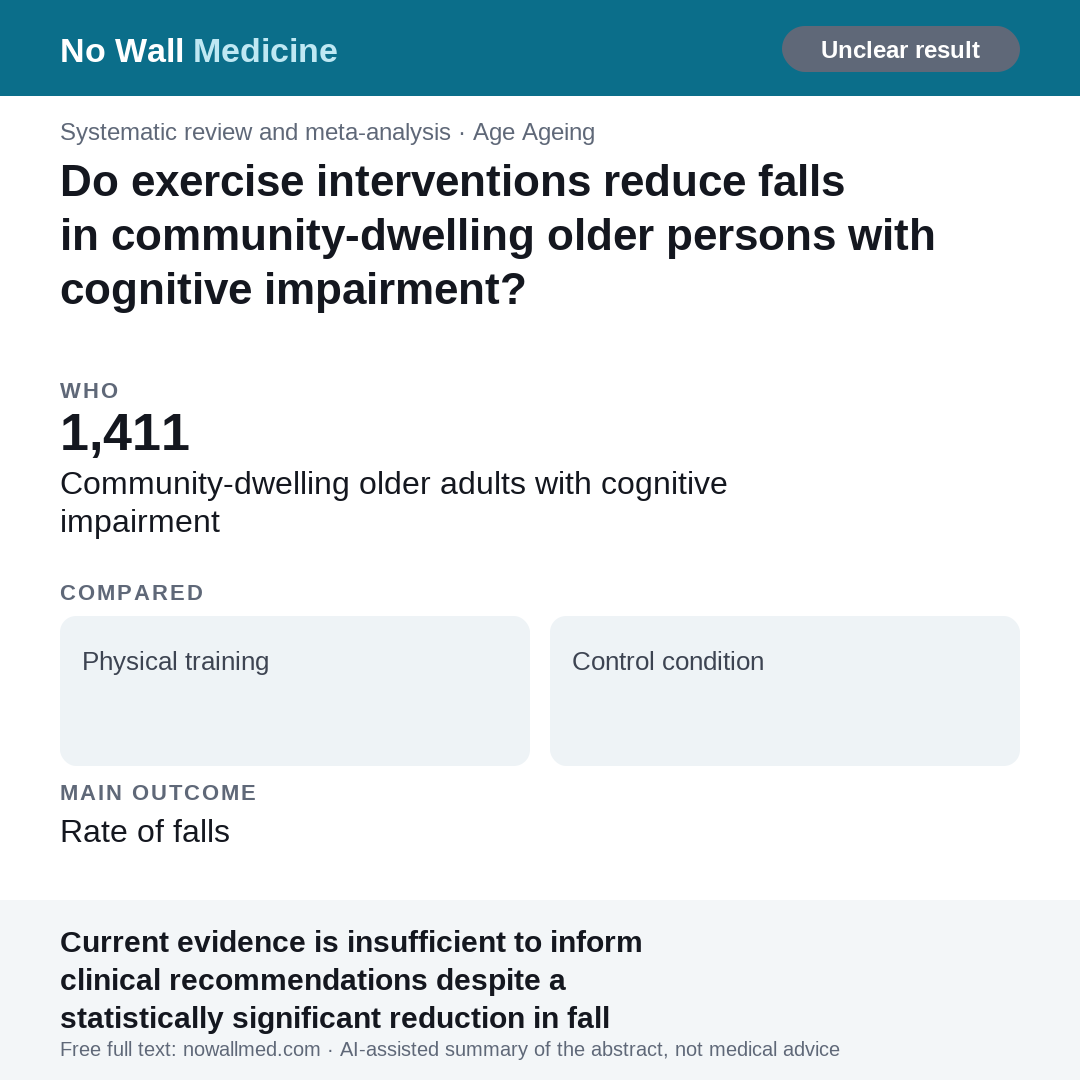
Do exercise interventions reduce falls in community-dwelling older persons with cognitive impairment?
Who
1,411
Community-dwelling older adults with cognitive impairment
Compared
Physical training
Control condition
Main outcome
Rate of falls
Result: incidence rate ratio 0.70 (95% CI, 0.52-0.95)
Bottom line: Current evidence is insufficient to inform clinical recommendations despite a statistically significant reduction in fall rates.
Limitation: Concerns about risk of bias and low quality of evidence were noted.
Age Ageing · 2021-06-14Download image
Clinical question: Do exercise interventions reduce falls in community-dwelling older persons with cognitive impairment?
Why it matters: Evidence is inconclusive regarding whether exercise interventions are effective at preventing falls in older adults living with Alzheimer's disease, related dementias, or mild cognitive impairment.
Key points
- Researchers analyzed nine studies involving 1,411 participants with a mean age of 78 years to compare physical training against control conditions.
- Interventions were associated with a 30% reduction in the rate of falls, though most studies showed no reduction in fall rates.
- Exercise-based interventions were not associated with a change in the number of people who fell, with a relative risk of 1.01.
Limitation the authors note: The authors noted concerns about risk of bias in the randomized controlled trials and rated the quality of evidence as low.
Headline and key points written with AI from the paper’s abstract, with every number checked against it. Read the paper before relying on them.
Was this summary helpful?
Subject terms
Cite this article
Li F, Harmer P, Eckstrom E, et al. Efficacy of exercise-based interventions in preventing falls among community-dwelling older persons with cognitive impairment: is there enough evidence? An updated systematic review and meta-analysis. Age Ageing. 2021. doi:10.1093/ageing/afab110
Spotted a mistake? Suggest a correction