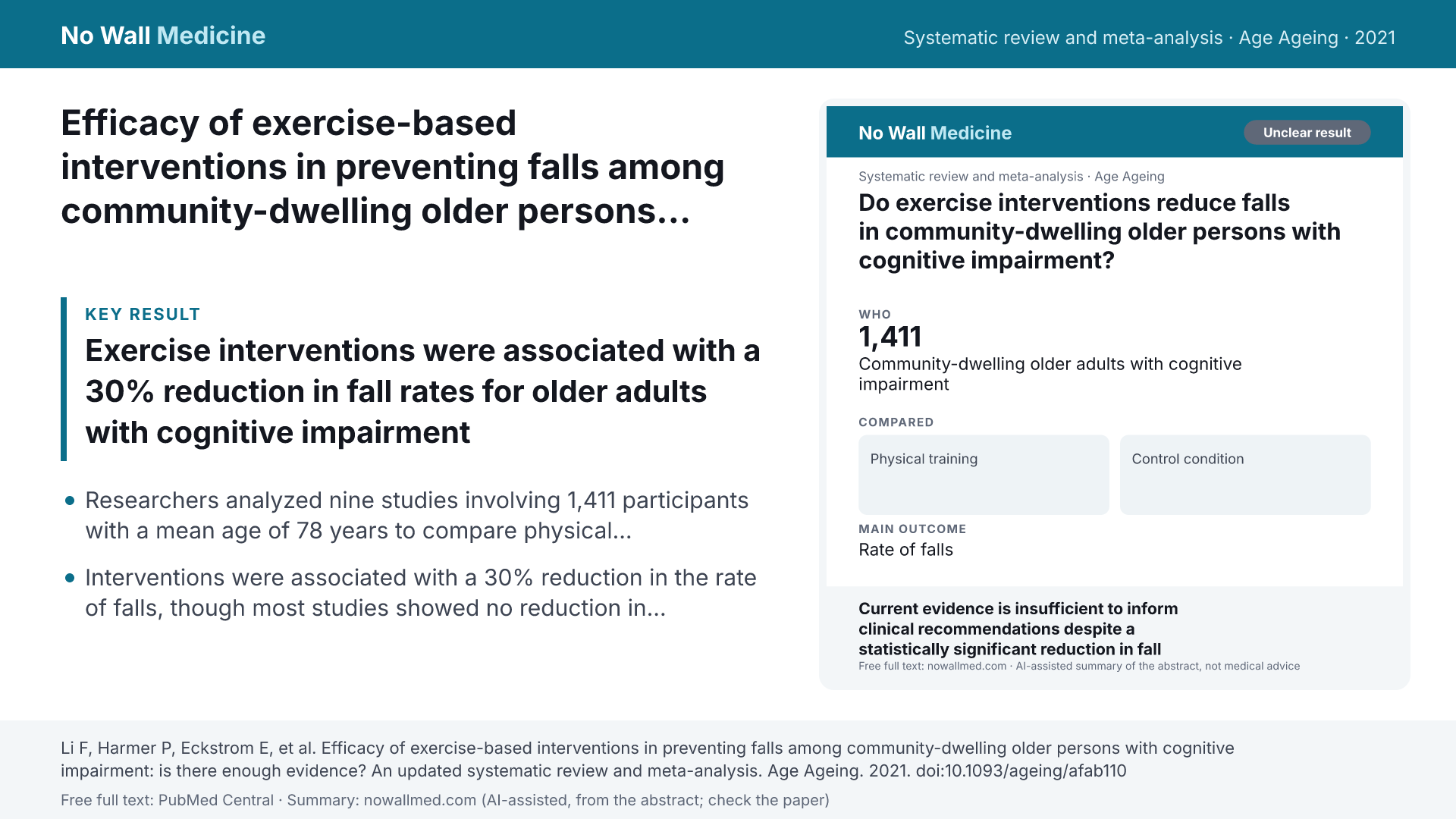
Efficacy of exercise-based interventions in preventing falls among community-dwelling older persons with cognitive impairment: is there enough evidence? An updated systematic review and meta-analysis
Key result: Exercise interventions were associated with a 30% reduction in fall rates for older adults with cognitive impairment
Key points
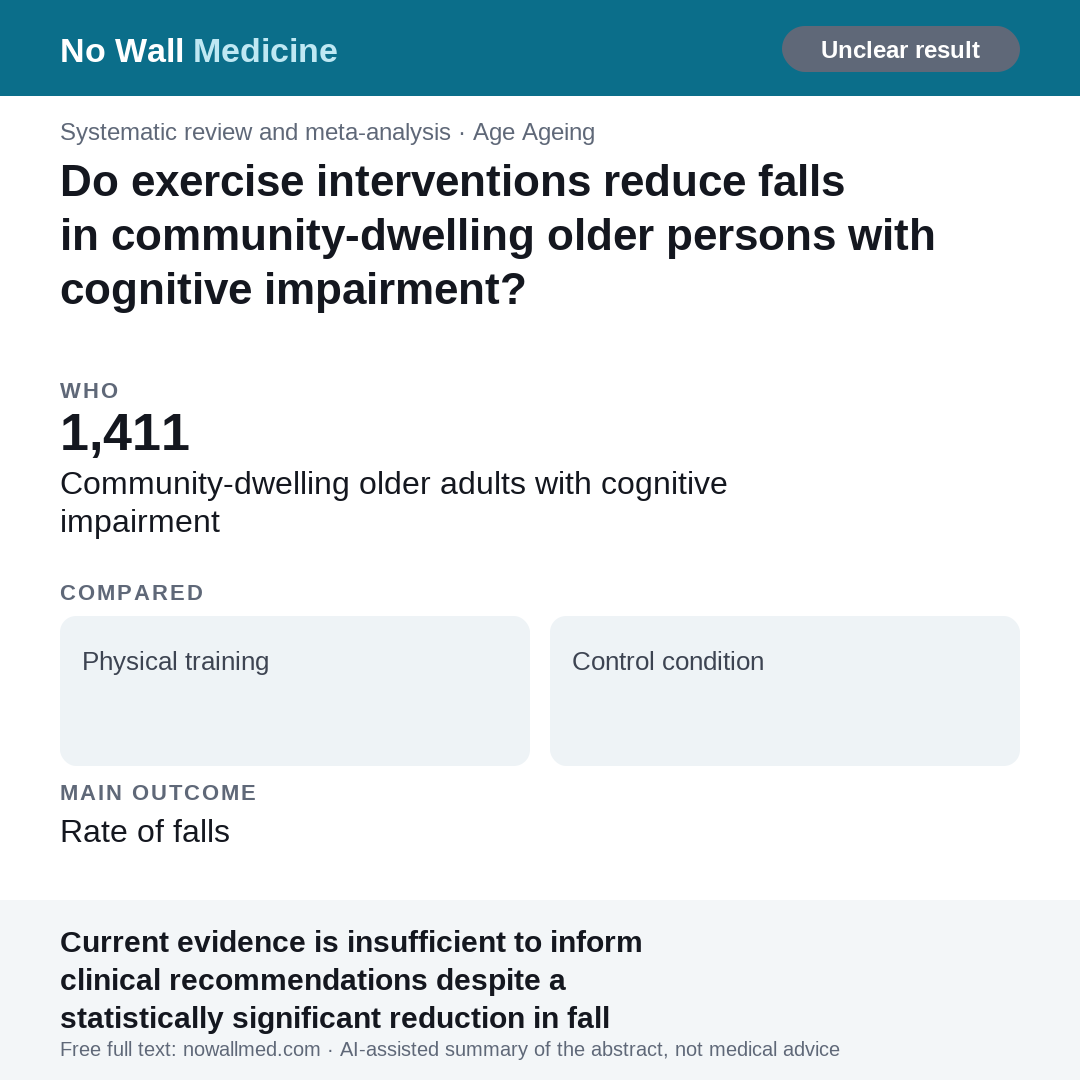
- Researchers analyzed nine studies involving 1,411 participants with a mean age of 78 years to compare physical training against control conditions.
- Interventions were associated with a 30% reduction in the rate of falls, though most studies showed no reduction in fall rates.
- Exercise-based interventions were not associated with a change in the number of people who fell, with a relative risk of 1.01.
Why it matters: Evidence is inconclusive regarding whether exercise interventions are effective at preventing falls in older adults living with Alzheimer's disease, related dementias, or mild cognitive impairment.
Limitation the authors note: The authors noted concerns about risk of bias in the randomized controlled trials and rated the quality of evidence as low.
Discussion prompts
- Would these patients look like yours? Who was left out?
- Is the main outcome one that matters to patients?
- Is the difference large enough to change what you do?
Cite: Li F, Harmer P, Eckstrom E, et al. Efficacy of exercise-based interventions in preventing falls among community-dwelling older persons with cognitive impairment: is there enough evidence? An updated systematic review and meta-analysis. Age Ageing. 2021. doi:10.1093/ageing/afab110
Free full text: PubMed Central · Summary and visual abstract: nowallmed.com/a/efficacy-of-exercise-based-interventions-in-preventing-falls-among-8yjae0/ (AI-assisted from the abstract; check the paper before relying on it).