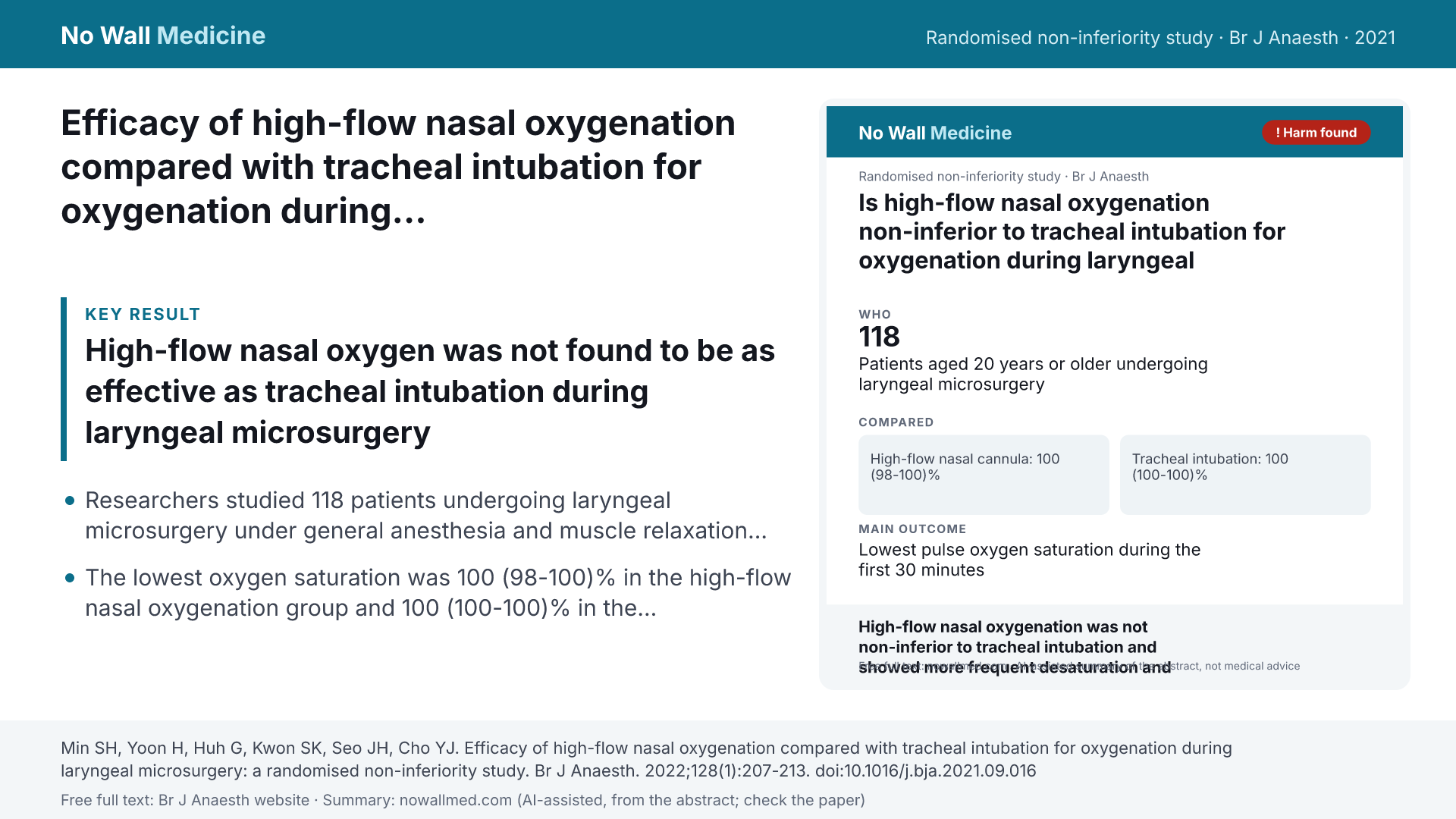
High-flow nasal oxygen was not found to be as effective as tracheal intubation during laryngeal microsurgery
Efficacy of high-flow nasal oxygenation compared with tracheal intubation for oxygenation during laryngeal microsurgery: a randomised non-inferiority study
Randomised non-inferiority studyHarm found
Is high-flow nasal oxygenation non-inferior to tracheal intubation for oxygenation during laryngeal microsurgery?
Who
118
Patients aged 20 years or older undergoing laryngeal microsurgery
Compared
High-flow nasal cannula: 100 (98-100)%
Tracheal intubation: 100 (100-100)%
Main outcome
Lowest pulse oxygen saturation during the first 30 minutes
Result: mean difference -1.4% (95% confidence interval: -2.4% and -0.3%)
Bottom line: High-flow nasal oxygenation was not non-inferior to tracheal intubation and showed more frequent desaturation and hypercarbia.
Br J Anaesth · 2021-10-20Download image
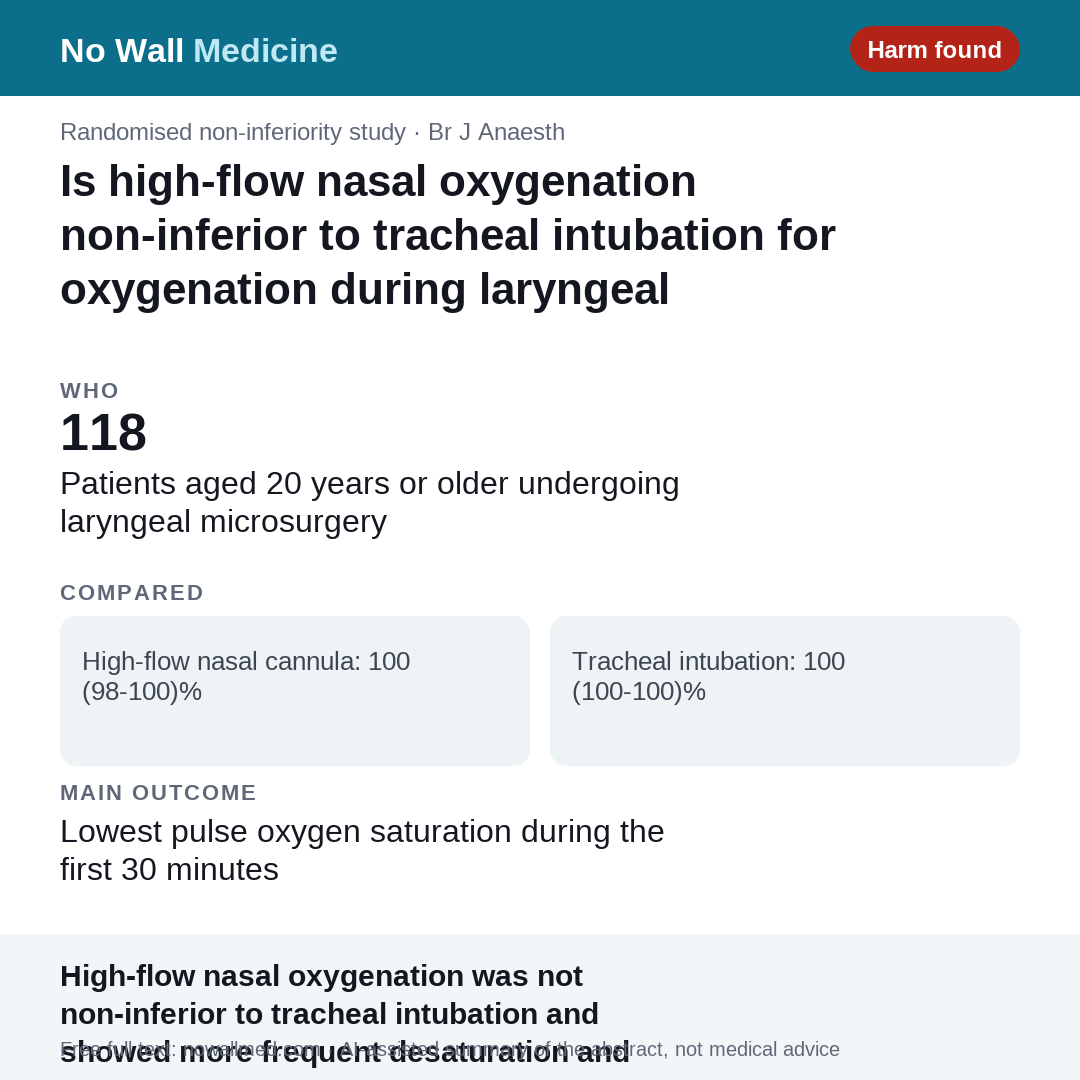
Clinical question: Is high-flow nasal oxygenation non-inferior to tracheal intubation for oxygenation during laryngeal microsurgery?
Why it matters: It is unknown if high-flow nasal oxygenation can serve as a safe alternative to tracheal intubation for maintaining oxygen levels during short procedures involving breath-holding.
Key points
- Researchers studied 118 patients undergoing laryngeal microsurgery under general anesthesia and muscle relaxation to compare high-flow nasal oxygenation with tracheal intubation.
- The lowest oxygen saturation was 100 (98-100)% in the high-flow nasal oxygenation group and 100 (100-100)% in the tracheal intubation group, failing to confirm non-inferiority.
- Patients receiving high-flow nasal oxygenation had more frequent desaturation, high carbon dioxide levels, and required more rescue interventions than those with tracheal intubation.
Headline and key points written with AI from the paper’s abstract, with every number checked against it. Read the paper before relying on them.
Was this summary helpful?
Subject terms
Cite this article
Min SH, Yoon H, Huh G, Kwon SK, Seo JH, Cho YJ. Efficacy of high-flow nasal oxygenation compared with tracheal intubation for oxygenation during laryngeal microsurgery: a randomised non-inferiority study. Br J Anaesth. 2021. doi:10.1016/j.bja.2021.09.016
Spotted a mistake? Suggest a correction
Top studies every Monday
The week’s key trials and guidelines in your specialties, plus any topics you follow. By email, free.
Get the weekly digest