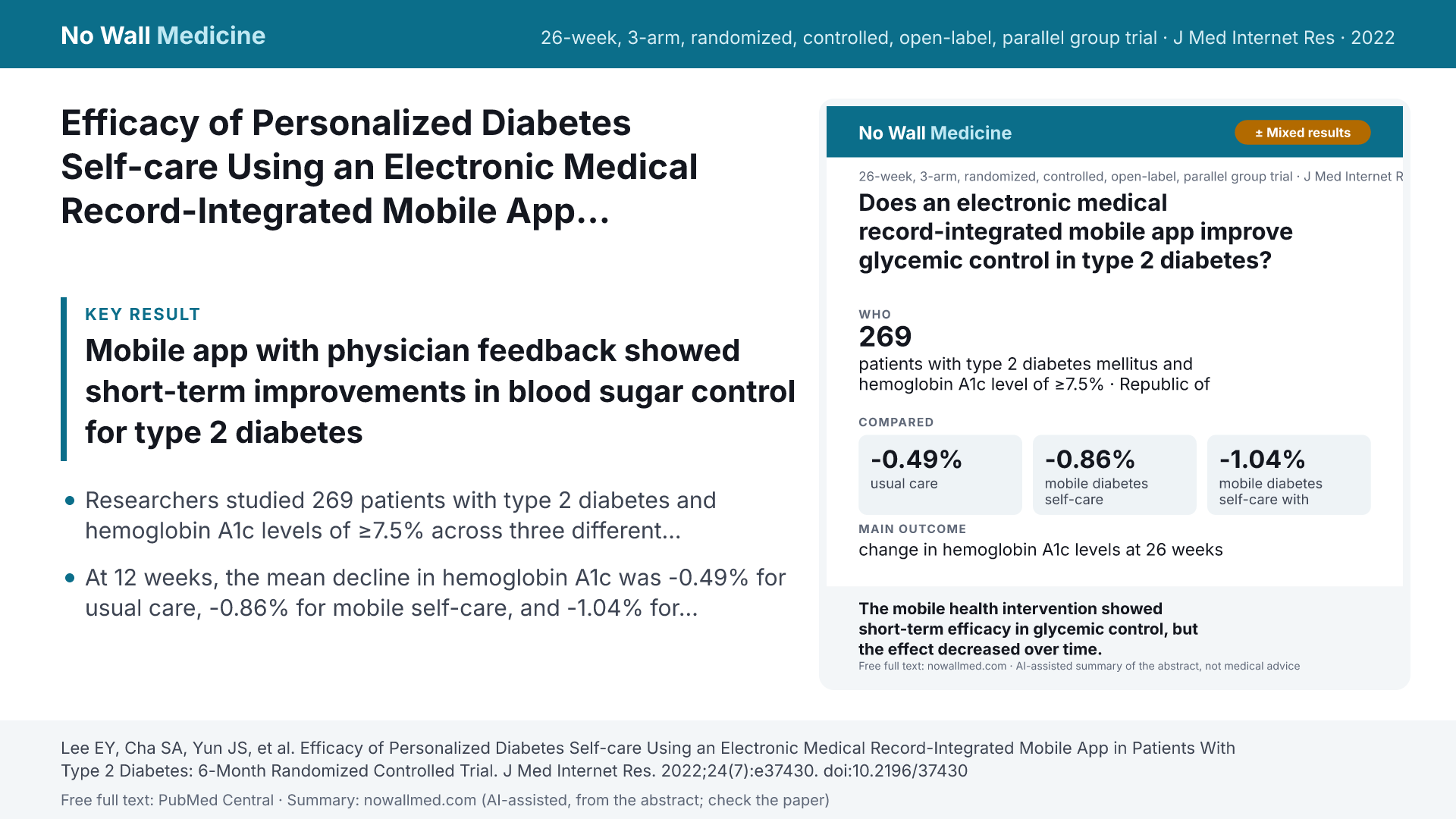
Mobile app with physician feedback showed short-term improvements in blood sugar control for type 2 diabetes
Efficacy of Personalized Diabetes Self-care Using an Electronic Medical Record-Integrated Mobile App in Patients With Type 2 Diabetes: 6-Month Randomized Controlled Trial
26-week, 3-arm, randomized, controlled, open-label, parallel group trialMixed results
Does an electronic medical record-integrated mobile app improve glycemic control in type 2 diabetes?
Who
269
patients with type 2 diabetes mellitus and hemoglobin A1c level of ≥7.5% · Republic of Korea
Compared
-0.49%usual care
-0.86%mobile diabetes self-care
-1.04%mobile diabetes self-care with physician feedback
Main outcome
change in hemoglobin A1c levels at 26 weeks
Bottom line: The mobile health intervention showed short-term efficacy in glycemic control, but the effect decreased over time.
J Med Internet Res · 2022-07-28Download image
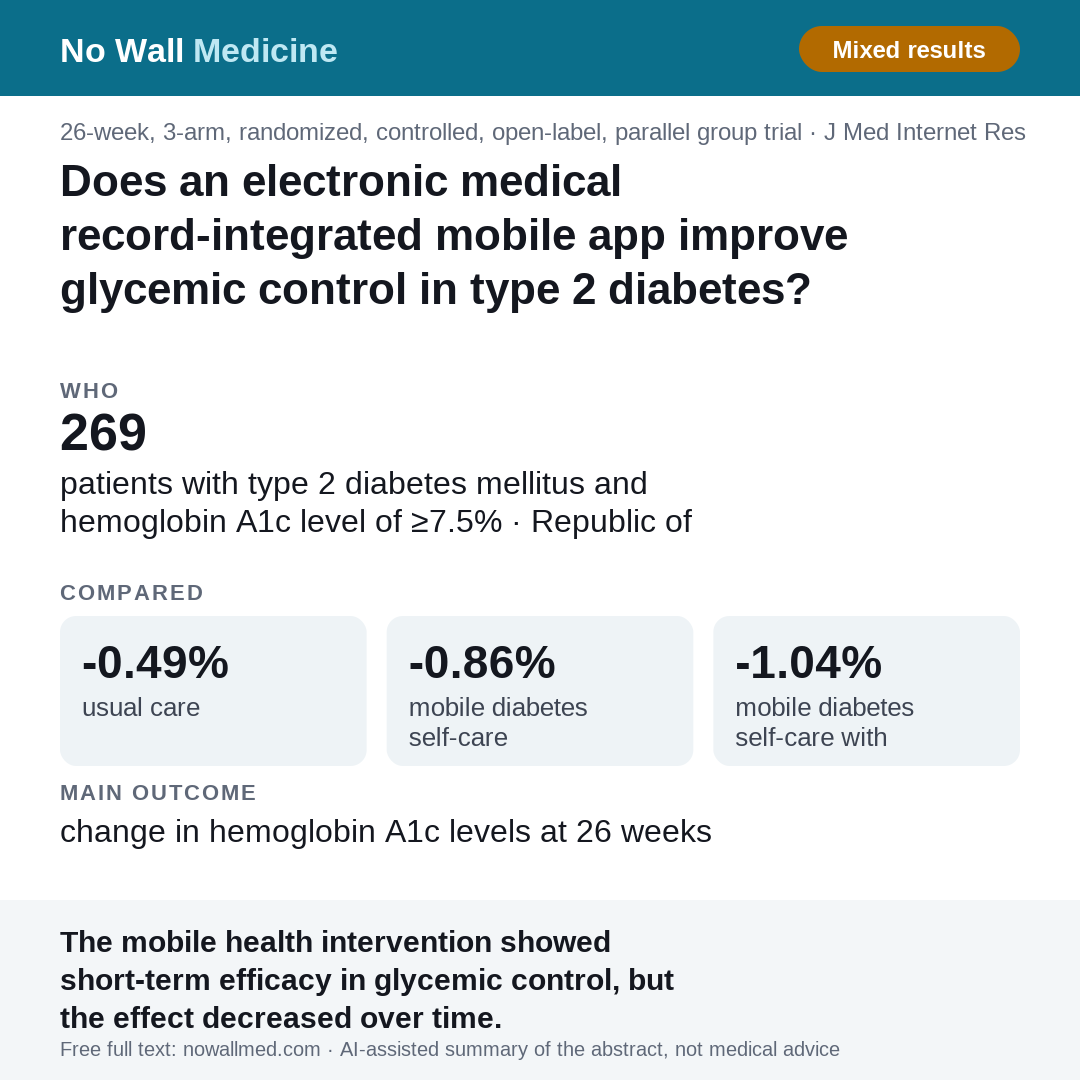
Clinical question: Does an electronic medical record-integrated mobile app improve glycemic control in type 2 diabetes?
Why it matters: The effectiveness of mobile health applications for diabetes management is unclear due to inconsistent interventions and a lack of long-term follow-up data.
Key points
- Researchers studied 269 patients with type 2 diabetes and hemoglobin A1c levels of ≥7.5% across three different care groups.
- At 12 weeks, the mean decline in hemoglobin A1c was -0.49% for usual care, -0.86% for mobile self-care, and -1.04% for mobile self-care with physician feedback.
- While blood sugar levels decreased in all groups at 12 weeks, there was no significant difference between the groups after 26 weeks.
Headline and key points written with AI from the paper’s abstract, with every number checked against it. Read the paper before relying on them.
Was this summary helpful?
Subject terms
Cite this article
Lee EY, Cha SA, Yun JS, et al. Efficacy of Personalized Diabetes Self-care Using an Electronic Medical Record-Integrated Mobile App in Patients With Type 2 Diabetes: 6-Month Randomized Controlled Trial. J Med Internet Res. 2022. doi:10.2196/37430
Spotted a mistake? Suggest a correction