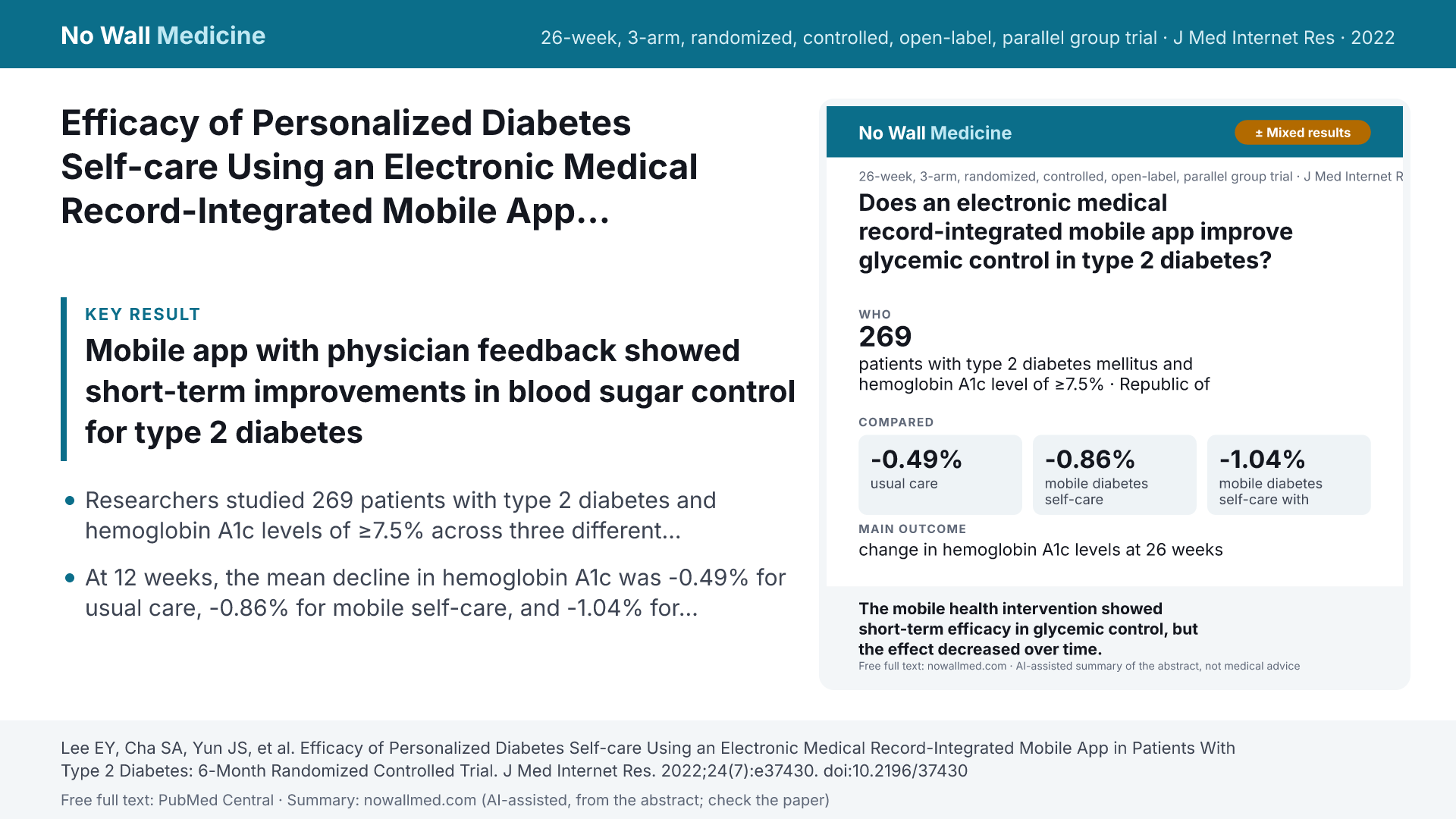
Efficacy of Personalized Diabetes Self-care Using an Electronic Medical Record-Integrated Mobile App in Patients With Type 2 Diabetes: 6-Month Randomized Controlled Trial
Key result: Mobile app with physician feedback showed short-term improvements in blood sugar control for type 2 diabetes
Key points
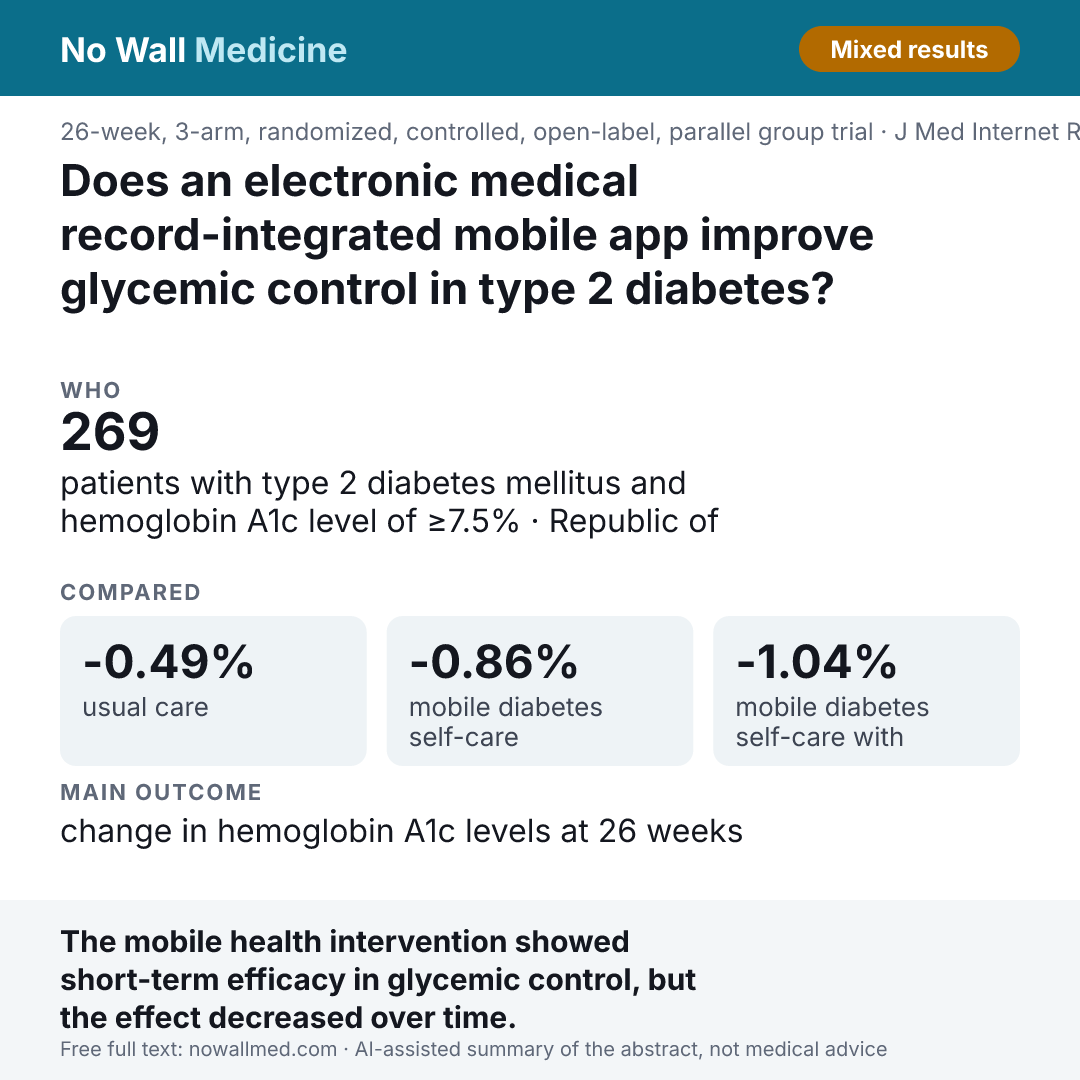
- Researchers studied 269 patients with type 2 diabetes and hemoglobin A1c levels of ≥7.5% across three different care groups.
- At 12 weeks, the mean decline in hemoglobin A1c was -0.49% for usual care, -0.86% for mobile self-care, and -1.04% for mobile self-care with physician feedback.
- While blood sugar levels decreased in all groups at 12 weeks, there was no significant difference between the groups after 26 weeks.
Why it matters: The effectiveness of mobile health applications for diabetes management is unclear due to inconsistent interventions and a lack of long-term follow-up data.
Discussion prompts
- Would these patients look like yours? Who was left out?
- Is the main outcome one that matters to patients?
- Is the difference large enough to change what you do?
Cite: Lee EY, Cha SA, Yun JS, et al. Efficacy of Personalized Diabetes Self-care Using an Electronic Medical Record-Integrated Mobile App in Patients With Type 2 Diabetes: 6-Month Randomized Controlled Trial. J Med Internet Res. 2022;24(7):e37430. doi:10.2196/37430
Free full text: PubMed Central · Summary and visual abstract: nowallmed.com/a/efficacy-of-personalized-diabetes-self-care-using-an-electronic-1agegy6/ (AI-assisted from the abstract; check the paper before relying on it).